Department of Gastroenterology and Hepatology, The Second Hospital of Anhui Medical University, Hefei, Anhui Province, China.
Department of Pharmacology, Anhui Medical University, Hefei, Anhui Province, China.
Biomed Res Int. 2018 Sep 13;2018:8941340. doi: 10.1155/2018/8941340. eCollection 2018.
Fecal microbiota transplantation (FMT) is an emerging treatment approach for inflammatory bowel disease (IBD). The donor selection, the separation of fecal bacteria, the frequency of FMT, the way of infusion, the long-term safety, and efficacy are still uncertain.
To further study the efficacy and safety and protocol of FMT for IBD.
A systematic review and meta-analysis were conducted until February, 2018. Clinical remission was established as the primary outcome.
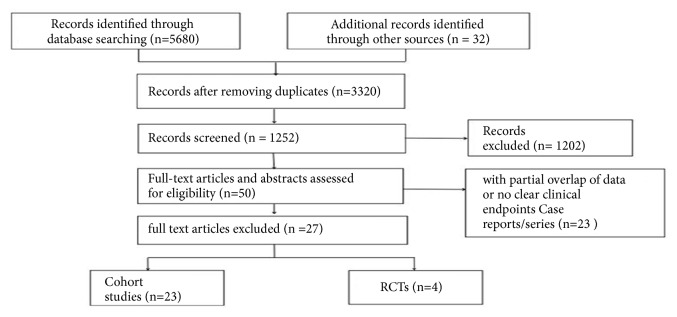
A total of 596 paediatric and adult IBD patients were enrolled, and 459 patients received FMT therapy. 28.8% (132/459) patients achieved clinical remission during follow-up. 53% (241/459) patients achieved clinical response. The pooled estimated clinical remission for ulcerative colitis (UC) was 21% (95% CI: 8%-37%) and 30% (95% CI: 11%-52%) for Crohn's disease (CD), both with a risk of heterogeneity; 10% (95% CI: 0%-43%) for paediatric UC; 26% (95% CI: 10%-48%) for adult UC; 45% for paediatric CD (95% CI: 24%-66%); 22% (95% CI: 3%-52%) for adult CD. Meta-analysis of cohort studies showed that moderate-severe IBD patients could achieve more significant remission from FMT than mild-moderate patients (=0.037). Delivery route has no impact on the efficacy of FMT in UC and CD. Based on current available evidence, a trend was observed towards higher clinical remission rate of frozen stool FMT than that of fresh stool for UC, while there was no significant difference between fresh and frozen FMT for CD. The optimal donor stool for FMT is still uncertain. Meta-analysis of RCTs showed that FMT treatment achieved significantly higher clinical remission rate than placebo for UC (28% versus 9%, =0.0003).
FMT is an effective and safe therapy for both paediatric and adult IBD; fresh or frozen donor stool, delivery route, and antibiotic pretreatment or not have no impact on the efficacy of FMT in IBD. FMT might be a potential rescue therapy and even an initial standardized therapy for IBD. However, few data exist on long-term safety and efficacy and further validation is needed.
粪便微生物群移植(FMT)是一种新兴的治疗炎症性肠病(IBD)的方法。供体选择、粪便细菌分离、FMT 频率、输注方式、长期安全性和疗效仍不确定。
进一步研究 FMT 治疗 IBD 的疗效和安全性及方案。
系统评价和荟萃分析截至 2018 年 2 月。临床缓解被确定为主要结局。
共纳入 596 例儿科和成人 IBD 患者,其中 459 例接受 FMT 治疗。在随访期间,28.8%(132/459)的患者达到临床缓解。53%(241/459)的患者达到临床反应。溃疡性结肠炎(UC)的汇总估计临床缓解率为 21%(95%CI:8%-37%),克罗恩病(CD)为 30%(95%CI:11%-52%),均存在异质性;儿科 UC 为 10%(95%CI:0%-43%);成人 UC 为 26%(95%CI:10%-48%);儿科 CD 为 45%(95%CI:24%-66%);成人 CD 为 22%(95%CI:3%-52%)。队列研究的荟萃分析表明,中重度 IBD 患者比轻度中度患者更能从 FMT 中获得更显著的缓解(=0.037)。输送途径对 UC 和 CD 中 FMT 的疗效没有影响。基于目前的可用证据,对于 UC,冷冻粪便 FMT 的临床缓解率趋势高于新鲜粪便,而 CD 中新鲜和冷冻 FMT 之间没有显著差异。FMT 的最佳供体粪便仍不确定。RCTs 的荟萃分析表明,FMT 治疗在 UC 中的临床缓解率显著高于安慰剂(28%比 9%,=0.0003)。
FMT 是一种治疗儿科和成人 IBD 的有效且安全的方法;新鲜或冷冻供体粪便、输送途径、是否使用抗生素预处理对 IBD 中 FMT 的疗效没有影响。FMT 可能是 IBD 的一种潜在的抢救治疗方法,甚至是初始标准化治疗方法。然而,关于长期安全性和疗效的数据很少,需要进一步验证。