Emerg Infect Dis. 2018 Dec;24(12):2228-2240. doi: 10.3201/eid2412.180740. Epub 2018 Dec 17.
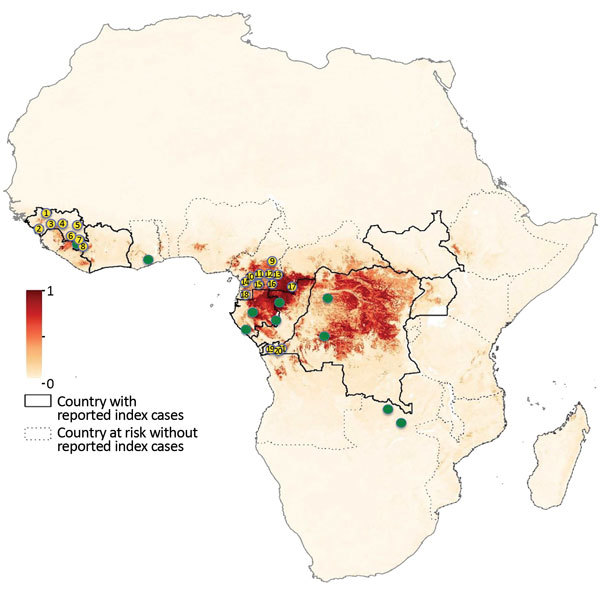
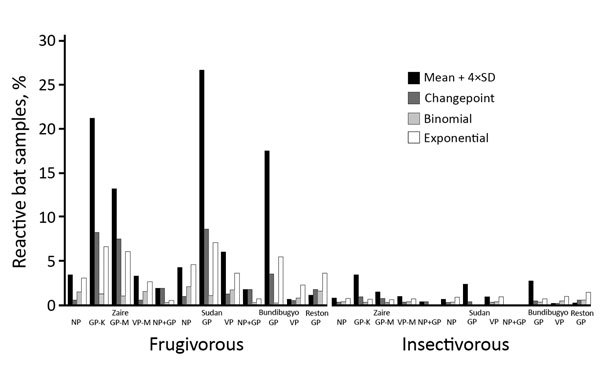
To clarify the role of bats in the ecology of Ebola viruses, we assessed the prevalence of Ebola virus antibodies in a large-scale sample of bats collected during 2015-2017 from countries in Africa that have had previous Ebola outbreaks (Guinea, the Democratic Republic of the Congo) or are at high risk for outbreaks (Cameroon). We analyzed 4,022 blood samples of bats from >12 frugivorous and 27 insectivorous species; 2-37 (0.05%-0.92%) bats were seropositive for Zaire and 0-30 (0%-0.75%) bats for Sudan Ebola viruses. We observed Ebola virus antibodies in 1 insectivorous bat genus and 6 frugivorous bat species. Certain bat species widespread across Africa had serologic evidence of Zaire and Sudan Ebola viruses. No viral RNA was detected in the subset of samples tested (n = 665). Ongoing surveillance of bats and other potential animal reservoirs are required to predict and prepare for future outbreaks.
为了阐明蝙蝠在埃博拉病毒生态学中的作用,我们评估了在 2015 年至 2017 年期间从曾经发生过埃博拉疫情(几内亚、刚果民主共和国)或有高爆发风险(喀麦隆)的非洲国家采集的大量蝙蝠样本中埃博拉病毒抗体的流行情况。我们分析了来自 12 种以上食果蝠和 27 种食虫蝙蝠的 4022 份血液样本;2-37 只(0.05%-0.92%)蝙蝠对扎伊尔埃博拉病毒呈血清阳性,0-30 只(0%-0.75%)蝙蝠对苏丹埃博拉病毒呈血清阳性。我们在 1 种食虫蝙蝠属和 6 种食果蝠种中观察到埃博拉病毒抗体。在广泛分布于非洲的某些蝙蝠物种中,有扎伊尔和苏丹埃博拉病毒的血清学证据。在检测的样本亚组(n=665)中未检测到病毒 RNA。需要对蝙蝠和其他潜在的动物宿主进行持续监测,以预测和准备未来的疫情爆发。