Neuroscience Research Center of Lyon, SLEEP Team, UMR 5292 CNRS/U1028 INSERM, Université Claude Bernard Lyon 1, Lyon, France.
Nanotechnologies Institute of Lyon, UMR5270 CNRS, INSA Lyon, Université Claude Bernard Lyon 1, France.
PLoS Biol. 2018 Oct 11;16(10):e2005982. doi: 10.1371/journal.pbio.2005982. eCollection 2018 Oct.
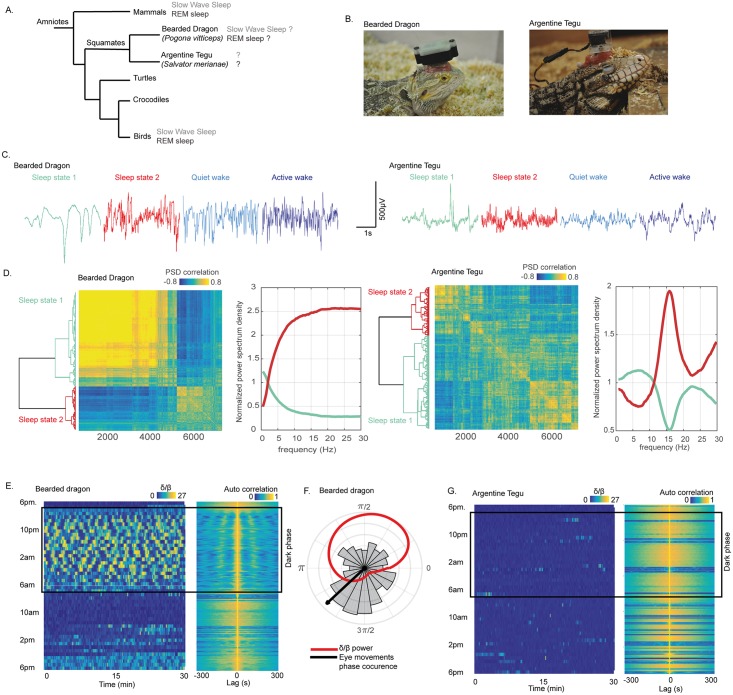
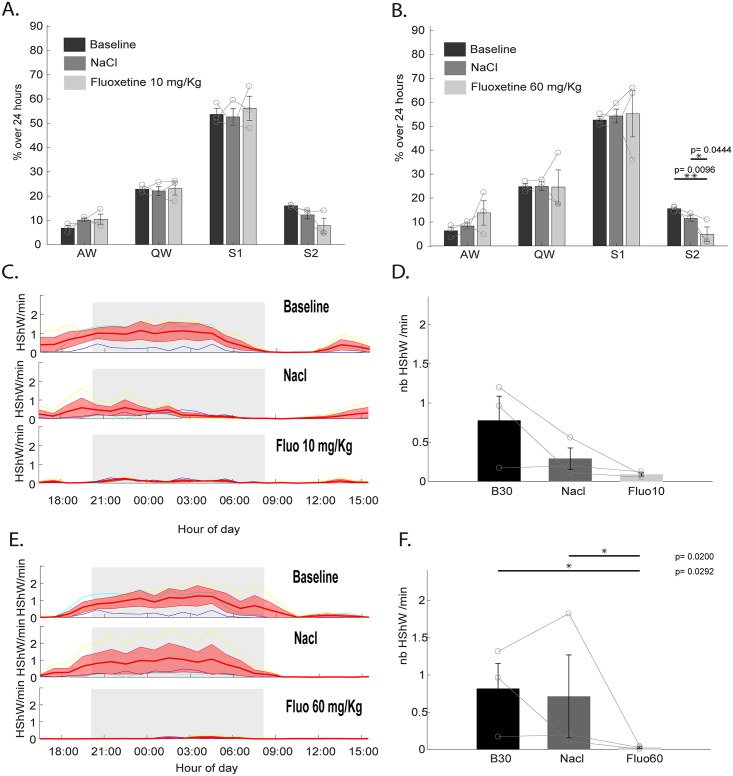
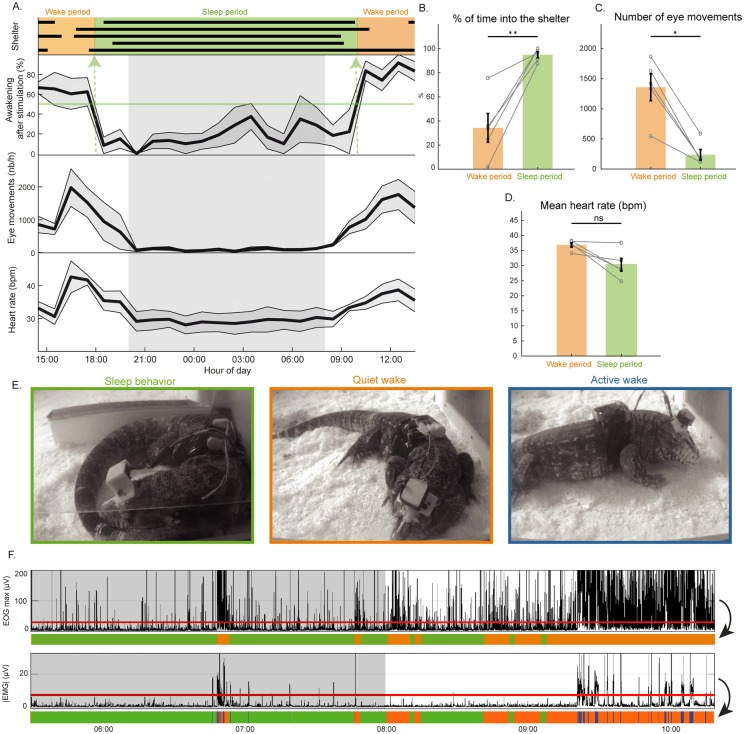
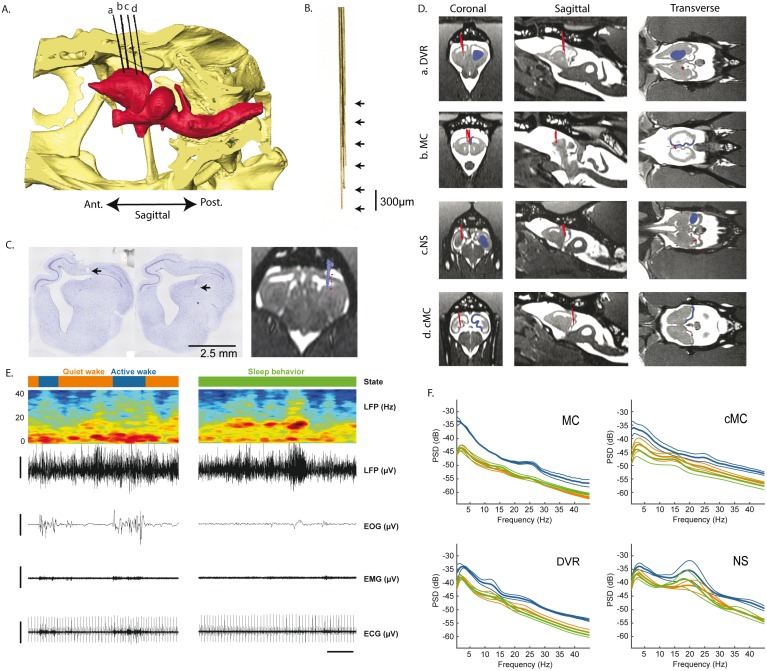
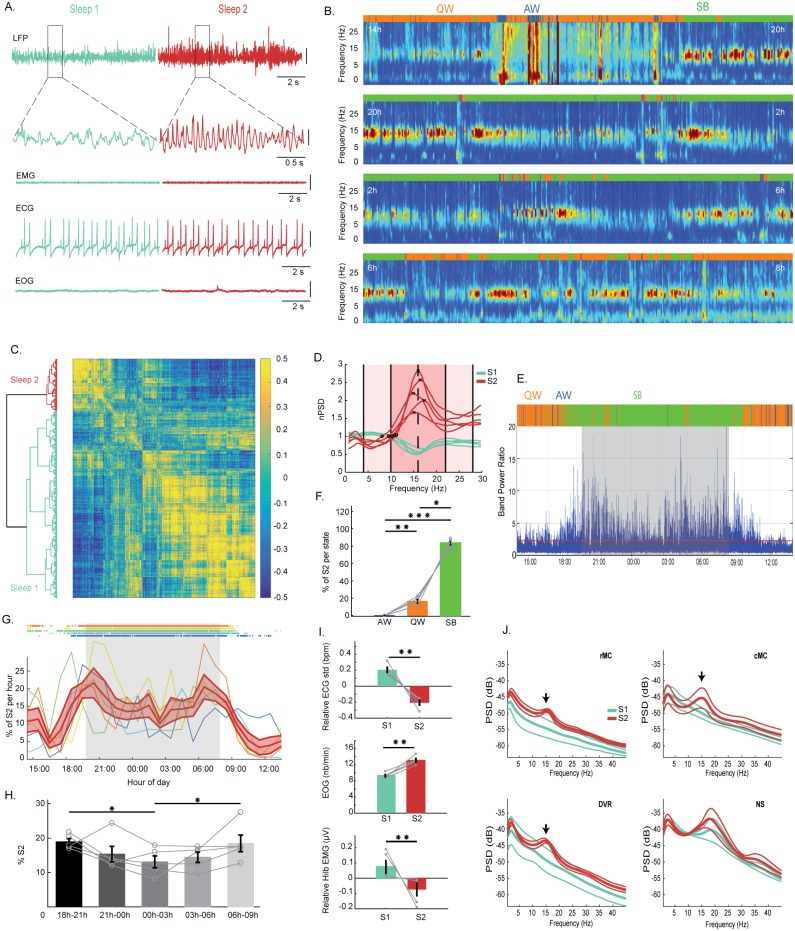
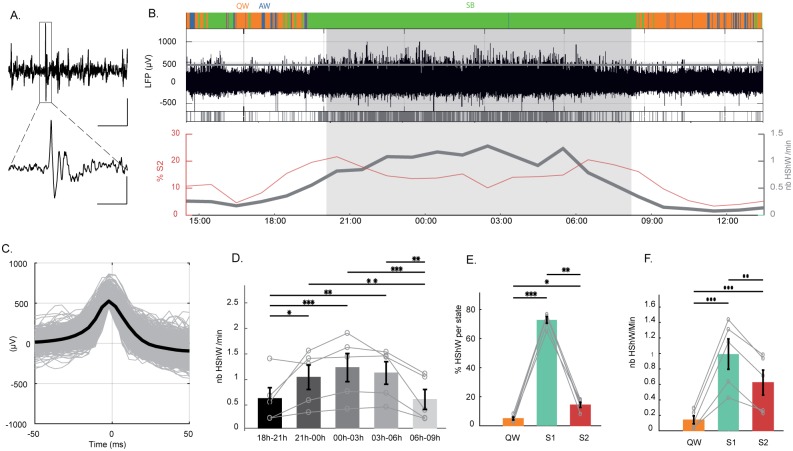
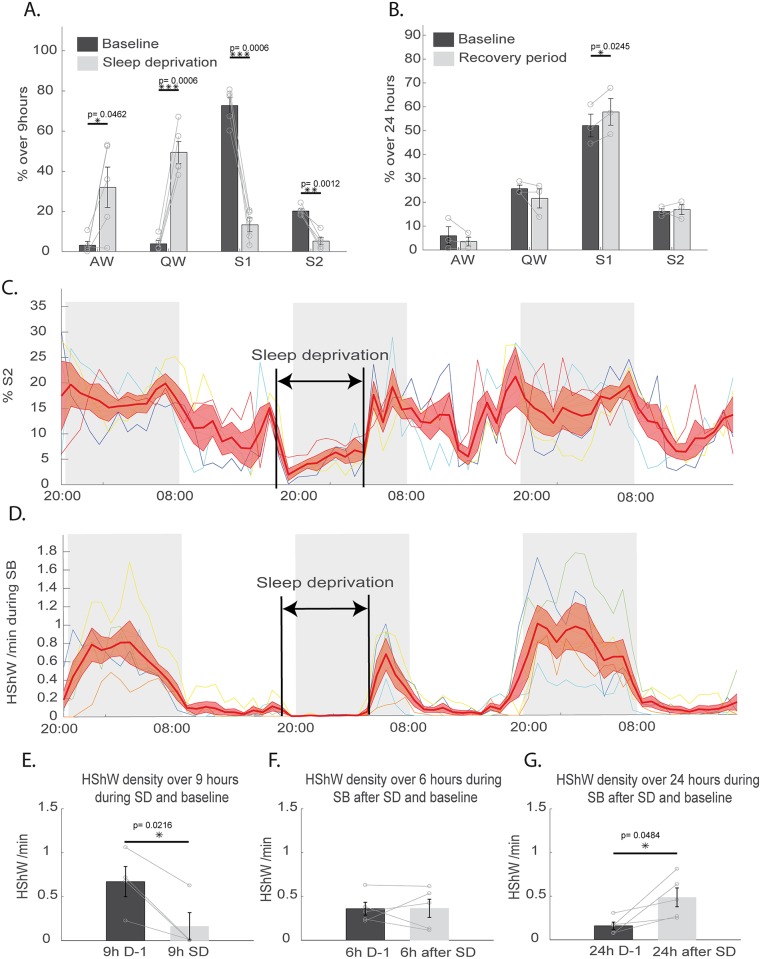
It is crucial to determine whether rapid eye movement (REM) sleep and slow-wave sleep (SWS) (or non-REM sleep), identified in most mammals and birds, also exist in lizards, as they share a common ancestor with these groups. Recently, a study in the bearded dragon (P. vitticeps) reported states analogous to REM and SWS alternating in a surprisingly regular 80-s period, suggesting a common origin of the two sleep states across amniotes. We first confirmed these results in the bearded dragon with deep brain recordings and electro-oculogram (EOG) recordings. Then, to confirm a common origin and more finely characterize sleep in lizards, we developed a multiparametric approach in the tegu lizard, a species never recorded to date. We recorded EOG, electromyogram (EMG), heart rate, and local field potentials (LFPs) and included data on arousal thresholds, sleep deprivation, and pharmacological treatments with fluoxetine, a serotonin reuptake blocker that suppresses REM sleep in mammals. As in the bearded dragon, we demonstrate the existence of two sleep states in tegu lizards. However, no clear periodicity is apparent. The first sleep state (S1 sleep) showed high-amplitude isolated sharp waves, and the second sleep state (S2 sleep) displayed 15-Hz oscillations, isolated ocular movements, and a decrease in heart rate variability and muscle tone compared to S1. Fluoxetine treatment induced a significant decrease in S2 quantities and in the number of sharp waves in S1. Because S2 sleep is characterized by the presence of ocular movements and is inhibited by a serotonin reuptake inhibitor, as is REM sleep in birds and mammals, it might be analogous to this state. However, S2 displays a type of oscillation never previously reported and does not display a desynchronized electroencephalogram (EEG) as is observed in the bearded dragons, mammals, and birds. This suggests that the phenotype of sleep states and possibly their role can differ even between closely related species. Finally, our results suggest a common origin of two sleep states in amniotes. Yet, they also highlight a diversity of sleep phenotypes across lizards, demonstrating that the evolution of sleep states is more complex than previously thought.
确定快速眼动 (REM) 睡眠和慢波睡眠 (SWS)(或非 REM 睡眠)是否也存在于蜥蜴中至关重要,因为它们与这些群体有共同的祖先。最近,一项针对胡子龙(P. vitticeps)的研究报告称,在一个令人惊讶的 80 秒周期内,REM 和 SWS 交替出现,这表明两种睡眠状态在羊膜动物中具有共同的起源。我们首先通过深度脑记录和眼电图 (EOG) 记录在胡子龙中证实了这些结果。然后,为了确认共同的起源并更精细地描述蜥蜴的睡眠,我们在一种以前从未记录过的蜥蜴——巨蜥中开发了一种多参数方法。我们记录了眼电图 (EOG)、肌电图 (EMG)、心率和局部场电位 (LFPs),并包括了觉醒阈值、睡眠剥夺和氟西汀(一种抑制哺乳动物 REM 睡眠的 5-羟色胺再摄取抑制剂)药物治疗的数据。与胡子龙一样,我们证明了巨蜥存在两种睡眠状态。然而,没有明显的周期性。第一种睡眠状态(S1 睡眠)显示出高振幅孤立的尖波,第二种睡眠状态(S2 睡眠)显示出 15-Hz 振荡、孤立的眼球运动以及与 S1 相比心率变异性和肌肉张力降低。氟西汀治疗显著降低了 S2 的数量和 S1 中的尖波数量。因为 S2 睡眠的特征是存在眼球运动,并且被 5-羟色胺再摄取抑制剂抑制,就像鸟类和哺乳动物的 REM 睡眠一样,它可能类似于这种状态。然而,S2 显示出一种以前从未报道过的振荡类型,并且不像在胡子龙、哺乳动物和鸟类中观察到的那样,没有去同步化的脑电图 (EEG)。这表明即使在密切相关的物种之间,睡眠状态的表型及其作用也可能不同。最后,我们的结果表明羊膜动物中存在两种睡眠状态的共同起源。然而,它们也突出了蜥蜴中睡眠表型的多样性,表明睡眠状态的进化比以前想象的更为复杂。