College of Food Science and Engineering, Ocean University of China, Qingdao 266003, China.
School of Medicine and Pharmacy, Ocean University of China, Qingdao 266003, China.
Mar Drugs. 2018 Oct 10;16(10):377. doi: 10.3390/md16100377.
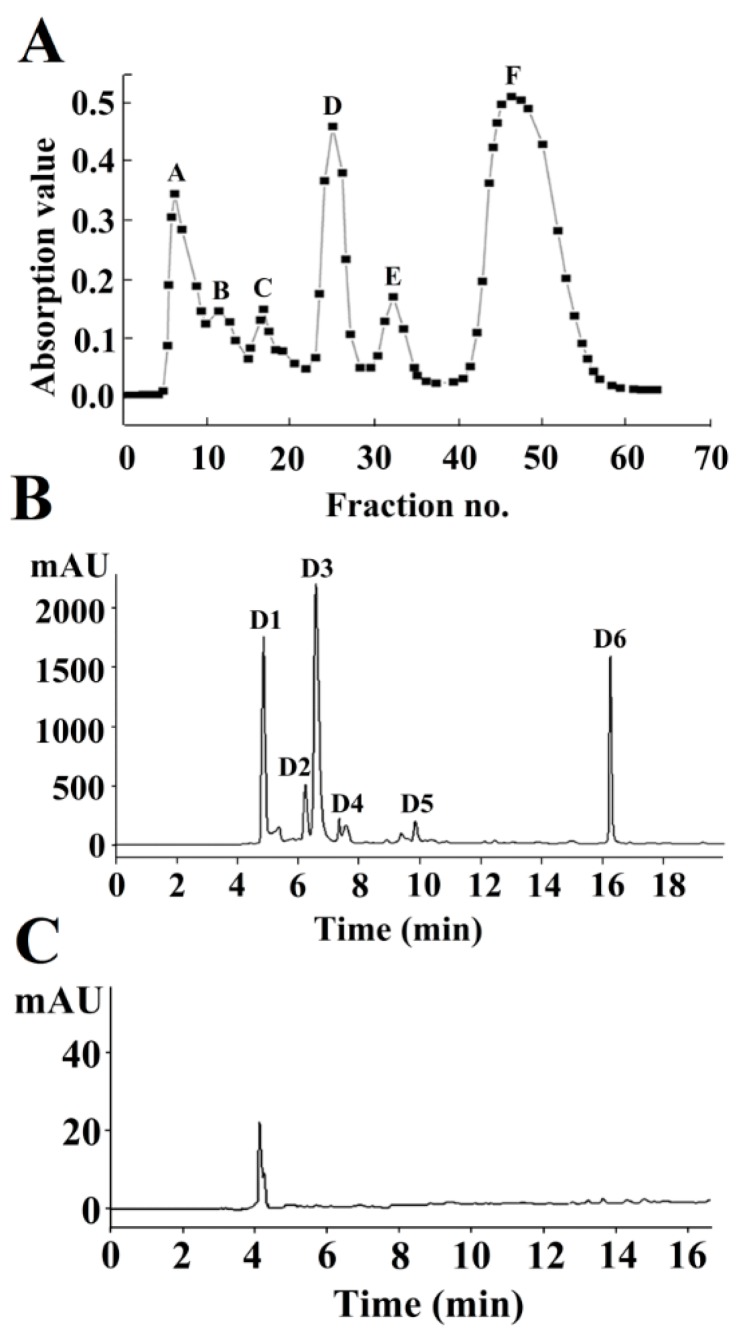
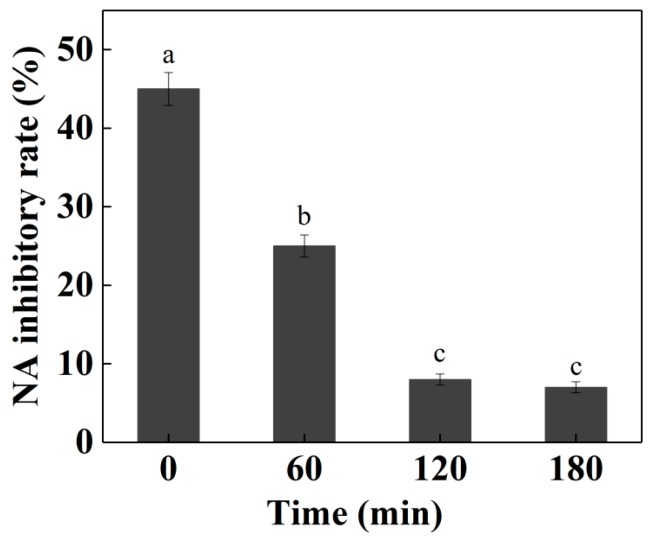
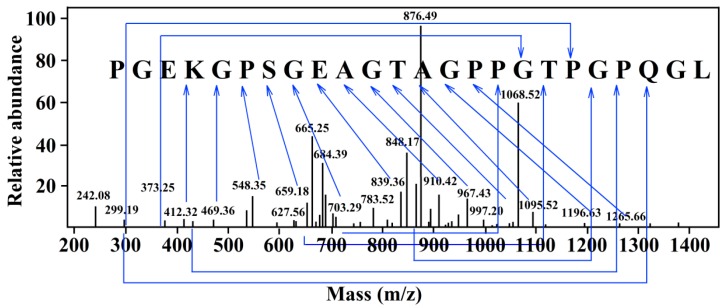
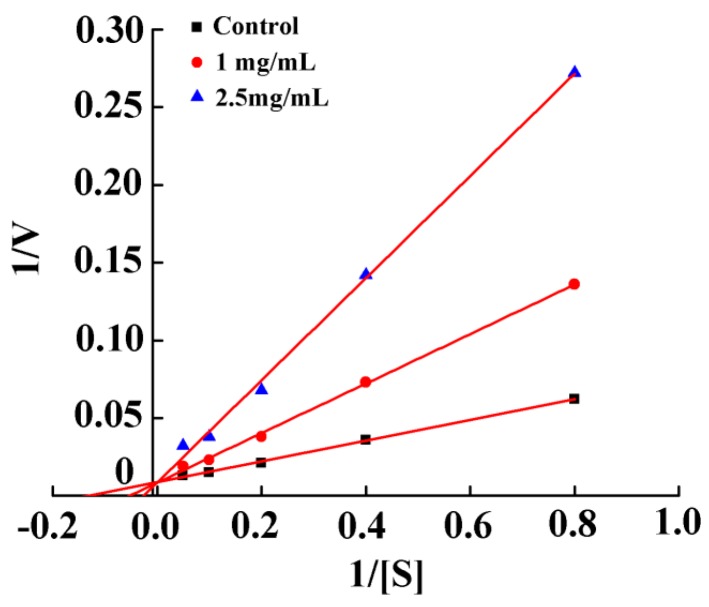
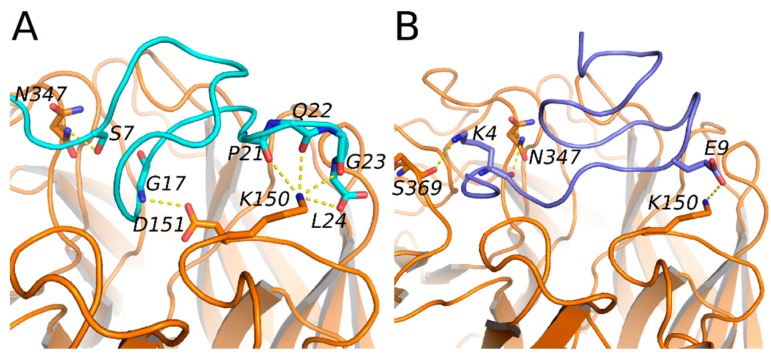
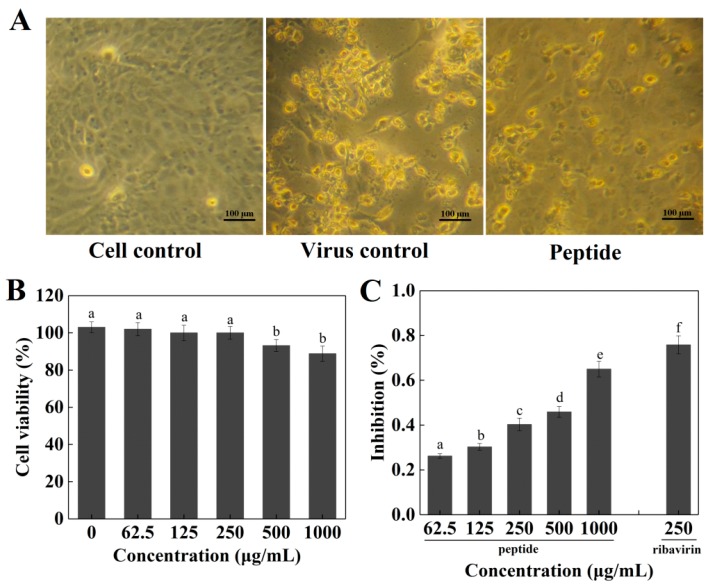
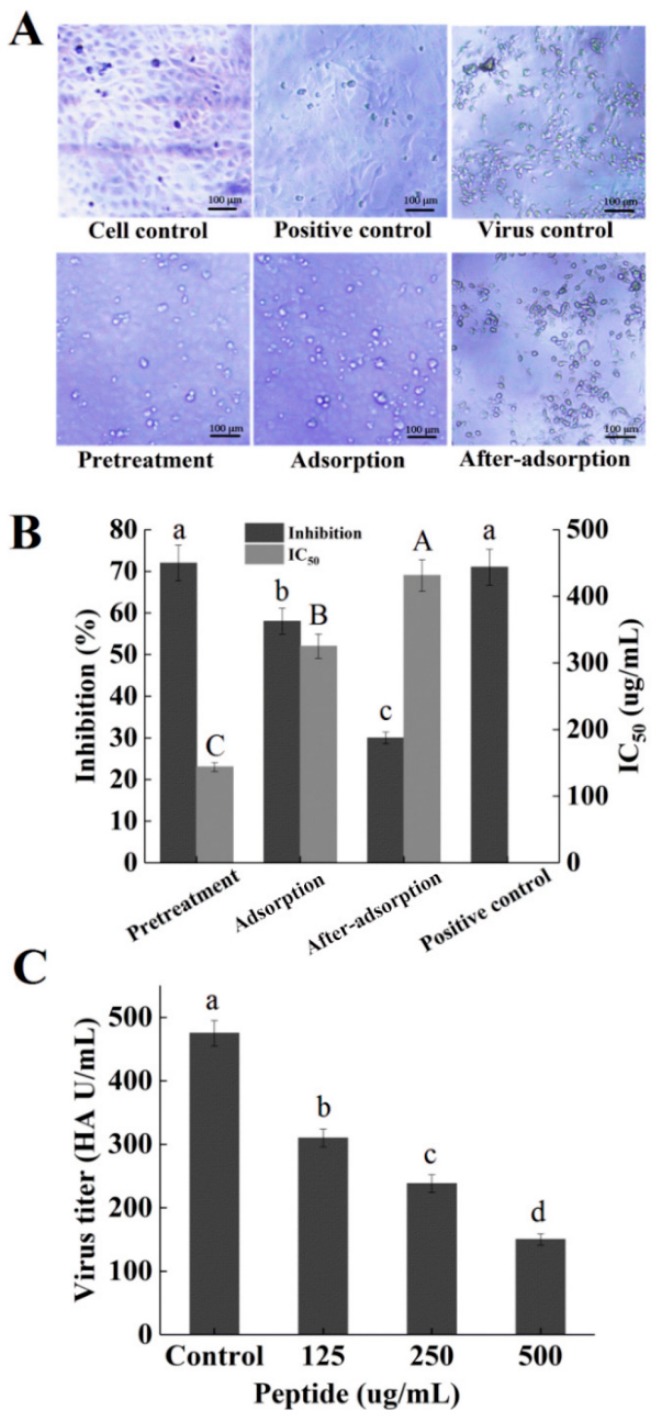
In this paper, a novel natural influenza A H1N1 virus neuraminidase (NA) inhibitory peptide derived from cod skin hydrolysates was purified and its antiviral mechanism was explored. From the hydrolysates, novel efficient NA-inhibitory peptides were purified by a sequential approach utilizing an ultrafiltration membrane (5000 Da), sephadex G-15 gel column and reverse-phase high-performance liquid chromatography (RP-HPLC). The amino acid sequence of the pure peptide was determined by electrospray ionization Fourier transform ion cyclotron resonance mass spectrometry (ESI-FTICR-MS) was PGEKGPSGEAGTAGPPGTPGPQGL, with a molecular weight of 2163 Da. The analysis of the Lineweacer⁻Burk model indicated that the peptide was a competitive NA inhibitor with Ki of 0.29 mM and could directly bind free enzymes. In addition, docking studies suggested that hydrogen binding might be the driving force for the binding affinity of PGEKGPSGEAGTAGPPGTPGPQGL to NA. The cytopathic effect reduction assay showed that the peptide PGEKGPSGEAGTAGPPGTPGPQGL protected Madin⁻Darby canine kidney (MDCK) cells from viral infection and reduced the viral production in a dose-dependent manner. The EC value was 471 ± 12 μg/mL against H1N1. Time-course analysis showed that PGEKGPSGEAGTAGPPGTPGPQGL inhibited influenza virus in the early stage of the infectious cycle. The virus titers assay indicated that the NA-inhibitory peptide PGEKGPSGEAGTAGPPGTPGPQGL could directly affect the virus toxicity and adsorption by host cells, further proving that the peptide had an anti-viral effect with multiple target sites. The activity of NA-inhibitory peptide was almost inactivated during the simulated in vitro gastrointestinal digestion, suggesting that oral administration is not recommended. The peptide PGEKGPSGEAGTAGPPGTPGPQGL acts as a neuraminidase blocker to inhibit influenza A virus in MDCK cells. Thus, the peptide PGEKGPSGEAGTAGPPGTPGPQGL has potential utility in the treatment of the influenza virus infection.
本文从鳕鱼皮中提取出一种新型天然甲型流感 H1N1 病毒神经氨酸酶 (NA) 抑制肽,并对其抗病毒机制进行了研究。从水解产物中,利用超滤膜 (5000Da)、葡聚糖凝胶 G-15 柱和反相高效液相色谱 (RP-HPLC) 等连续方法对新型高效 NA 抑制肽进行了纯化。通过电喷雾电离傅里叶变换离子回旋共振质谱 (ESI-FTICR-MS) 确定纯肽的氨基酸序列为 PGEKGPSGEAGTAGPPGTPGPQGL,分子量为 2163Da。Lineweaver-Burk 模型分析表明,该肽为竞争性 NA 抑制剂,Ki 值为 0.29mM,可直接与游离酶结合。此外,对接研究表明,氢键可能是 PGEKGPSGEAGTAGPPGTPGPQGL 与 NA 结合亲和力的驱动力。细胞病变抑制试验表明,该肽 PGEKGPSGEAGTAGPPGTPGPQGL 可保护 Madin-Darby 犬肾 (MDCK) 细胞免受病毒感染,并以剂量依赖的方式降低病毒产量。对 H1N1 的 EC 值为 471±12μg/mL。时间进程分析表明,PGEKGPSGEAGTAGPPGTPGPQGL 在感染周期的早期抑制流感病毒。病毒滴度试验表明,NA 抑制肽 PGEKGPSGEAGTAGPPGTPGPQGL 可直接影响病毒对宿主细胞的毒性和吸附作用,进一步证明该肽具有多种作用靶点的抗病毒作用。在模拟的体外胃肠道消化过程中,NA 抑制肽的活性几乎完全失活,提示不建议口服给药。肽 PGEKGPSGEAGTAGPPGTPGPQGL 作为神经氨酸酶阻断剂,在 MDCK 细胞中抑制甲型流感病毒。因此,肽 PGEKGPSGEAGTAGPPGTPGPQGL 在治疗流感病毒感染方面具有潜在的应用价值。