Larhammar D, Ericsson A, Persson H
Proc Natl Acad Sci U S A. 1987 Apr;84(7):2068-72. doi: 10.1073/pnas.84.7.2068.
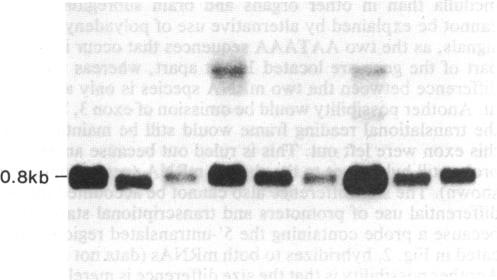
Neuropeptide Y is a 36-amino acid peptide that is abundant throughout the mammalian nervous system. It belongs to the same family of carboxyl-terminally amidated peptides as pancreatic polypeptide and peptide YY. We describe here the gene encoding the rat neuropeptide Y precursor. The gene spans 7.2 kilobase pairs and contains four exons. The exon organization is identical to the pancreatic polypeptide gene, although the amino acid sequences of the neuropeptide Y and pancreatic polypeptide precursors differ extensively. The predicted amino acid sequence of mature rat neuropeptide Y is identical to the human sequence. Also the sequence of the 30-amino acid carboxyl-terminal peptide of preproneuropeptide Y is highly conserved, which suggests that it is functionally important. Two neuropeptide Y alleles were found to differ at nine positions in 2.5 kilobase pairs at the 5' portion of the gene. No exon difference was found. One nucleotide substitution close to the gene promoter may influence the regulation of expression. Neuropeptide Y mRNA was found in all rat brain subregions tested, which shows that neuropeptide Y is synthesized throughout the brain. Developmentally, mRNA was detected in the rat brain as early as embryonic day 16 and increased rapidly to adult levels. The level of neuropeptide Y mRNA was also studied in several rat peripheral organs. Unexpectedly high levels were observed in heart and spleen. This mRNA may be synthesized in intrinsic ganglia and non-neuronal cells, respectively.
神经肽Y是一种由36个氨基酸组成的肽,在哺乳动物的整个神经系统中含量丰富。它与胰多肽和肽YY属于同一类羧基末端酰胺化肽家族。我们在此描述编码大鼠神经肽Y前体的基因。该基因跨度为7.2千碱基对,包含四个外显子。外显子组织与胰多肽基因相同,尽管神经肽Y和胰多肽前体的氨基酸序列有很大差异。成熟大鼠神经肽Y的预测氨基酸序列与人类序列相同。此外,前神经肽Y的30个氨基酸羧基末端肽的序列高度保守,这表明它在功能上很重要。在基因5'端的2.5千碱基对中发现两个神经肽Y等位基因在九个位置上存在差异。未发现外显子差异。靠近基因启动子的一个核苷酸取代可能会影响表达调控。在所测试的所有大鼠脑区中均发现了神经肽Y mRNA,这表明神经肽Y在整个大脑中合成。在发育过程中,早在胚胎第16天就在大鼠脑中检测到了mRNA,并迅速增加到成年水平。还对几种大鼠外周器官中的神经肽Y mRNA水平进行了研究。在心脏和脾脏中观察到了意外的高水平。这种mRNA可能分别在内脏神经节和非神经元细胞中合成。