National Institute of Parasitic Diseases, Chinese Center for Disease Control and Prevention; Chinese Center for Tropical Diseases Research, Shanghai, 200025, China.
WHO Collaborating Centre for Tropical Diseases; National Center for International Research on Tropical Diseases, Ministry of Science and Technology, Shanghai, 200025, China.
Infect Dis Poverty. 2018 Oct 15;7(1):100. doi: 10.1186/s40249-018-0482-8.
Angiostrongyliasis is a food-borne parasitic zoonosis. Human infection is caused by infection with the third-stage larvae of Angiostrongylus cantonensis. The life cycle of A. cantonensis involves rodents as definitive hosts and molluscs as intermediate hosts. This study aims to investigate on the infection status and characteristics of spatial distribution of these hosts, which are key components in the strategy for the prevention and control of angiostrongyliasis.
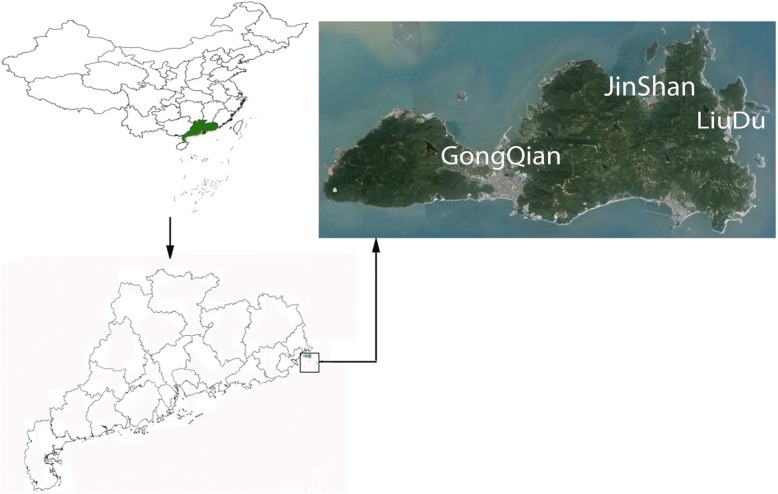
Three villages from Nanao Island, Guangdong Province, China, were chosen as study area by stratified random sampling. The density and natural infection of Pomacea canaliculata and various rat species were surveyed every three months from December 2015 to September 2016, with spatial correlations of the positive P. canaliculata and the infection rates analysed by ArcGIS, scan statistics, ordinary least squares (OLS) and geographically weighted regression (GWR) models.
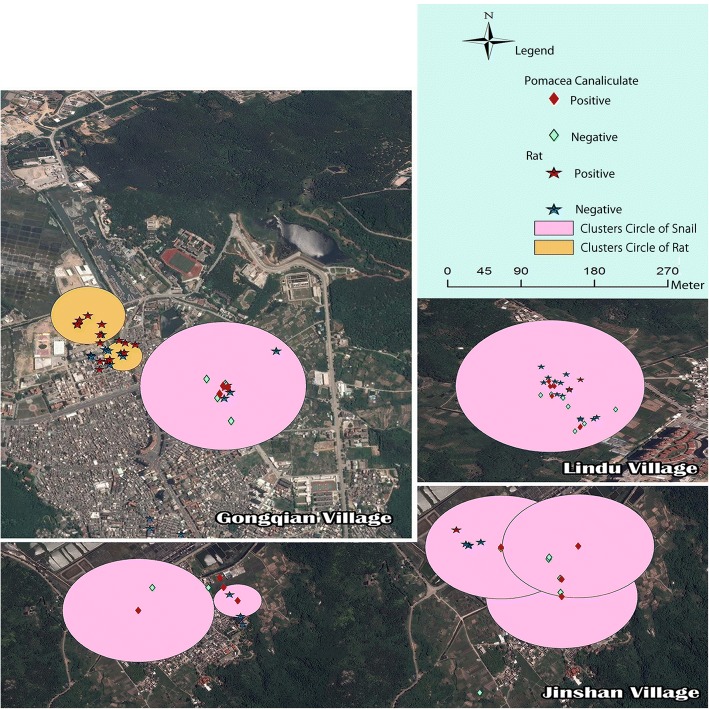
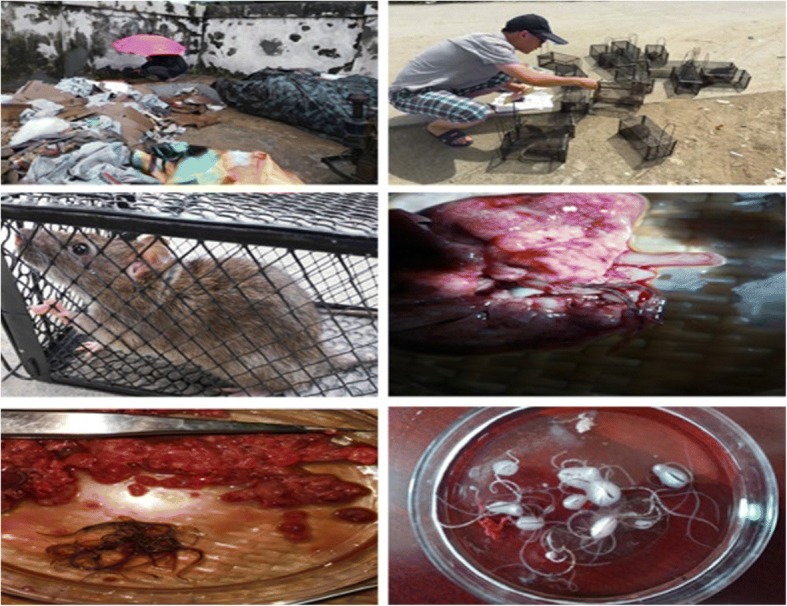
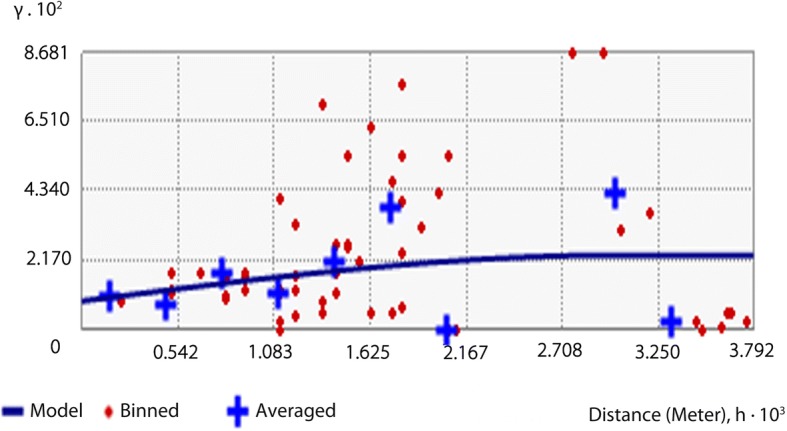
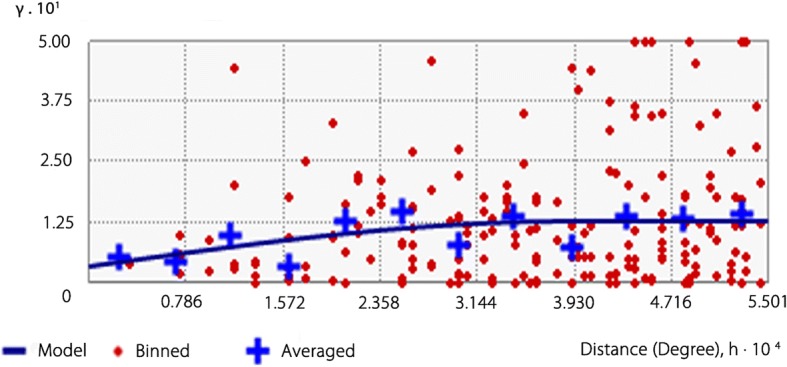
A total of 2192 P. canaliculata specimens were collected from the field, of which 1190 were randomly chosen to be examined for third-stage larvae of A. cantonensis. Seventy-two Angiostrongylus-infected snails were found, which represents a larval infection rate of 6.1% (72/1190). In total, 110 rats including 85 Rattus norvegicus, 10 R. flavipectus, one R. losea and 14 Suncus murinus were captured, and 32 individuals were positive (for adult worms), representing an infection rate of 29.1% of the definitive hosts (32/110). Worms were only found in R. norvegicus and R. flavipectus, representing a prevalence of 36.5% (31/85) and 10% (1/10), respectively in these species, but none in R. losea and S. murinus, despite testing as many as 32 of the latter species. Statistically, spatial correlation and spatial clusters in the spatial distribution of positive P. canaliculata and positive rats existed. Most of the spatial variability of the host infection rates came from spatial autocorrelation. Nine spatial clusters with respect to positive P. canaliculata were identified, but only two correlated to infection rates. The results show that corrected Akaike information criterion, R, R adjusted and σ in the GWR model were superior to those in the OLS model.
P. canaliculata and rats were widely distributed in Nanao Island and positive infection has also been found in the hosts, demonstrating that there was a risk of angiostrongyliasis in this region of China. The distribution of positive P. canaliculata and rats exhibited spatial correlation, and the GWR model had advantage over the OLS model in the spatial analysis of hosts of A. cantonensis.
旋毛虫病是一种食源性寄生虫病。人类感染是由感染广州管圆线虫的第三期幼虫引起的。广州管圆线虫的生命周期涉及啮齿动物作为终宿主和软体动物作为中间宿主。本研究旨在调查这些宿主的感染状况和空间分布特征,这些宿主是旋毛虫病预防和控制策略的关键组成部分。
采用分层随机抽样的方法,选择广东省南澳岛的三个村庄作为研究区域。从 2015 年 12 月至 2016 年 9 月,每三个月调查一次福寿螺的密度和自然感染情况,以及各种鼠类的密度和自然感染情况,并用 ArcGIS、扫描统计、普通最小二乘法(OLS)和地理加权回归(GWR)模型分析阳性福寿螺和感染率的空间相关性。
共采集野外福寿螺标本 2192 只,随机抽取 1190 只进行广州管圆线虫第三期幼虫检查。发现 72 只感染旋毛虫的蜗牛,幼虫感染率为 6.1%(72/1190)。共捕获 110 只老鼠,包括 85 只挪威鼠、10 只黄胸鼠、1 只白腹巨鼠和 14 只臭鼩鼱,其中 32 只为成虫阳性,占终宿主感染率的 29.1%(32/110)。蠕虫仅在挪威鼠和黄胸鼠中发现,分别占这两种物种的 36.5%(31/85)和 10%(1/10),而在白腹巨鼠和臭鼩鼱中均未发现,尽管对后两种物种进行了多达 32 次检测。统计分析表明,阳性福寿螺和阳性鼠的空间分布存在空间相关性和空间聚集性。宿主感染率的大部分空间变异性来自空间自相关。确定了 9 个与阳性福寿螺相关的空间聚类,但只有 2 个与感染率相关。结果表明,地理加权回归模型中的校正 Akaike 信息准则、R、R 调整和 σ 优于普通最小二乘模型。
福寿螺和老鼠在南澳岛广泛分布,宿主也有阳性感染,表明该地区存在旋毛虫病的风险。阳性福寿螺和老鼠的分布存在空间相关性,地理加权回归模型在宿主的空间分析中优于普通最小二乘模型。