Wimberg Hanna, Lev Dorit, Yosovich Keren, Namburi Prasanthi, Banin Eyal, Sharon Dror, Koch Karl-Wilhelm
Department of Neuroscience, Biochemistry Group, University of Oldenburg, Oldenburg, Germany.
The Rina Mor Institute of Medical Genetics, Wolfson Medical Center, Holon, Israel.
Front Mol Neurosci. 2018 Sep 25;11:348. doi: 10.3389/fnmol.2018.00348. eCollection 2018.
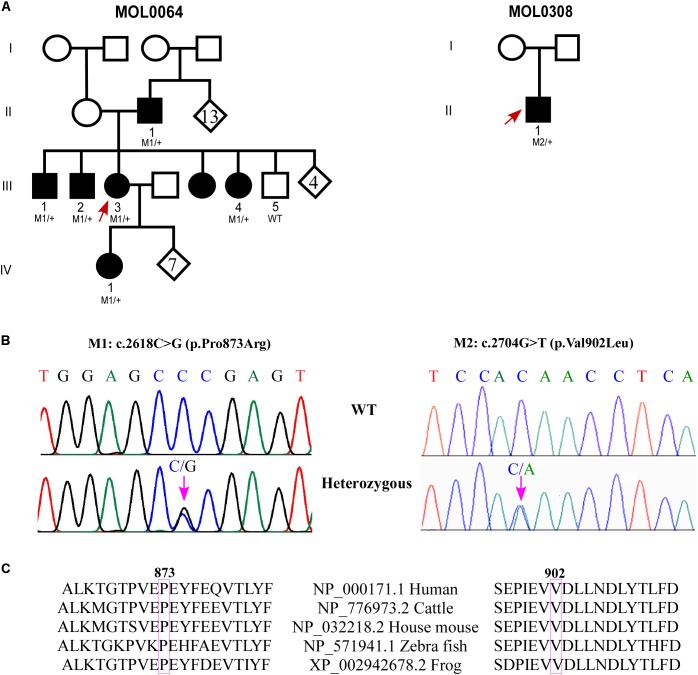
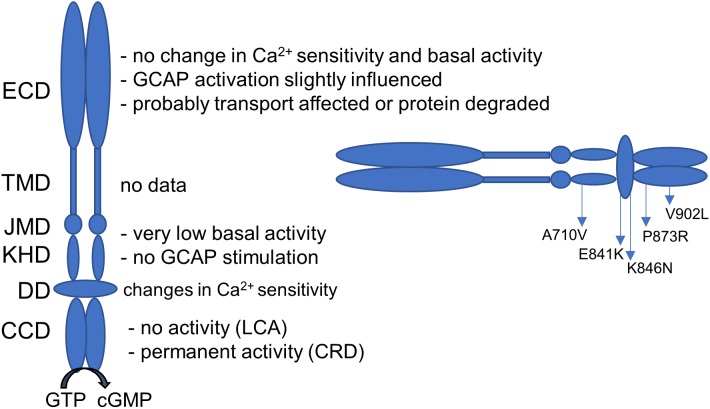
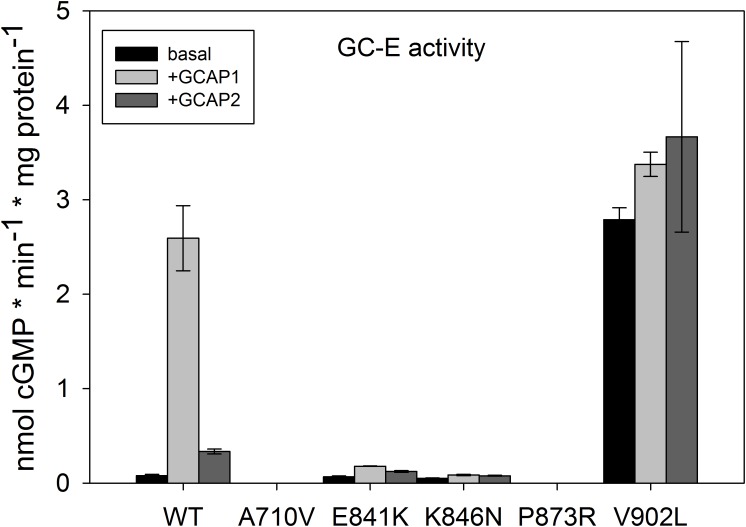
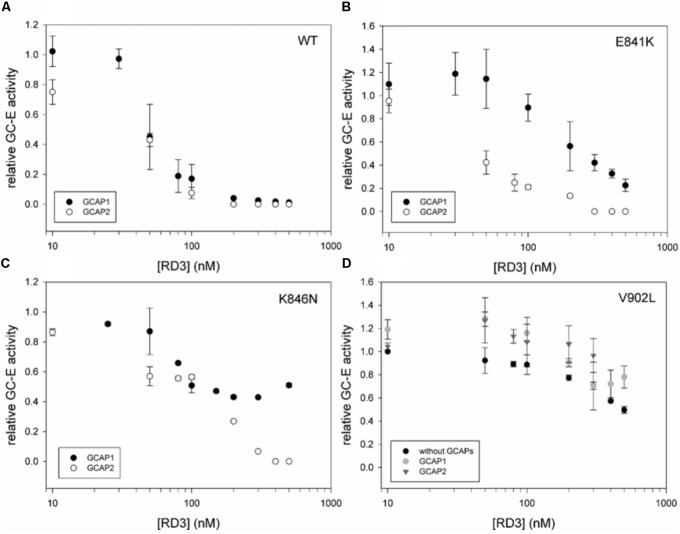
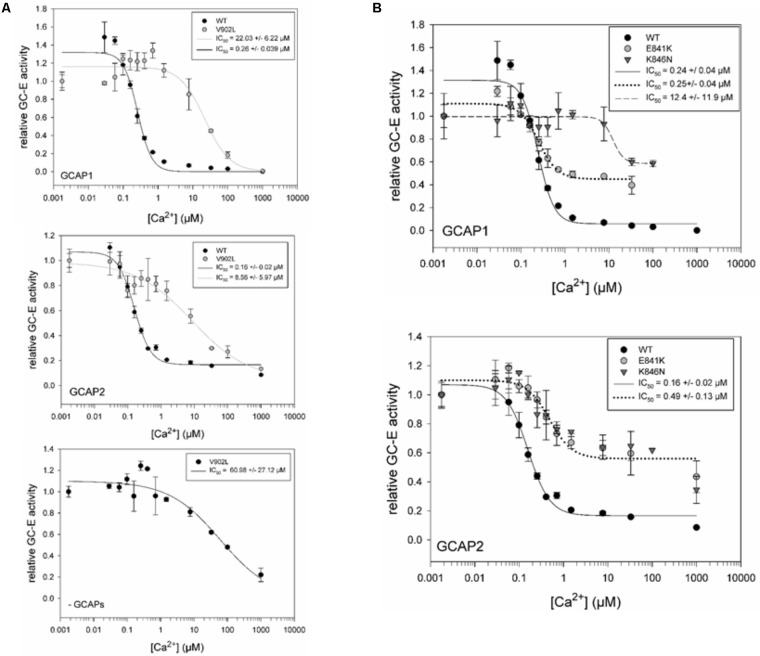
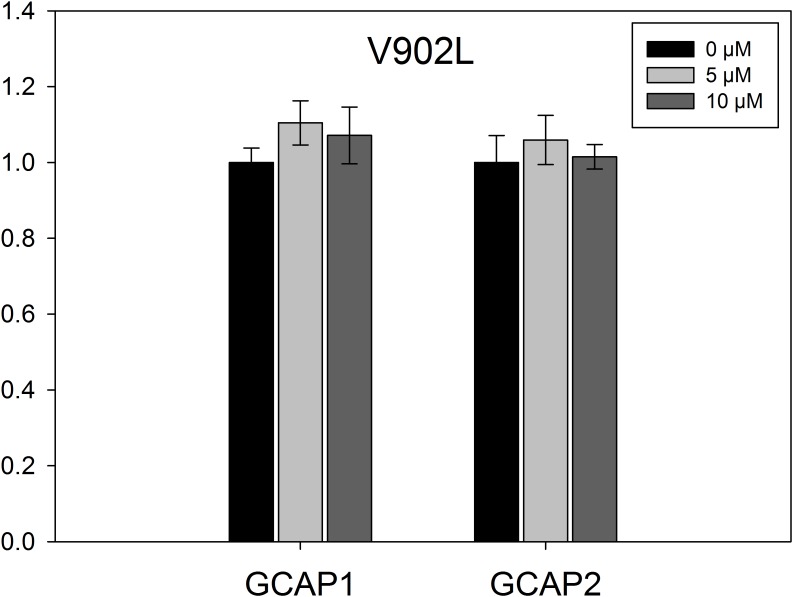
Over 100 mutations in that encodes the photoreceptor guanylate cyclase GC-E are known to cause two major diseases: autosomal recessive Leber congenital amaurosis (arLCA) or autosomal dominant cone-rod dystrophy (adCRD) with a poorly understood mechanism at the molecular level in most cases. Only few mutations were further characterized for their enzymatic and molecular properties. GC-E activity is under control of neuronal Ca-sensor proteins, which is often a possible route to dysfunction. We investigated five recently-identified GC-E mutants that have been reported in patients suffering from arLCA (one large family) and adCRD/maculopathy (four families). Microsatellite analysis revealed that one of the mutations, c.2538G > C (p.K846N), occurred . To better understand the mechanism by which mutations that are located in different GC-E domains develop different phenotypes, we investigated the molecular consequences of these mutations by expressing wildtype and mutant GC-E variants in HEK293 cells. Analyzing their general enzymatic behavior, their regulation by Ca sensor proteins and retinal degeneration protein 3 (RD3) dimerization domain mutants (p.E841K and p.K846N) showed a shift in Ca-sensitive regulation by guanylate cyclase-activating proteins (GCAPs). Mutations in the cyclase catalytic domain led to a loss of enzyme function in the mutant p.P873R, but not in p.V902L. Instead, the p.V902L mutation increased the guanylate cyclase activity more than 20-fold showing a high GCAP independent activity and leading to a constitutively active mutant. This is the first mutation to be described affecting the GC-E catalytic core in a complete opposite way.
已知编码光感受器鸟苷酸环化酶GC-E的基因中有100多种突变会导致两种主要疾病:常染色体隐性遗传性莱伯先天性黑蒙(arLCA)或常染色体显性遗传性锥杆营养不良(adCRD),在大多数情况下,其分子水平的机制尚不清楚。只有少数突变的酶学和分子特性得到了进一步表征。GC-E的活性受神经元钙传感蛋白的控制,这通常是功能障碍的一条可能途径。我们研究了最近鉴定出的五个GC-E突变体,这些突变体已在患有arLCA(一个大家族)和adCRD/黄斑病变(四个家族)的患者中报道。微卫星分析显示其中一个突变,即c.2538G > C(p.K846N)发生了。为了更好地理解位于不同GC-E结构域的突变产生不同表型的机制,我们通过在HEK293细胞中表达野生型和突变型GC-E变体来研究这些突变的分子后果。分析它们的一般酶学行为、钙传感蛋白和视网膜变性蛋白3(RD3)二聚化结构域突变体(p.E841K和p.K846N)对它们的调节作用,结果表明鸟苷酸环化酶激活蛋白(GCAPs)对钙敏感性调节发生了改变。环化酶催化结构域中的突变导致突变体p.P873R失去酶功能,但p.V902L没有。相反,p.V突变使鸟苷酸环化酶活性增加了20多倍,显示出高度的不依赖GCAP的活性,并导致一个组成型激活突变体。这是首次描述的以完全相反方式影响GC-E催化核心的突变。