Department of Gastrointestinal Surgery, Union Hospital, Tongji Medical College, Huazhong University of Science and Technology, Wuhan, Hubei 430022, P.R. China.
Department of Paediatric Surgery, Union Hospital, Tongji Medical College, Huazhong University of Science and Technology, Wuhan, Hubei 430022, P.R. China.
Oncol Rep. 2019 Jan;41(1):191-201. doi: 10.3892/or.2018.6794. Epub 2018 Oct 15.
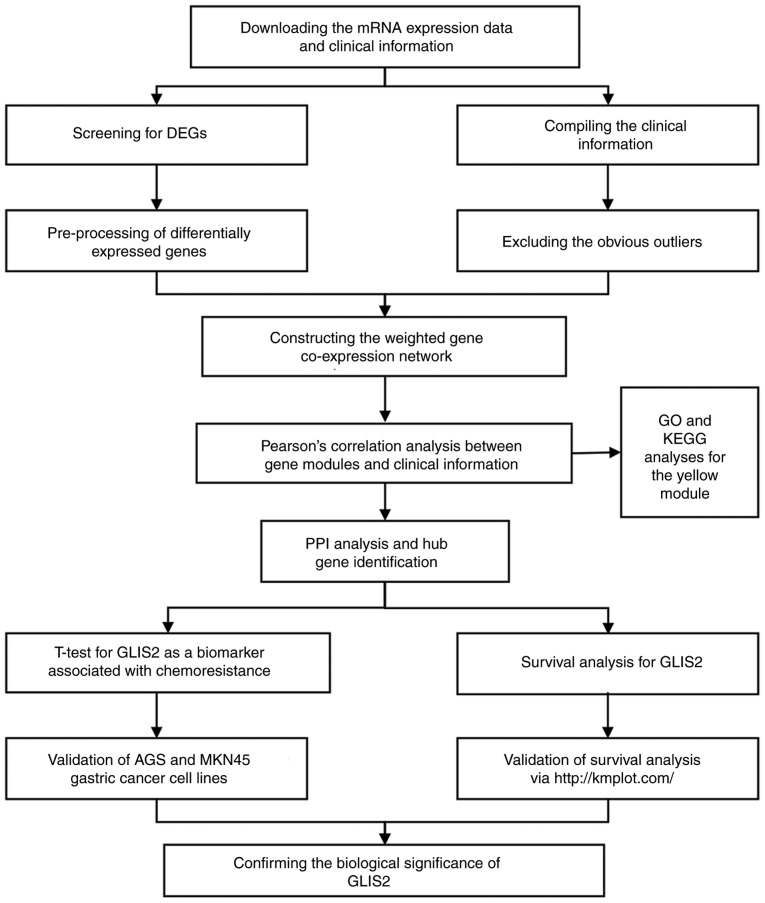
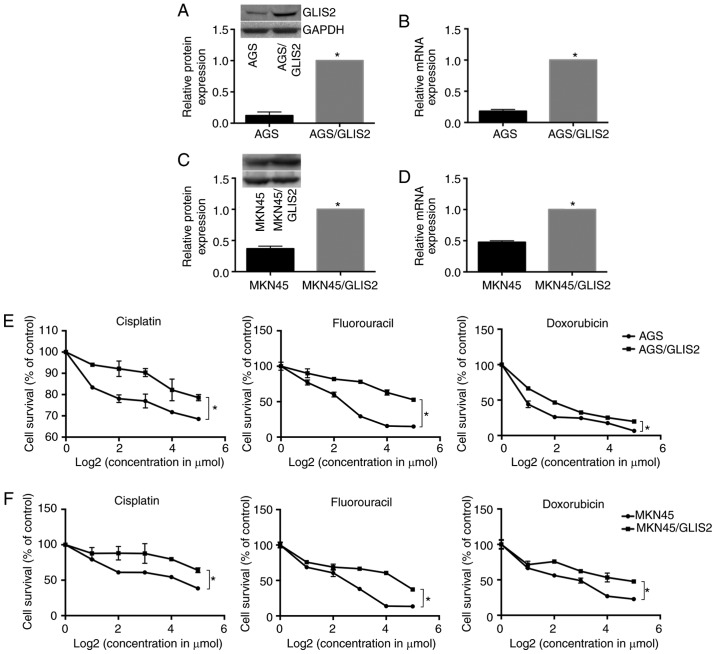
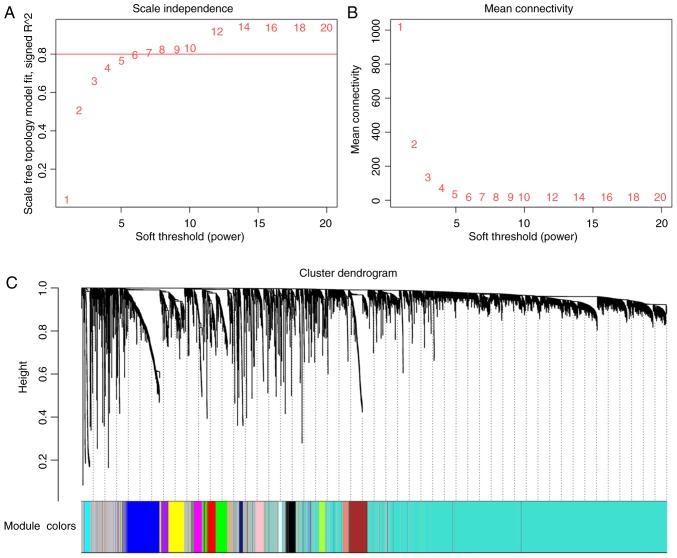
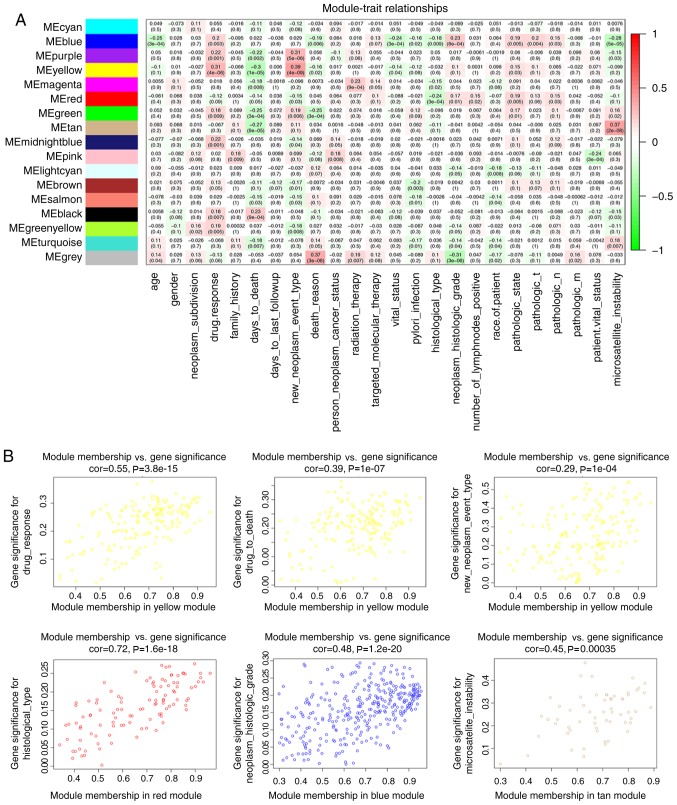
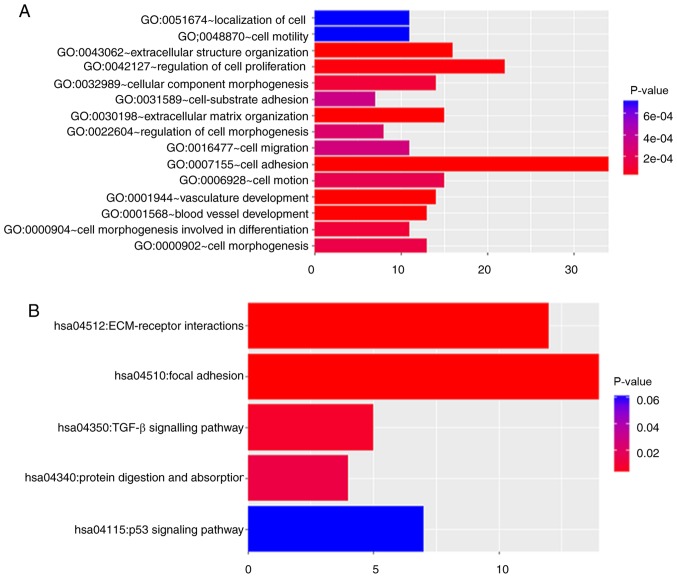
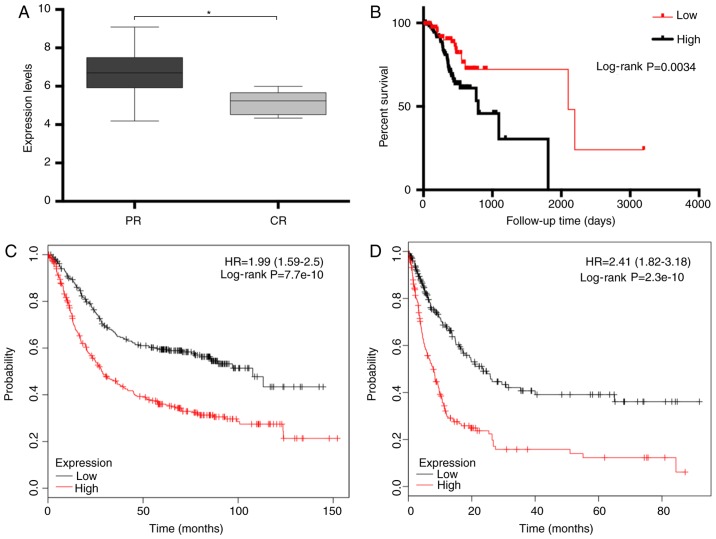
Gastric cancer is currently the fourth most common cancer and the third leading cause of cancer‑associated mortality worldwide. Studies have identified that certain biomarkers contribute to the prognosis, diagnosis and treatment of gastric cancer. However, the biomarkers of gastric cancer are rarely used clinically. Therefore, it is imperative to define novel molecular networks and key genes to guide the further study and clinical treatment of gastric cancer. In the present study, raw RNA sequencing data and clinicopathological information on patients with gastric cancer were downloaded from The Cancer Genome Atlas, and a weighted gene co‑expression network analysis was conducted. Additionally, functional enrichment and protein‑protein interaction analyses were implemented to further examine the significant modules. As a result, 16 modules of highly correlated genes were acquired and colour coded, and the yellow module containing 174 genes associated with chemotherapy resistance and prognosis in gastric cancer was further analysed. The biological processes of the yellow module were primarily associated with cell adhesion, vasculature development and the regulation of cell proliferation. In addition, the Kyoto Encyclopedia of Genes and Genomes pathways primarily involved the transforming growth factor‑β signalling pathway, the cellular tumour antigen p53 signalling pathway, extracellular matrix‑receptor interactions and focal adhesions. Notably, survival analysis and cell verification confirmed that high expression of GLIS family zinc finger 2 is significantly associated with chemoresistance and a worse prognosis in gastric cancer, and that this high expression is likely to be an important biomarker for the guidance of clinical treatment and prognostic evaluation.
胃癌是目前全球第四大常见癌症和第三大癌症相关死亡原因。研究已经确定某些生物标志物有助于胃癌的预后、诊断和治疗。然而,胃癌的生物标志物很少在临床上使用。因此,确定新的分子网络和关键基因来指导胃癌的进一步研究和临床治疗迫在眉睫。本研究从癌症基因组图谱下载了胃癌患者的原始 RNA 测序数据和临床病理信息,并进行了加权基因共表达网络分析。此外,还进行了功能富集和蛋白质-蛋白质相互作用分析,以进一步研究显著模块。结果获得了 16 个高度相关基因的模块,并进行了颜色编码,进一步分析了与胃癌化疗耐药和预后相关的包含 174 个基因的黄色模块。黄色模块的生物学过程主要与细胞黏附、血管发育和细胞增殖的调节有关。此外,京都基因与基因组百科全书通路主要涉及转化生长因子-β信号通路、肿瘤细胞抗原 p53 信号通路、细胞外基质-受体相互作用和焦点黏附。值得注意的是,生存分析和细胞验证证实,GLIS 家族锌指蛋白 2 的高表达与胃癌的化疗耐药和预后不良显著相关,这种高表达可能是指导临床治疗和预后评估的重要生物标志物。