Division of Clinical Oncology, Department of Internal Medicine, Medical University of Graz, 8036 Graz, Austria.
Drug Development Unit, Royal Marsden NHS Foundation Trust, Sutton, Surrey SM2 5PT, UK.
Int J Mol Sci. 2018 Oct 12;19(10):3130. doi: 10.3390/ijms19103130.
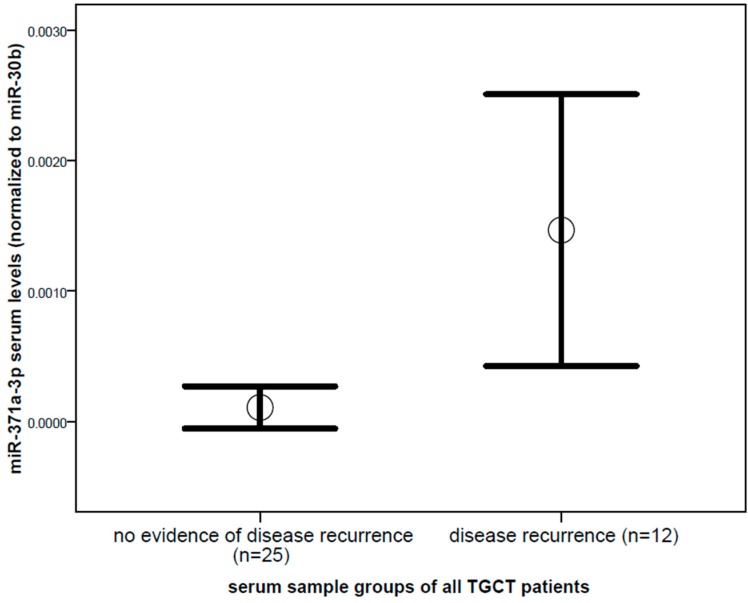
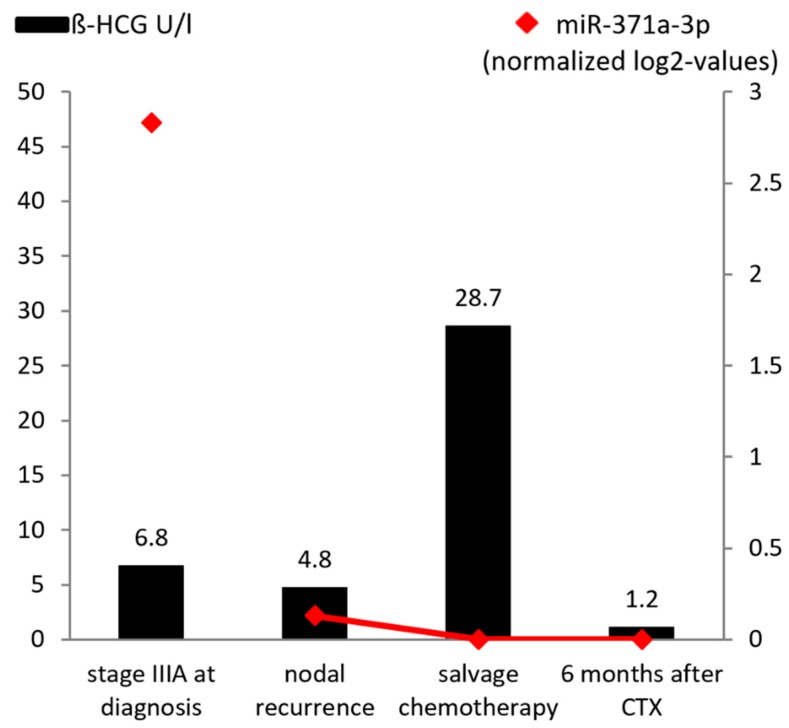
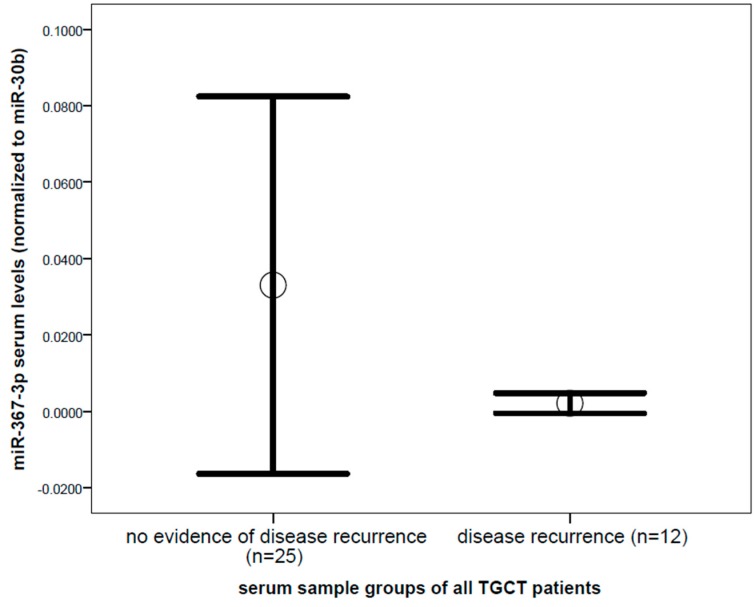
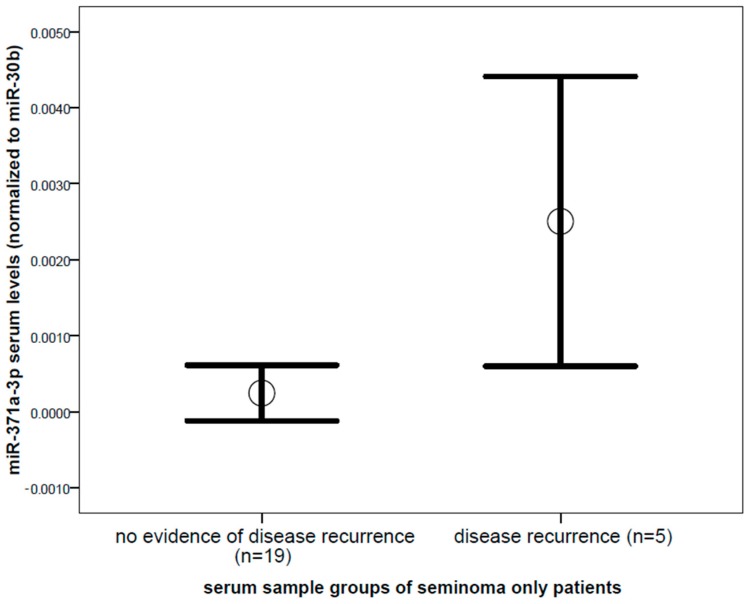
Metastatic testicular germ cell tumors (TGCTs) are a potentially curable disease by administration of risk-adapted cytotoxic chemotherapy. Nevertheless, a disease-relapse after curative chemotherapy needs more intensive salvage chemotherapy and significantly worsens the prognosis of TGCT patients. Circulating tumor markers (β-subunit of human chorionic gonadotropin (β-HCG), alpha-Fetoprotein (AFP), and Lactate Dehydrogenase (LDH)) are frequently used for monitoring disease recurrence in TGCT patients, though they lack diagnostic sensitivity and specificity. Increasing evidence suggests that serum levels of stem cell-associated microRNAs (miR-371a-3p and miR-302/367 cluster) are outperforming the traditional tumor markers in terms of sensitivity to detect newly diagnosed TGCT patients. The aim of this study was to investigate whether these miRNAs are also informative in detection of disease recurrence in TGCT patients after curative first line therapy. For this purpose, we measured the serum levels of miR-371a-3p and miR-367 in 52 samples of ten TGCT patients at different time points during disease relapse and during salvage chemotherapy. In our study, miR-371a-3p levels in serum samples with proven disease recurrence were 13.65 fold higher than levels from the same patients without evidence of disease ( = 0.014). In contrast, miR-367 levels were not different in these patient groups ( = 0.985). In conclusion, miR-371a-3p is a sensitive and potentially novel biomarker for detecting disease relapse in TGCT patients. This promising biomarker should be investigated in further large prospective trials.
转移性睾丸生殖细胞肿瘤 (TGCT) 通过适应性细胞毒性化疗可以得到治愈。然而,在治愈性化疗后疾病复发需要更强化的挽救化疗,这显著恶化了 TGCT 患者的预后。循环肿瘤标志物(人绒毛膜促性腺激素β亚单位(β-HCG)、甲胎蛋白(AFP)和乳酸脱氢酶(LDH))常被用于监测 TGCT 患者的疾病复发,但它们缺乏诊断的敏感性和特异性。越来越多的证据表明,干细胞相关的 microRNAs(miR-371a-3p 和 miR-302/367 簇)的血清水平在检测新诊断的 TGCT 患者方面优于传统肿瘤标志物。本研究旨在探讨这些 microRNAs 是否也能提供有关 TGCT 患者在一线治愈性治疗后疾病复发的信息。为此,我们在 10 名 TGCT 患者的 52 个样本中,在疾病复发和挽救化疗期间的不同时间点测量了 miR-371a-3p 和 miR-367 的血清水平。在我们的研究中,证实有疾病复发的血清样本中 miR-371a-3p 的水平比无疾病证据的同一患者的水平高 13.65 倍(=0.014)。相比之下,这些患者组中的 miR-367 水平没有差异(=0.985)。总之,miR-371a-3p 是检测 TGCT 患者疾病复发的一种敏感且有潜力的新型生物标志物。这一有前途的生物标志物应该在进一步的大型前瞻性试验中进行研究。