Xu Honghai, Wei Yuanyuan, Ma Hongqiu, Liu Yanyan, Zhang Yalong, Hu Lifen, Li Jiabin
Department of Infectious Diseases, The First Affiliated Hospital of Anhui Medical University, Hefei, China.
Department of Pathology, The First Affiliated Hospital of Anhui Medical University, Hefei, China.
Front Microbiol. 2018 Oct 1;9:2315. doi: 10.3389/fmicb.2018.02315. eCollection 2018.
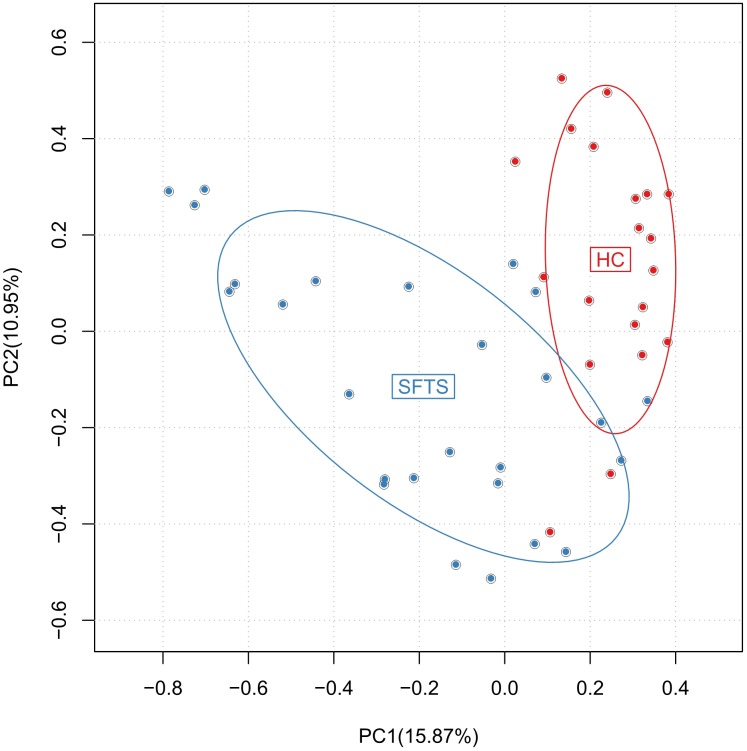
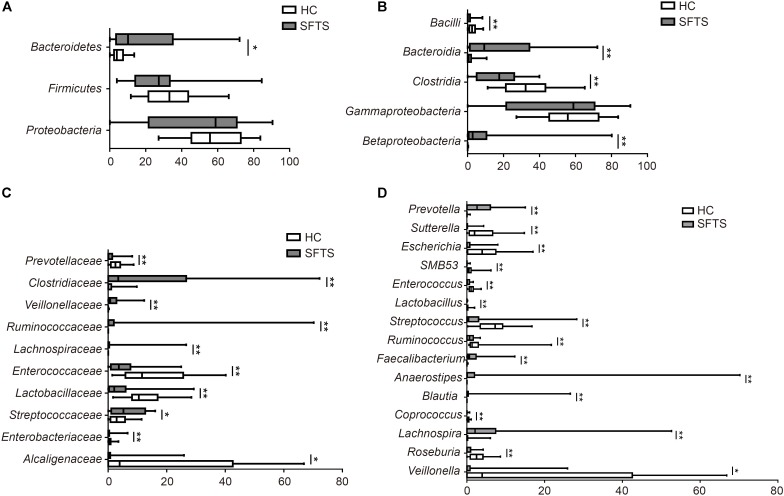
Severe fever with thrombocytopenia syndrome (SFTS) is an emerging tick-borne infectious disease caused by SFTS virus, and the number of SFTS cases increased year by year in China. Previous studies had indicated that gut microbiome closely associated with human health and diseases, including infection diseases, liver diseases, gastrointestinal diseases and metabolic diseases. The aim of this study is to investigate the alterations and involvements of gut microbial in SFTS patients. We compared the gut microbiome of 26 SFTS patients between 20 health controls using the Illumina MiSeq sequencing platform. Reduced gut microbiota diversity and dramatic shifts of fecal microbial composition in SFTS patients were observed compared with health controls. In the intestinal microbial of SFTS patients, the and which could produce short-chain fatty acids were clearly dropped compared with health people, meanwhile, which have anti-inflammation properties were reduced too. On the contrary, some common opportunistic pathogens like and and endotoxin-producing bacteria which could rise the risk of infections were increased in SFTS patients than healthy people, in addition lactate-producing bacteria also significantly increased in SFTS patients. In addition, research findings on the correlation between gut microbiota and biochemical data found that the changes of gut microbiota of SFTS patients were closely associated with clinical symptoms, key serum enzymes, infection and mortality. These alterations of gut microbiome in SFTS patients suggest the potential contributions of gut microbial to the pathogenesis of SFTS.
严重发热伴血小板减少综合征(SFTS)是一种由SFTS病毒引起的新发蜱传传染病,在中国,SFTS病例数逐年增加。先前的研究表明,肠道微生物群与人类健康和疾病密切相关,包括感染性疾病、肝脏疾病、胃肠道疾病和代谢性疾病。本研究的目的是调查SFTS患者肠道微生物的变化及其作用。我们使用Illumina MiSeq测序平台比较了26例SFTS患者与20名健康对照者的肠道微生物群。与健康对照者相比,观察到SFTS患者的肠道微生物群多样性降低,粪便微生物组成发生显著变化。在SFTS患者的肠道微生物中,与健康人相比,可产生短链脂肪酸的[具体微生物名称1]和[具体微生物名称2]明显减少,同时具有抗炎特性的[具体微生物名称3]也减少。相反,一些常见的机会性病原体如[具体微生物名称4]和[具体微生物名称5]以及可增加感染风险的产内毒素细菌[具体微生物名称6]在SFTS患者中比健康人增加,此外,产乳酸细菌[具体微生物名称7]在SFTS患者中也显著增加。此外,关于肠道微生物群与生化数据之间相关性的研究发现,SFTS患者肠道微生物群的变化与临床症状、关键血清酶、感染和死亡率密切相关。SFTS患者肠道微生物群的这些变化表明肠道微生物群对SFTS发病机制具有潜在作用。