de Roever Isabel, Bale Gemma, Mitra Subhabrata, Meek Judith, Robertson Nicola J, Tachtsidis Ilias
Department of Medical Physics and Biomedical Engineering, University College London, London, United Kingdom.
Department of Neonatology, Institute for Women's Health, University College London, London, United Kingdom.
Front Hum Neurosci. 2018 Oct 2;12:371. doi: 10.3389/fnhum.2018.00371. eCollection 2018.
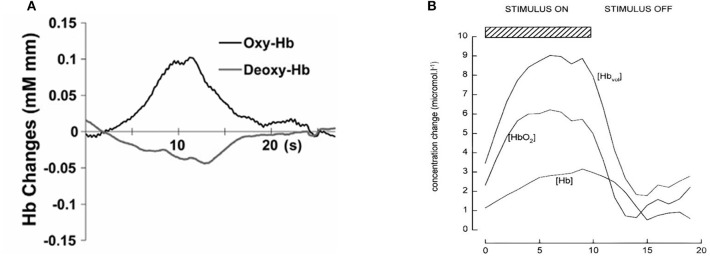
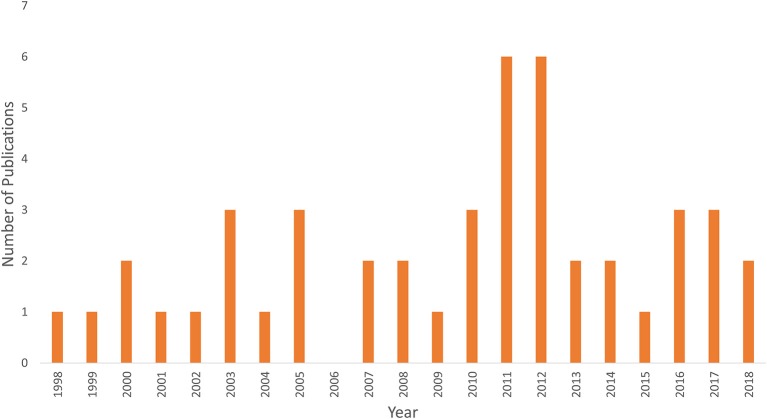
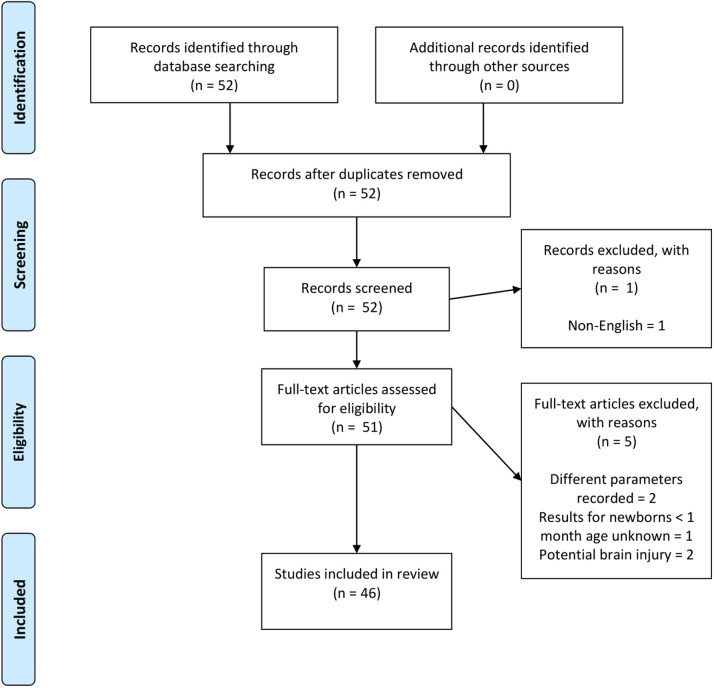
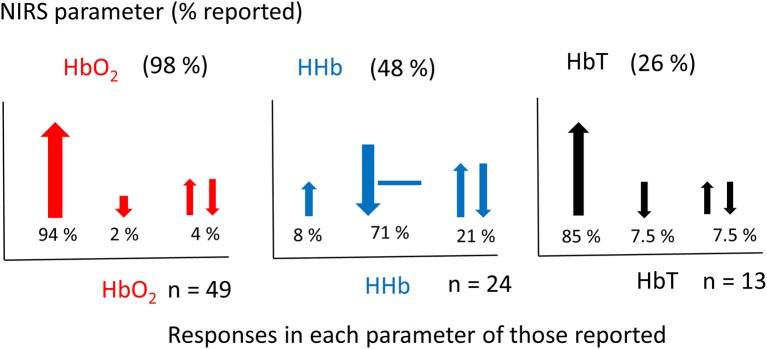
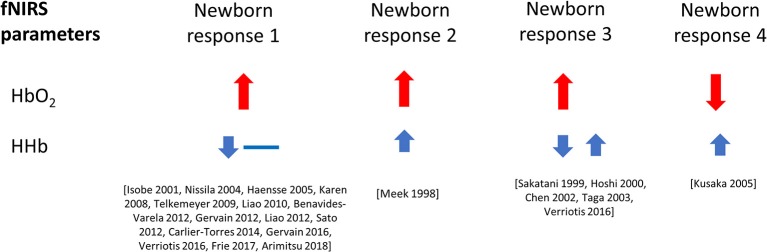
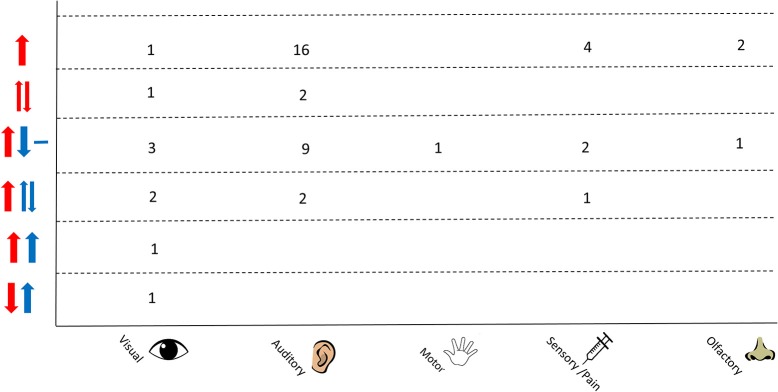
It has been 20 years since functional near-infrared spectroscopy (fNIRS) was first used to investigate the evoked hemodynamic response to a stimulus in newborns. The hemodynamic response to functional activation is well-established in adults, with an observed increase in concentration change of oxygenated hemoglobin (Δ[HbO]) and decrease in deoxygenated hemoglobin (Δ[HHb]). However, functional studies in newborns have revealed a mixed response, particularly with Δ[HHb] where an inconsistent change in direction is observed. The reason for this heterogeneity is unknown, with potential explanations arising from differing physiology in the developing brain, or differences in instrumentation or methodology. The aim of this review is to collate the findings from studies that have employed fNIRS to monitor cerebral hemodynamics in term newborn infants aged 1 day-1 month. A total of 46 eligible studies were identified; some studies investigated more than one stimulus type, resulting in a total of 51 reported results. The NIRS parameters reported varied across studies with 50/51 cases reporting Δ[HbO], 39/51 reporting Δ[HHb], and 13/51 reporting total hemoglobin concentration Δ[HbT] (Δ[HbO] + Δ[HHb]). However, of the 39 cases reporting Δ[HHb] in graphs or tables, only 24 studies explicitly discussed the response (i.e., direction of change) of this variable. In the studies where the fNIRS responses were discussed, 46/51 cases observed an increase in Δ[HbO], 7/51 observed an increase or varied Δ[HHb], and 2/51 reported a varied or negative Δ[HbT]. An increase in Δ[HbO] and decrease or no change in Δ[HHb] was observed in 15 studies. By reviewing this body of literature, we have identified that the majority of research articles reported an increase in Δ[HbO] across various functional tasks and did not report the response of Δ[HHb]. Confirming the normal, healthy hemodynamic response in newborns will allow identification of unhealthy patterns and their association to normal neurodevelopment.
自功能近红外光谱技术(fNIRS)首次用于研究新生儿对刺激的诱发血流动力学反应以来,已经过去了20年。在成年人中,对功能激活的血流动力学反应已得到充分证实,观察到氧合血红蛋白浓度变化(Δ[HbO])增加,脱氧血红蛋白(Δ[HHb])减少。然而,新生儿的功能研究显示出混合反应,特别是在Δ[HHb]方面,观察到方向变化不一致。这种异质性的原因尚不清楚,可能的解释包括发育中大脑的生理差异、仪器或方法的差异。本综述的目的是整理使用fNIRS监测足月儿(年龄1天至1个月)脑血流动力学的研究结果。共确定了46项符合条件的研究;一些研究调查了不止一种刺激类型,因此共有51个报告结果。各研究报告的近红外光谱参数各不相同,51个案例中有50个报告了Δ[HbO],39个报告了Δ[HHb],13个报告了总血红蛋白浓度Δ[HbT](Δ[HbO]+Δ[HHb])。然而,在39个以图表形式报告Δ[HHb]的案例中,只有24项研究明确讨论了该变量的反应(即变化方向)。在讨论fNIRS反应的研究中,51个案例中有46个观察到Δ[HbO]增加,7个观察到Δ[HHb]增加或变化,2个报告Δ[HbT]变化或为负。15项研究中观察到Δ[HbO]增加,Δ[HHb]减少或无变化。通过回顾这一系列文献,我们发现大多数研究文章报告了在各种功能任务中Δ[HbO]增加,并未报告Δ[HHb]的反应。确认新生儿正常、健康的血流动力学反应将有助于识别不健康模式及其与正常神经发育的关联。