Hamilton Mark J, McLean John, Cumming Sarah, Ballantyne Bob, McGhie Josephine, Jampana Ravi, Longman Cheryl, Evans Jonathan J, Monckton Darren G, Farrugia Maria Elena
West of Scotland Clinical Genetics Service, Queen Elizabeth University Hospital, Glasgow, United Kingdom.
Institute of Molecular, Cell and Systems Biology, College of Medical, Veterinary and Life Sciences, University of Glasgow, Glasgow, United Kingdom.
Front Neurol. 2018 Oct 2;9:780. doi: 10.3389/fneur.2018.00780. eCollection 2018.
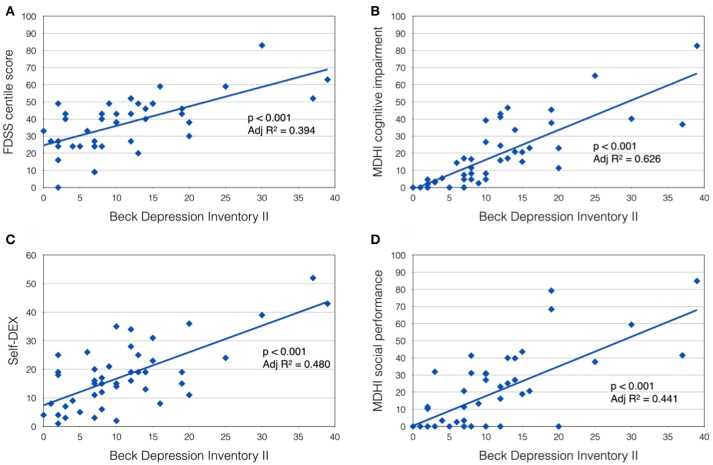
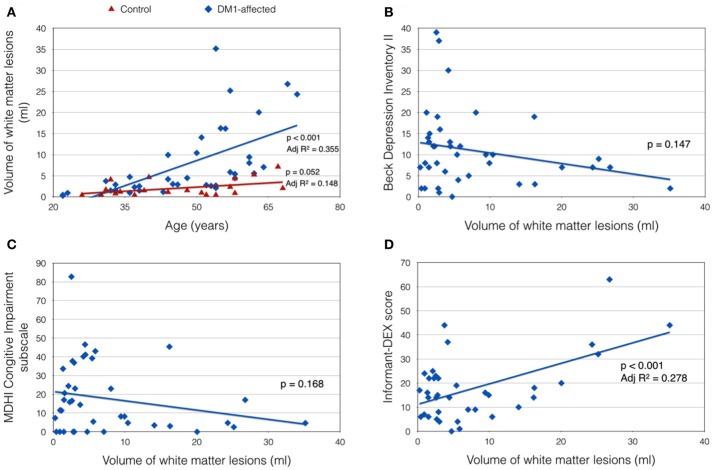
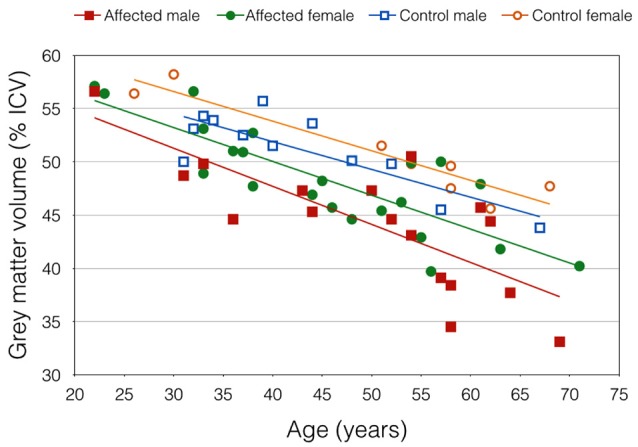
Central nervous system involvement in myotonic dystrophy type 1 (DM1) is associated with cognitive deficits, impaired social performance and excessive somnolence, which greatly impact quality of life. With the advent of clinical trials in DM1, there is a pressing need to identify outcome measures for quantification of central symptoms that are feasible and valid. In this context, we sought to evaluate neuropsychological and self-reported measures currently recommended by expert consensus, with particular reference to their specificity for central nervous system involvement in a moderate-sized DM1 cohort. Forty-five adults with DM1 and 20 controls completed neuropsychology assessments and symptom questionnaires. Those without contraindication also underwent MRI brain, from which global gray matter volume and white matter lesion volume were quantified. CTG repeat was measured by small pool PCR, and was screened for the presence of variant repeat sequences. The neuropsychology test battery was well tolerated and detected impairment across various domains in the DM1 group vs. controls. Large effect sizes in the Stroop and Trail Making Tests were however attenuated by correction for basic speed, which could be influenced by dysarthria and upper limb weakness, respectively. Low mood was strongly associated with increased self-reporting of central symptoms, including cognitive impairment. Conversely, self-reported cognitive impairment did not generally predict poorer performance in neuropsychology assessments, and there was a trend toward greater self-reporting of low mood and cognitive problems in those with milder white matter change on MRI. Global gray matter volume correlated with performance in several neuropsychology assessments in a multivariate model with age and sex, while white matter lesion volume was associated with executive dysfunction reported by a proxy. Screening for variant repeats was positive in three individuals, who reported mild muscle symptoms. Identification of outcome measures with good specificity for brain involvement in DM1 is challenging, since complex cognitive assessments may be compromised by peripheral muscle weakness and self-reported questionnaires may be influenced by mood and insight. This highlights the need for further large, longitudinal studies to identify and validate objective measures, which may include imaging biomarkers and cognitive measures not influenced by motor speed.
1型强直性肌营养不良(DM1)的中枢神经系统受累与认知缺陷、社交能力受损和过度嗜睡有关,这些对生活质量有很大影响。随着DM1临床试验的出现,迫切需要确定可行且有效的中枢症状量化结局指标。在此背景下,我们试图评估目前专家共识推荐的神经心理学和自我报告指标,特别关注它们在一个中等规模的DM1队列中对中枢神经系统受累的特异性。45名成年DM1患者和20名对照完成了神经心理学评估和症状问卷。无禁忌证者还接受了脑部MRI检查,从中量化全脑灰质体积和白质病变体积。通过小池PCR测量CTG重复序列,并筛查变异重复序列的存在。神经心理学测试组合耐受性良好,与对照组相比,DM1组在各个领域均检测到功能受损。然而,在进行基本速度校正后,Stroop测试和连线测试中的大效应量减弱,这可能分别受到构音障碍和上肢无力的影响。情绪低落与中枢症状(包括认知障碍)的自我报告增加密切相关。相反,自我报告的认知障碍通常并不能预测神经心理学评估中的较差表现,并且在MRI上白质变化较轻的患者中,情绪低落和认知问题的自我报告有增加的趋势。在一个包含年龄和性别的多变量模型中,全脑灰质体积与多项神经心理学评估的表现相关,而白质病变体积与代理人报告的执行功能障碍相关。三名报告有轻度肌肉症状的个体变异重复序列筛查呈阳性。确定对DM1脑受累具有良好特异性的结局指标具有挑战性,因为复杂的认知评估可能会受到外周肌肉无力的影响,而自我报告问卷可能会受到情绪和洞察力的影响。这凸显了进一步开展大型纵向研究以确定和验证客观指标的必要性,这些指标可能包括影像生物标志物和不受运动速度影响的认知指标。