Zinoni F, Birkmann A, Leinfelder W, Böck A
Proc Natl Acad Sci U S A. 1987 May;84(10):3156-60. doi: 10.1073/pnas.84.10.3156.
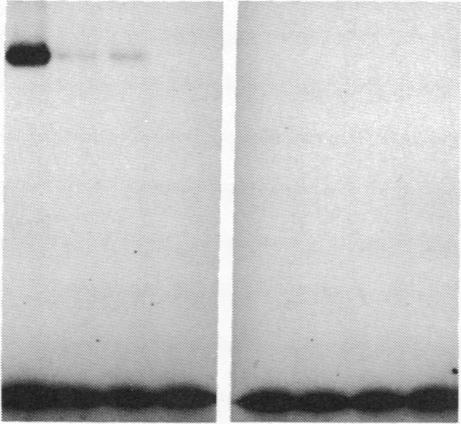
The structural gene (fdhF) for the 80-kDa selenopolypeptide of formate dehydrogenase (formate:benzyl viologen oxidoreductase, EC 1.2.--.--) from Escherichia coli contains an in-frame UGA codon at amino acid position 140 that is translated. Translation of gene fusions between N-terminal parts of fdhF with lacZ depends on the availability of selenium in the medium when the hybrid gene contains the UGA codon; it is independent of the presence of selenium when an fdhF portion upstream of the UGA position is fused to lacZ. Transcription does not require the presence of selenium in either case. By localized mutagenesis, the UGA codon was converted into serine (UCA) and cysteine (UGC and UGU) codons. Each mutation relieved the selenium dependency of fdhF mRNA translation. Selenium incorporation was completely abolished in the case of the UCA insertion and was reduced to about 10% when the UGA was replaced by a cysteine codon. Insertion of UCA yielded an inactive fdhF gene product, while insertion of UGC and UGU resulted in polypeptides with lowered activities as components in the system formerly known as formate hydrogenlyase. Altogether the results indicate that the UGA codon at position 140 directs the cotranslational insertion of selenocysteine into the fdhF polypeptide chain.
来自大肠杆菌的甲酸脱氢酶(甲酸:苄基紫精氧化还原酶,EC 1.2.--.--)80 kDa硒代多肽的结构基因(fdhF)在氨基酸位置140处含有一个可读框内的UGA密码子,该密码子可被翻译。当杂交基因包含UGA密码子时,fdhF N端部分与lacZ的基因融合体的翻译取决于培养基中硒的可用性;当UGA位置上游的fdhF部分与lacZ融合时,翻译则与硒的存在无关。在这两种情况下,转录都不需要硒的存在。通过定位诱变,UGA密码子被转换为丝氨酸(UCA)和半胱氨酸(UGC和UGU)密码子。每个突变都消除了fdhF mRNA翻译对硒的依赖性。在插入UCA的情况下,硒的掺入完全被消除,当UGA被半胱氨酸密码子取代时,硒的掺入减少到约10%。插入UCA产生了无活性的fdhF基因产物,而插入UGC和UGU则产生了活性降低的多肽,作为以前称为甲酸氢化酶系统的组成部分。总的来说,这些结果表明,位置140处的UGA密码子指导硒代半胱氨酸共翻译插入到fdhF多肽链中。