Munukka Eveliina, Ahtiainen Juha P, Puigbó Pere, Jalkanen Sirpa, Pahkala Katja, Keskitalo Anniina, Kujala Urho M, Pietilä Sami, Hollmén Maija, Elo Laura, Huovinen Pentti, D'Auria Giuseppe, Pekkala Satu
Institute of Biomedicine, University of Turku, Turku, Finland.
Department of Clinical Microbiology and Immunology, Turku University Hospital, Turku, Finland.
Front Microbiol. 2018 Oct 3;9:2323. doi: 10.3389/fmicb.2018.02323. eCollection 2018.
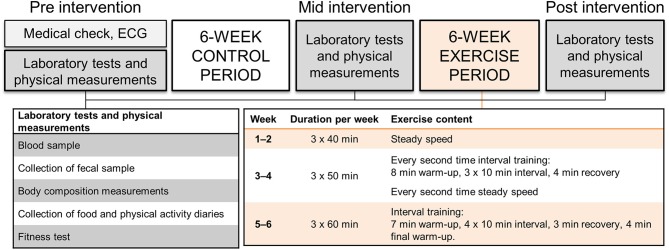
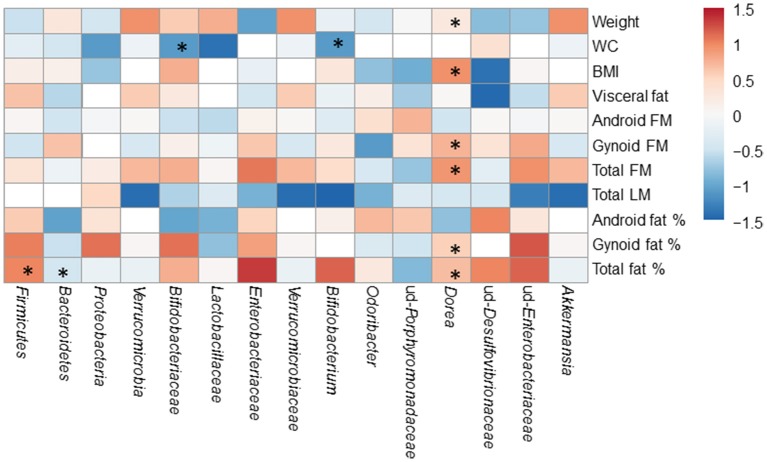
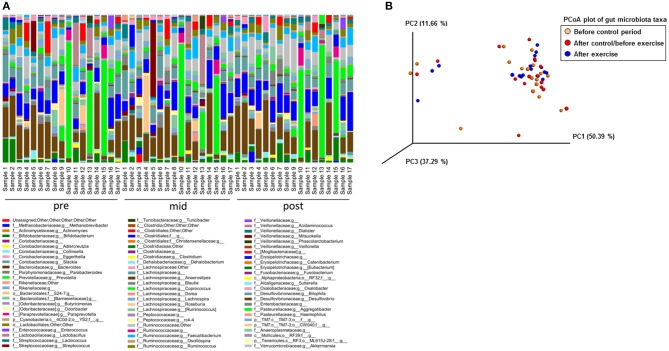
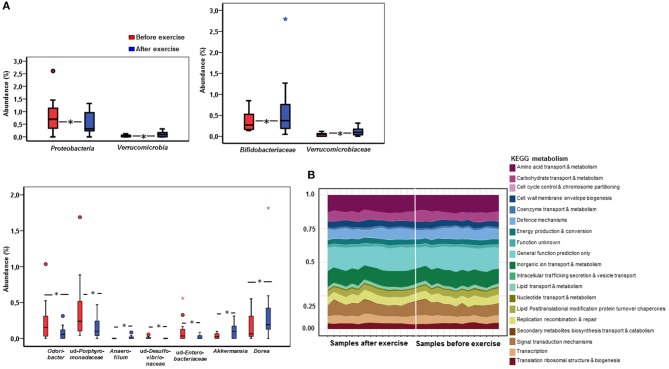
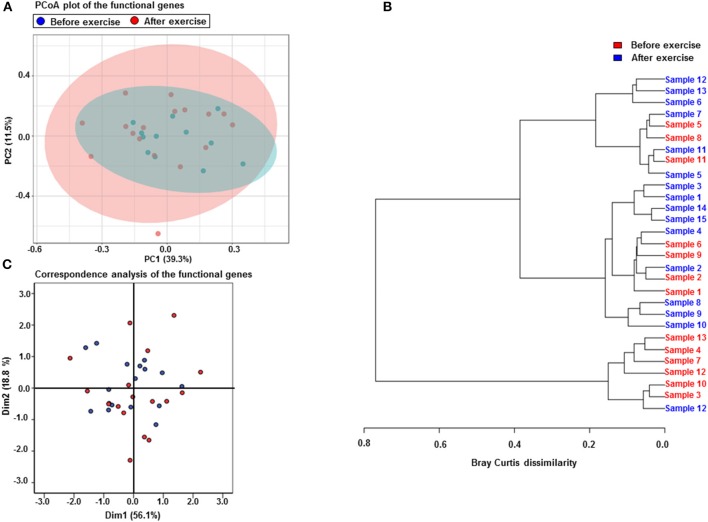
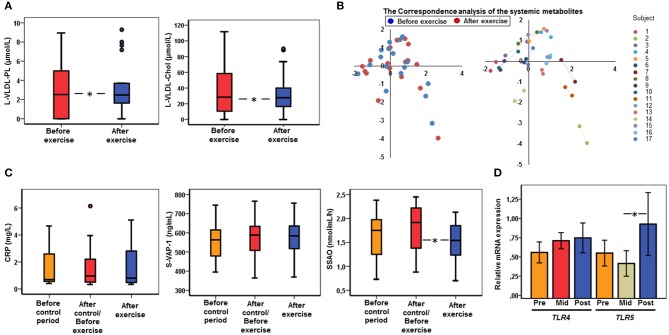
Recent studies suggest that exercise alters the gut microbiome. We determined whether six-weeks endurance exercise, without changing diet, affected the gut metagenome and systemic metabolites of overweight women. Previously sedentary overweight women ( = 19) underwent a six-weeks endurance exercise intervention, but two were excluded due to antibiotic therapy. The gut microbiota composition and functions were analyzed by 16S rRNA gene amplicon sequencing and metagenomics. Body composition was analyzed with DXA X-ray densitometer and serum metabolomics with NMR metabolomics. Total energy and energy-yielding nutrient intakes were analyzed from food records using Micro-Nutrica software. Serum clinical variables were determined with KONELAB instrument. Soluble Vascular Adhesion Protein 1 (VAP-1) was measured with ELISA and its' enzymatic activity as produced hydrogen peroxide. The exercise intervention was effective, as maximal power and maximum rate of oxygen consumption increased while android fat mass decreased. No changes in diet were observed. Metagenomic analysis revealed taxonomic shifts including an increase in and a decrease in . These changes were independent of age, weight, fat % as well as energy and fiber intake. Training slightly increased Jaccard distance of genus level β-diversity. Training did not alter the enriched metagenomic pathways, which, according to Bray Curtis dissimilarity analysis, may have been due to that only half of the subjects' microbiomes responded considerably to exercise. Nevertheless, tranining decreased the abundance of several genes including those related to fructose and amino acid metabolism. These metagenomic changes, however, were not translated into major systemic metabolic changes as only two metabolites, phospholipids and cholesterol in large VLDL particles, decreased after exercise. Training also decreased the amine oxidase activity of pro-inflammatory VAP-1, whereas no changes in CRP were detected. All clinical blood variables were within normal range, yet exercise slightly increased glucose and decreased LDL and HDL. In conclusion, exercise training modified the gut microbiome without greatly affecting systemic metabolites or body composition. Based on our data and existing literature, we propose that especially and are exercise-responsive taxa. Our results warrant the need for further studies in larger cohorts to determine whether exercise types other than endurance exercise also modify the gut metagenome.
近期研究表明,运动可改变肠道微生物群。我们确定了在不改变饮食的情况下,为期六周的耐力运动是否会影响超重女性的肠道宏基因组和全身代谢产物。之前久坐不动的超重女性(n = 19)接受了为期六周的耐力运动干预,但有两名女性因抗生素治疗被排除。通过16S rRNA基因扩增子测序和宏基因组学分析肠道微生物群的组成和功能。使用双能X线吸收仪(DXA)分析身体成分,使用核磁共振代谢组学分析血清代谢组学。使用Micro-Nutrica软件从食物记录中分析总能量和产能营养素摄入量。使用KONELAB仪器测定血清临床变量。使用酶联免疫吸附测定法(ELISA)测量可溶性血管粘附蛋白1(VAP-1)及其产生过氧化氢的酶活性。运动干预是有效的,因为最大功率和最大耗氧率增加,而腹部脂肪量减少。未观察到饮食变化。宏基因组分析揭示了分类学上的变化,包括[具体菌属1]增加和[具体菌属2]减少。这些变化与年龄、体重、脂肪百分比以及能量和纤维摄入量无关。训练略微增加了属水平β多样性的杰卡德距离。根据布雷-柯蒂斯差异分析,训练并未改变富集的宏基因组途径,这可能是因为只有一半受试者的微生物群对运动有显著反应。然而,训练降低了包括与果糖和氨基酸代谢相关基因在内的几个基因的丰度。然而,这些宏基因组变化并未转化为主要的全身代谢变化,因为运动后只有两种代谢产物,即大极低密度脂蛋白颗粒中的磷脂和胆固醇减少。训练还降低了促炎性VAP-1的胺氧化酶活性,而未检测到C反应蛋白(CRP)的变化。所有临床血液变量均在正常范围内,但运动略微增加了血糖,降低了低密度脂蛋白(LDL)和高密度脂蛋白(HDL)。总之,运动训练改变了肠道微生物群,但对全身代谢产物或身体成分影响不大。根据我们的数据和现有文献,我们提出特别是[具体菌属1]和[具体菌属2]是对运动有反应的分类群。我们的结果表明需要在更大的队列中进行进一步研究,以确定除耐力运动外的其他运动类型是否也会改变肠道宏基因组。