Division of Informatics, Imaging and Data Sciences, The University of Manchester, Manchester, United Kingdom.
CRUK and EPSRC Cancer Imaging Centre in Cambridge and Manchester, United Kingdom.
Magn Reson Med. 2019 Apr;81(4):2288-2301. doi: 10.1002/mrm.27551. Epub 2018 Oct 19.
To determine the feasibility of extracting sufficiently precise estimates of cell radius, R, and intracellular volume fraction, f , from DW-MRI data in order to distinguish between specific microstructural changes tissue may undergo, specifically focusing on cell death in tumors.
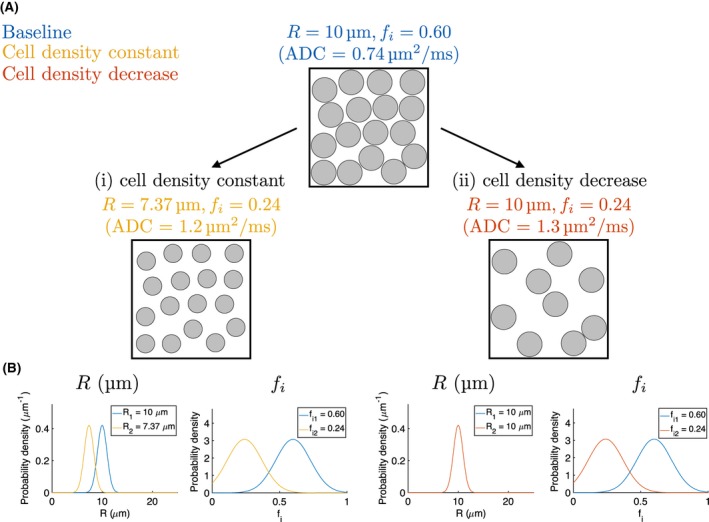
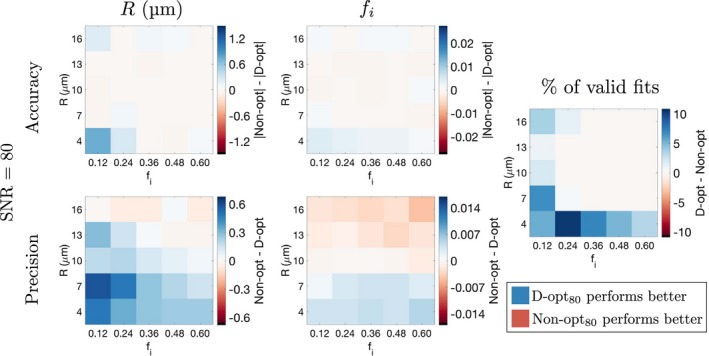
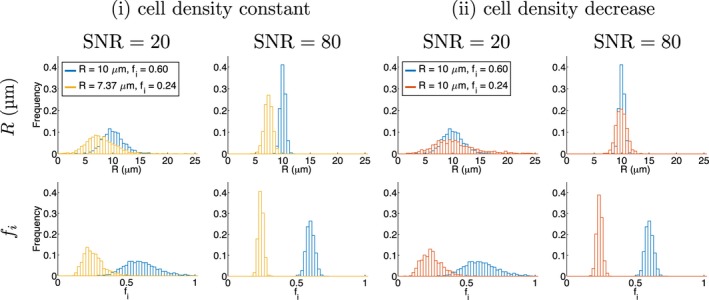
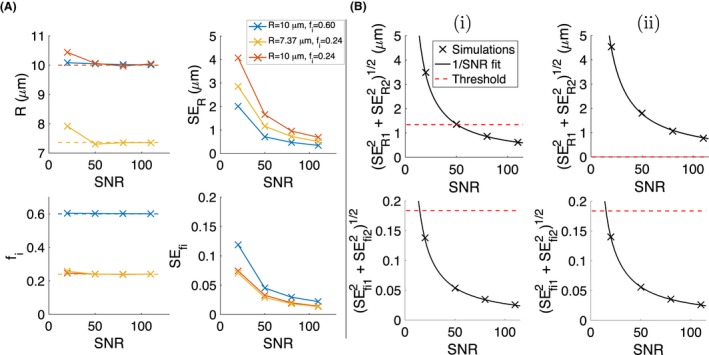
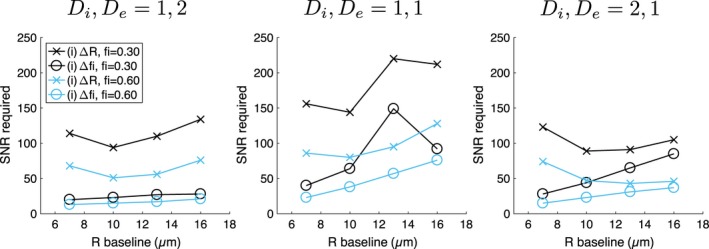
Simulations with optimized and non-optimized clinical acquisitions were performed for a range of microstructures, using a two-compartment model. The ability to distinguish between (i) cell shrinkage with cell density constant, mimicking apoptosis, and (ii) cell size constant with cell density decreasing, mimicking loss of cells, was evaluated based on the precision of simulated parameter estimates. Relationships between parameter precision, SNR, and the magnitude of specific parameter changes, were used to infer SNR requirements for detecting changes.
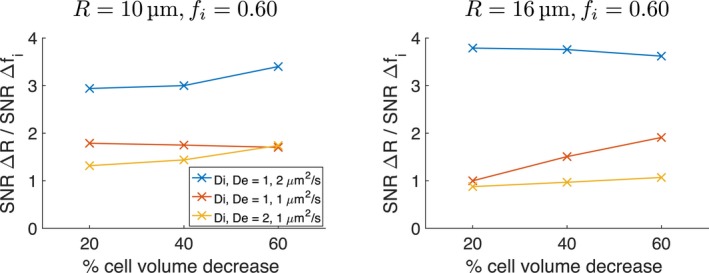
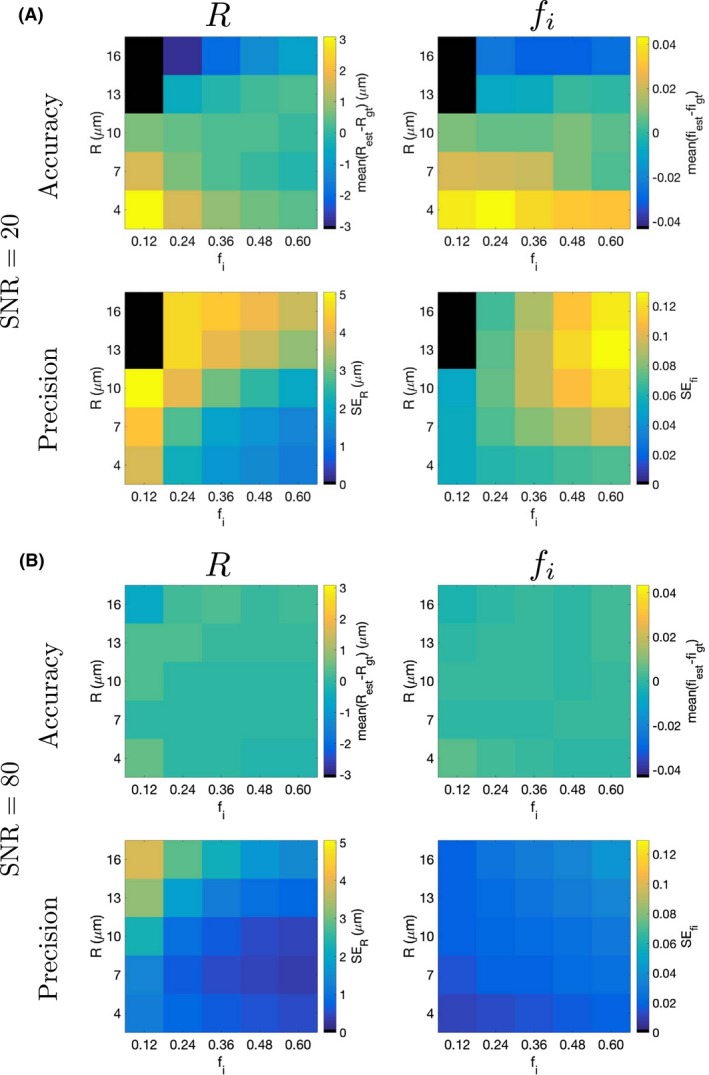
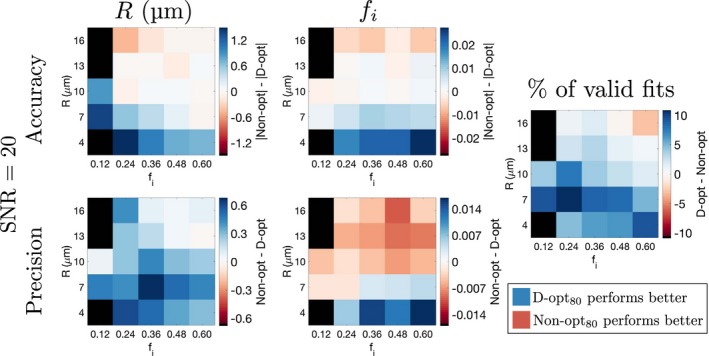
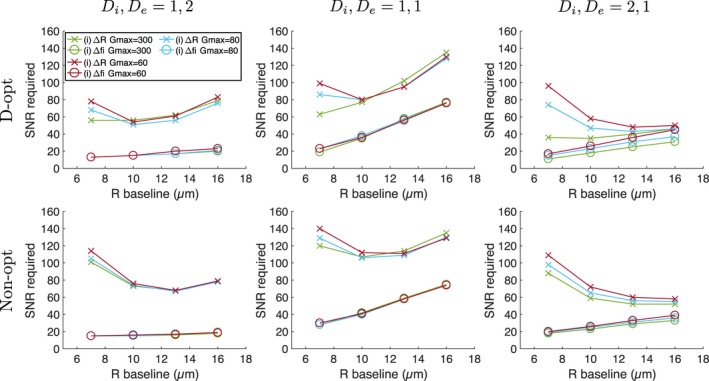
Accuracy and precision depended on microstructural properties, SNR, and the acquisition protocol. The main benefit of optimized acquisitions tended to be improved accuracy and precision of R, particularly for small cells. In most cases considered, higher SNR was required for detecting changes in R than for changes in f .
Given the relative changes in R and f due to apoptosis, simulations indicate that, for a range of microstructures, detecting changes in R require higher SNR than detecting changes in f , and that such SNR is typically not achieved in clinical data. This suggests that if apoptotic cell size decreases are to be detected in clinical settings, improved SNR is required. Comparing measurement precision with the magnitude of expected biological changes should form part of the validation process for potential biomarkers.
确定从 DW-MRI 数据中提取足够精确的细胞半径(R)和细胞内体积分数(f)估计值的可行性,以便区分组织可能经历的特定微观结构变化,特别是聚焦于肿瘤中的细胞死亡。
针对一系列微观结构,使用两室模型对优化和非优化的临床采集进行了模拟。基于模拟参数估计的精度,评估了区分(i)细胞密度不变时的细胞收缩,模拟细胞凋亡,和(ii)细胞大小不变时的细胞密度降低,模拟细胞丢失的能力。参数精度、信噪比(SNR)与特定参数变化幅度之间的关系用于推断检测变化所需的 SNR 要求。
准确性和精密度取决于微观结构特性、SNR 和采集协议。优化采集的主要优势往往是提高 R 的准确性和精密度,特别是对于小细胞。在考虑的大多数情况下,检测 R 变化所需的 SNR 高于检测 f 变化。
鉴于细胞凋亡引起的 R 和 f 的相对变化,模拟表明,对于一系列微观结构,检测 R 的变化所需的 SNR 高于检测 f 的变化,而在临床数据中通常无法达到这种 SNR。这表明,如果要在临床环境中检测到凋亡细胞大小的减小,则需要提高 SNR。将测量精度与预期的生物学变化幅度进行比较,应成为潜在生物标志物验证过程的一部分。