Federal University of Maranhão UFMA, Applied Computing Group - NCA, Av. dos Portugueses, SN, Campus do Bacanga, Bacanga, São Luís, MA, 65085-580, Brazil.
Instituto Federal de Educação, Ciência e Tecnologia do Maranhão, São José de Ribamar, MA, Brazil.
Biomed Eng Online. 2018 Oct 23;17(1):160. doi: 10.1186/s12938-018-0592-3.
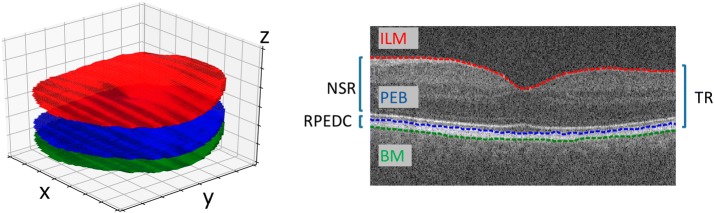
Age-related macular degeneration (AMD) is a degenerative ocular disease that develops by the formation of drusen in the macula region leading to blindness. This condition can be detected automatically by automated image processing techniques applied in spectral domain optical coherence tomography (SD-OCT) volumes. The most common approach is the individualized analysis of each slice (B-Scan) of the SD-OCT volumes. However, it ends up losing the correlation between pixels of neighboring slices. The retina representation by topographic maps reveals the similarity of these structures with geographic relief maps, which can be represented by geostatistical descriptors. In this paper, we present a methodology based on geostatistical functions for the automatic diagnosis of AMD in SD-OCT.
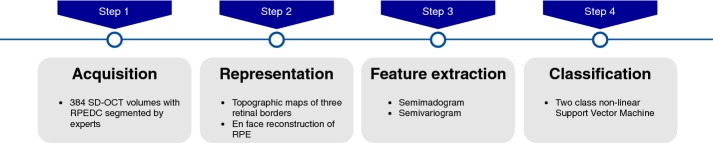
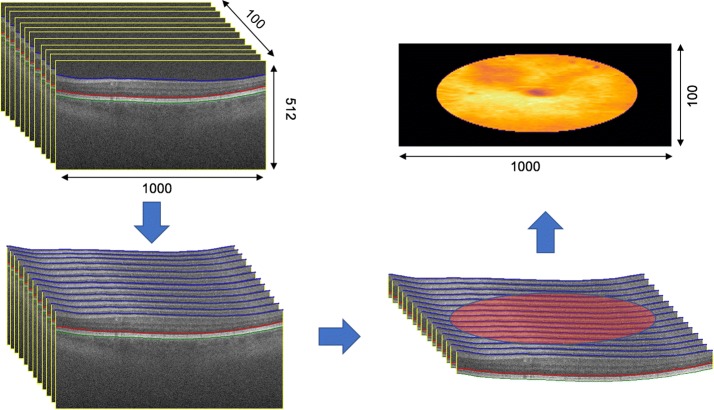
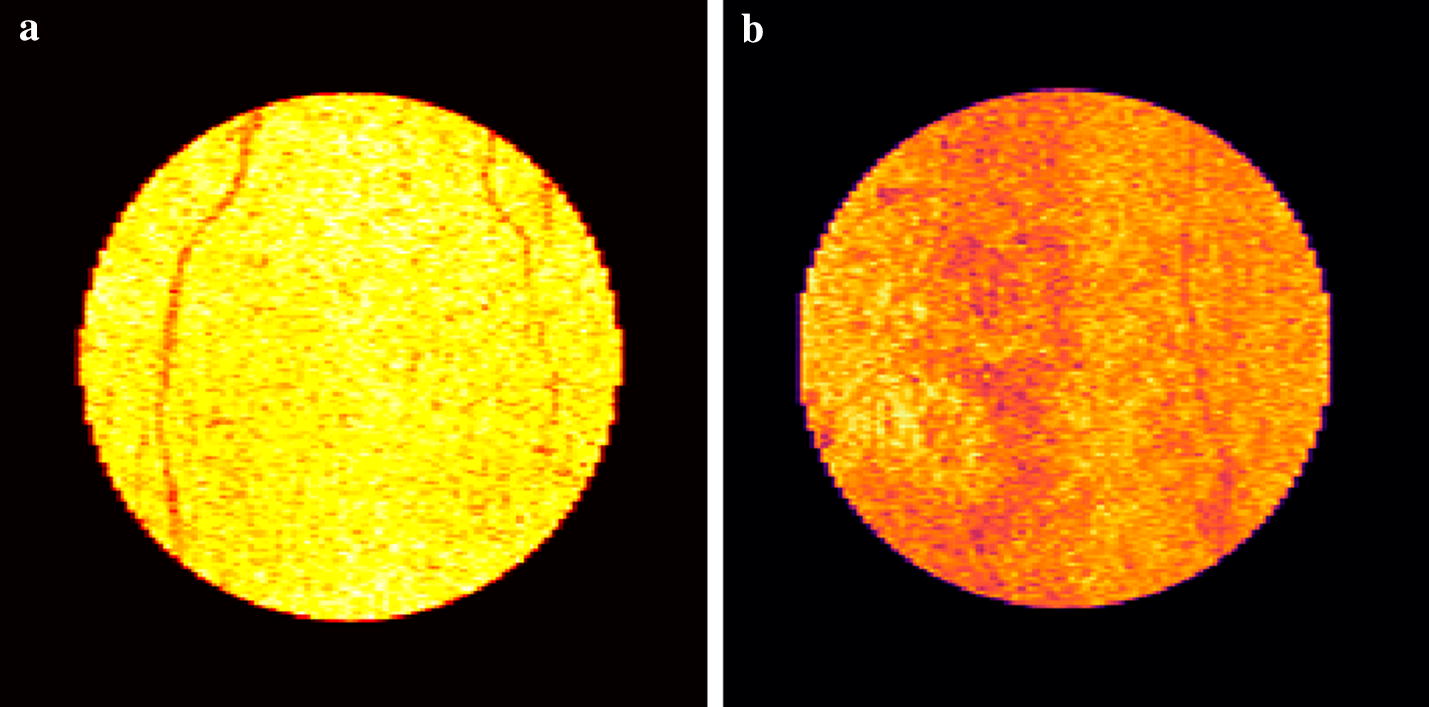
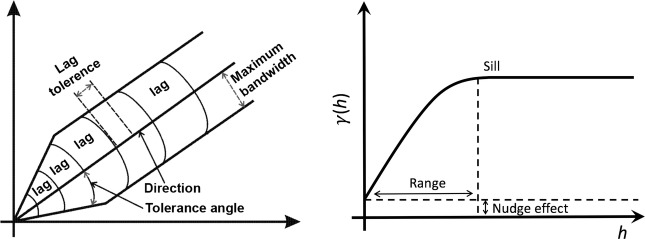
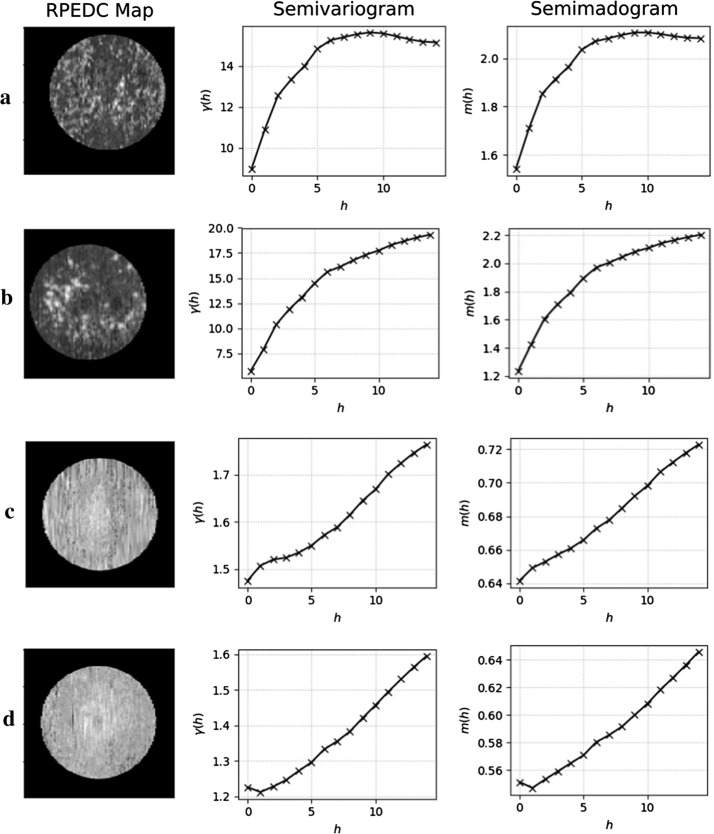
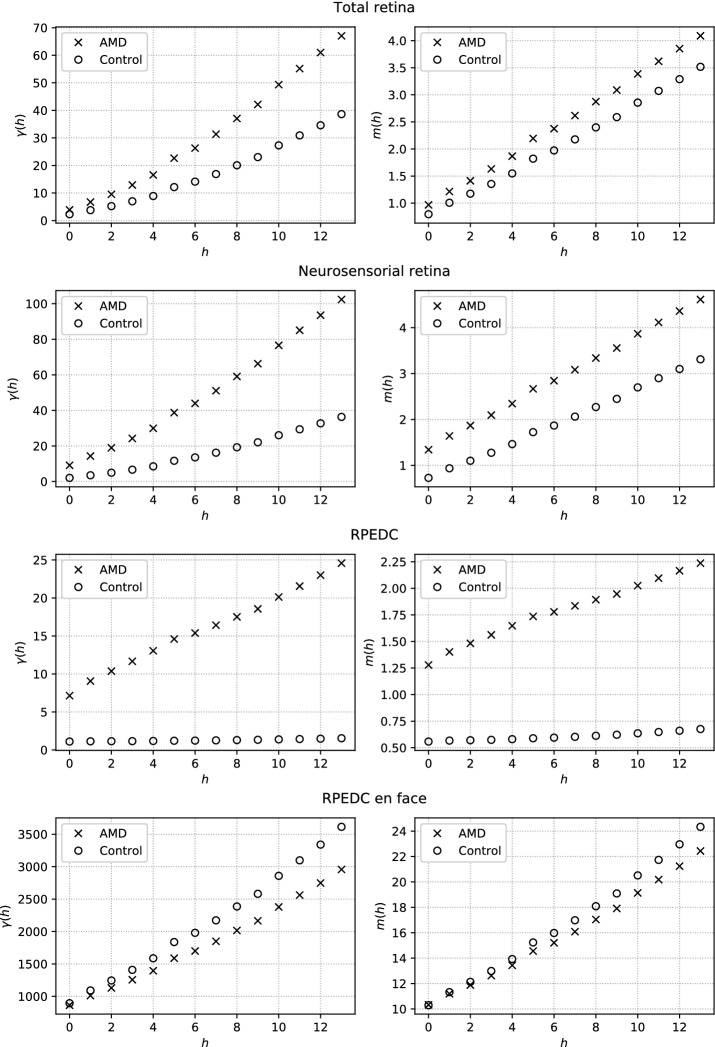
The proposed methodology is based on the construction of a topographic map of the macular region. Over the topographic map, we compute geostatistical features using semivariogram and semimadogram functions as texture descriptors. The extracted descriptors are then used as input for a Support Vector Machine classifier.
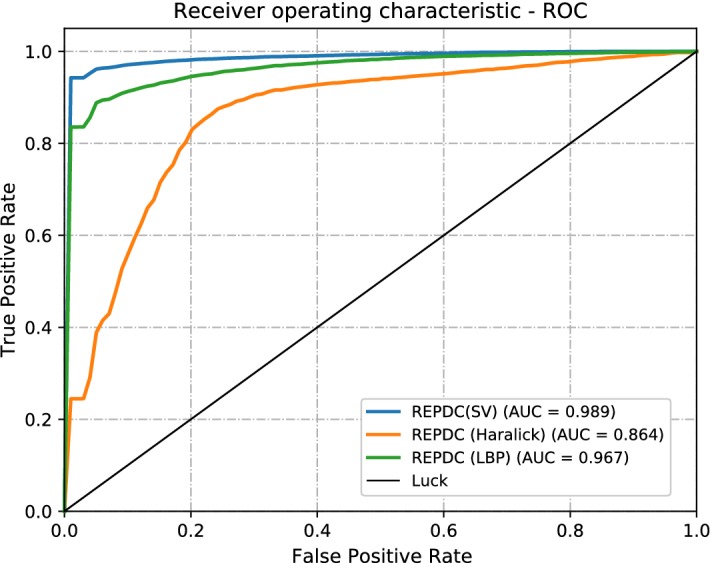
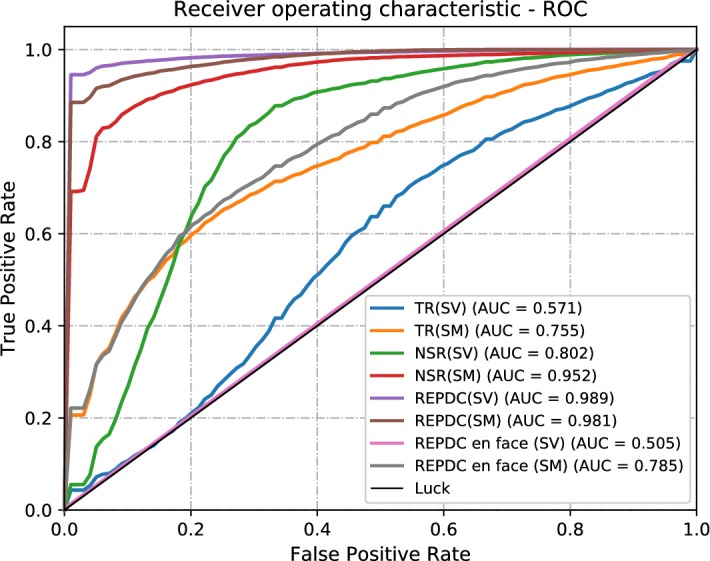
For training of the classifier and tests, a database composed of 384 OCT exams (269 volumes of eyes exhibiting AMD and 115 control volumes) with layers segmented and validated by specialists were used. The best classification model, validated with cross-validation k-fold, achieved an accuracy of 95.2% and an AUROC of 0.989.
The presented methodology exclusively uses geostatistical descriptors for the diagnosis of AMD in SD-OCT images of the macular region. The results are promising and the methodology is competitive considering previous results published in literature.
年龄相关性黄斑变性(AMD)是一种退行性眼部疾病,由黄斑区的玻璃膜疣形成导致失明。这种情况可以通过应用于光谱域光学相干断层扫描(SD-OCT)体积的自动图像处理技术自动检测。最常见的方法是对 SD-OCT 体积的每个切片(B 扫描)进行个性化分析。然而,它最终失去了相邻切片像素之间的相关性。通过地形映射表示的视网膜揭示了这些结构与地理等高线地图的相似性,这些结构可以通过地质统计学描述符来表示。在本文中,我们提出了一种基于地质统计学函数的 SD-OCT 中 AMD 自动诊断的方法。
所提出的方法基于黄斑区域的地形地图的构建。在地形地图上,我们使用半变异函数和半偏变函数计算地质统计学特征作为纹理描述符。然后,将提取的描述符用作支持向量机分类器的输入。
为了训练分类器和进行测试,使用了一个由 384 个 OCT 检查组成的数据库(269 个体积的眼睛表现出 AMD 和 115 个对照体积),这些体积的层由专家分割和验证。经过交叉验证 k 折验证的最佳分类模型的准确率为 95.2%,AUROC 为 0.989。
本文提出的方法仅使用地质统计学描述符来诊断 SD-OCT 图像中的 AMD。与文献中发表的先前结果相比,该方法具有很大的潜力和竞争力。