Radenkovs Vitalijs, Kviesis Jorens, Juhnevica-Radenkova Karina, Valdovska Anda, Püssa Tõnu, Klavins Maris, Drudze Inese
Processing and Biochemistry Department, Institute of Horticulture, Latvia University of Life Sciences and Technologies, Graudu Str. 1, LV-3701 Dobele, Latvia.
Department of Environmental Science, University of Latvia, Jelgavas Str. 1, LV-1004 Riga, Latvia.
Plants (Basel). 2018 Oct 24;7(4):90. doi: 10.3390/plants7040090.
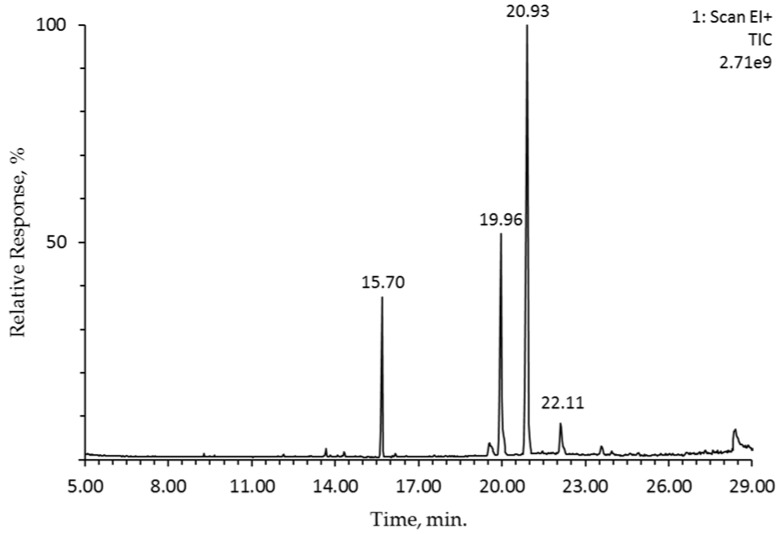
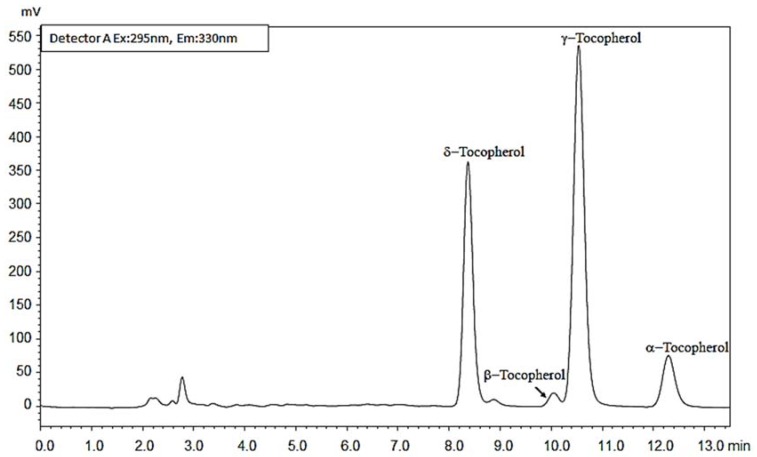
The amplified production of fruit as well as burgeoning demand for plant-made food products have resulted in a sharp increase of waste. Currently, millions of tons of by-products are either being discarded or utilized rather ineffectively. However, these by-products may be processed and further incorporated as functional ingredients in making high-value food products with many physiological and biochemical effects. The chemical analysis of pomace oils using gas chromatography-mass spectrometry (GC/MS) and reversed-phase-liquid chromatography coupled with fluorescence detector (RP-HPLC/FLD) systems led to the identification and quantification of 56 individual lipophilic compounds including unsaturated, polyunsaturated and saturated fatty acids, as well as phytosterols and four homologs of tocopherol. The oils recovered from by-products of spp. (particularly cv. "Ola") are rich in fatty acids such as linolenic (57.8%), α-linolenic (54.3%), and oleic (25.5%). The concentration of total tocopherols varied among the species and dessert apples investigated, representing the range of 16.8⁻30.9 mg mL. The highest content of total tocopherols was found in Bernu prieks, followed by . cv. "Ola", and . × pomace oils. A significantly higher amount of δ-tocopherol was established in the oil of . Bernu prieks, indicating that this species could be utilized as a natural and cheap source of bioactive molecules. β-Sitosterol was the prevalent compound determined in all tested pomace oils with a percentage distribution of 10.3⁻94.5%. The main triterpene identified in the oils was lupeol, which varied in the range of 0.1⁻66.3%. A targeted utilization of apple pomace would facilitate management of tons of by-products and benefit the environment and industry.
水果产量的增加以及对植物性食品需求的迅速增长导致了废弃物的急剧增加。目前,数百万吨的副产品要么被丢弃,要么利用效率极低。然而,这些副产品可以经过加工,并进一步作为功能性成分用于制造具有多种生理和生化作用的高价值食品。使用气相色谱 - 质谱联用仪(GC/MS)和反相液相色谱与荧光检测器联用系统(RP - HPLC/FLD)对果渣油进行化学分析,鉴定并定量了56种亲脂性化合物,包括不饱和脂肪酸、多不饱和脂肪酸和饱和脂肪酸,以及植物甾醇和生育酚的四种同系物。从 spp.(特别是“奥拉”品种)的副产品中回收的油富含脂肪酸,如亚麻酸(57.8%)、α - 亚麻酸(54.3%)和油酸(25.5%)。在所研究的 品种和甜点苹果中,总生育酚的浓度各不相同,范围为16.8⁻30.9 mg/mL。总生育酚含量最高的是 Bernu prieks,其次是 。“奥拉”品种和 × 的果渣油。在 Bernu prieks 的油中检测到显著更高含量的δ - 生育酚,表明该品种可作为生物活性分子的天然廉价来源。β - 谷甾醇是所有测试果渣油中普遍存在的化合物,百分比分布为10.3⁻94.5%。油中鉴定出的主要三萜是羽扇豆醇,其含量范围为0.1⁻66.3%。有针对性地利用苹果果渣将有助于管理数吨副产品,并对环境和产业有益。