Key Laboratory of Agricultural Animal Genetics, Breeding and Reproduction of Ministry of Education, Key Laboratory of Pig Genetics and Breeding of Ministry of Agriculture & College of Animal Science and Technology, Huazhong Agricultural University, Wuhan, 430070, China.
The Cooperative Innovation Center for Sustainable Pig Production, Wuhan, 430070, China.
Sci Rep. 2018 Oct 23;8(1):15621. doi: 10.1038/s41598-018-33891-0.
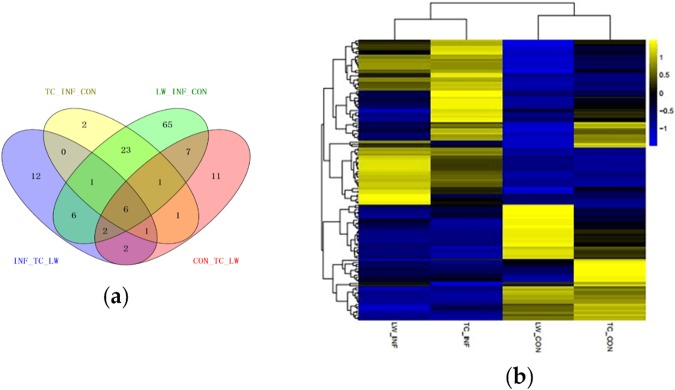
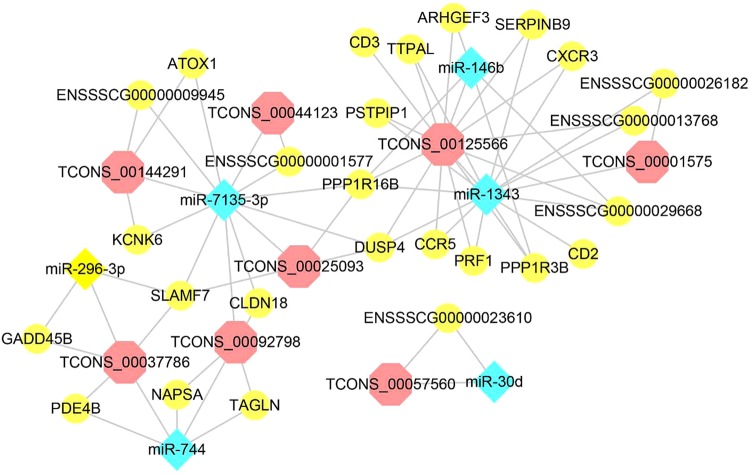
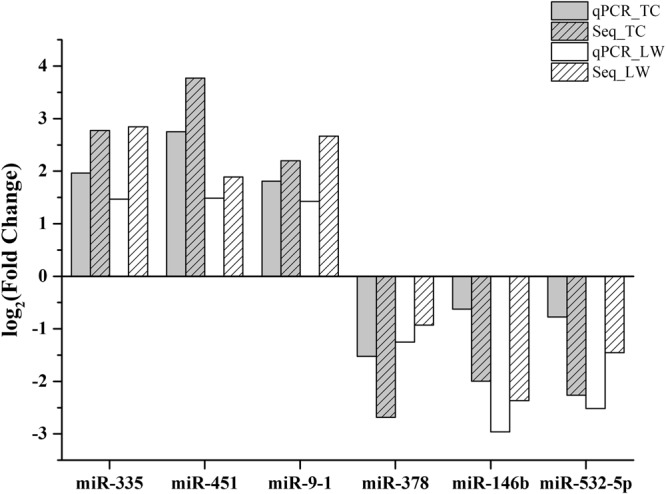
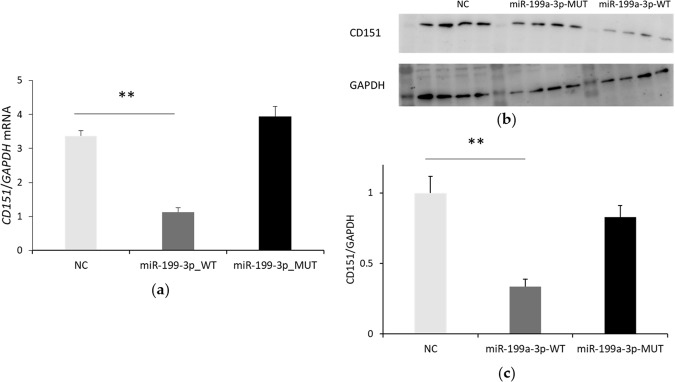
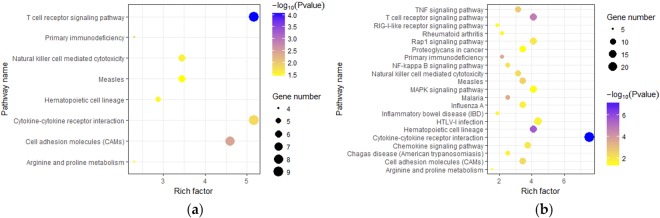
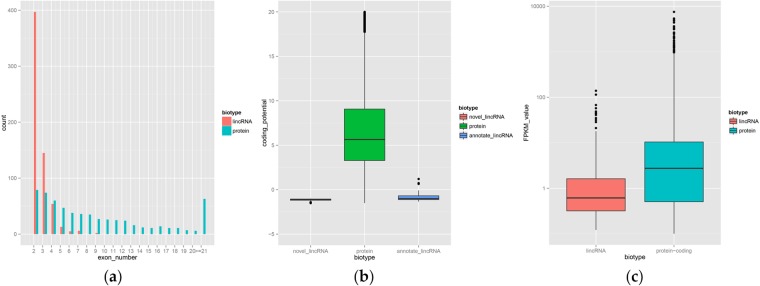
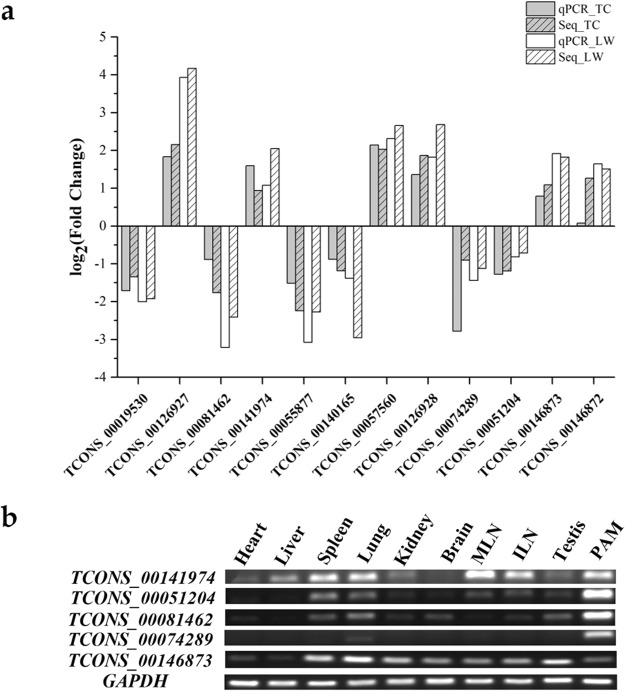
Porcine reproductive and respiratory syndrome (PRRS) is one of the most ruinous diseases in pig production. Our previous work showed that Tongcheng pigs (TC) were less susceptible to PRRS virus (PRRSV) than Large White (LW) pigs. To elucidate the difference in PRRSV resistance between the two breeds, small RNA-seq and ribo-zero RNA-seq were used to identify differentially expressed non-coding RNAs (including miRNAs and lincRNAs) responded to PRRSV in porcine alveolar macrophages (PAMs) from TC and LW pigs. Totally, 250 known mature miRNAs were detected. For LW pigs, there were 44 down-regulated and 67 up-regulated miRNAs in infection group; while for TC pigs, 12 down-regulated and 23 up-regulated miRNAs in TC infection group were identified. The target genes of the common differentially expressed miRNAs (DEmiRNAs) in these two breeds were enriched in immune-related processes, including apoptosis process, inflammatory response, T cell receptor signaling pathway and so on. In addition, 5 shared DEmiRNAs (miR-181, miR-1343, miR-296-3p, miR-199a-3p and miR-34c) were predicted to target PRRSV receptors, of which miR-199a-3p was validated to inhibit the expression of CD151. Interestingly, miR-378 and miR-10a-5p, which could inhibit PRRSV replication, displayed higher expression level in TC control group than that in LW control group. Contrarily, miR-145-5p and miR-328, which were specifically down-regulated in LW pigs, could target inhibitory immunoreceptors and may involve in immunosuppression caused by PRRSV. This indicates that DEmiRNAs are involved in the regulation of the immunosuppression and immune escape of the two breeds. Furthermore, we identified 616 lincRNA transcripts, of which 48 and 30 lincRNAs were differentially expressed in LW and TC pigs, respectively. LincRNA TCONS_00125566 may play an important role in the entire regulatory network, and was predicted to regulate the expression of immune-related genes through binding with miR-1343 competitively. In conclusion, this study provides an important resource for further revealing the interaction between host and virus, which will specify a new direction for anti-PRRSV research.
猪繁殖与呼吸综合征(PRRS)是养猪业中最具破坏性的疾病之一。我们之前的工作表明,通城猪(TC)比大白猪(LW)对 PRRS 病毒(PRRSV)的易感性较低。为了阐明这两个品种对 PRRSV 抗性的差异,我们使用小 RNA-seq 和核糖核酸零 RNA-seq 来鉴定来自 TC 和 LW 猪肺泡巨噬细胞(PAMs)中对 PRRSV 反应的差异表达的非编码 RNA(包括 miRNA 和 lincRNA)。总共检测到 250 个已知的成熟 miRNA。对于 LW 猪,感染组中有 44 个下调和 67 个上调的 miRNA;而对于 TC 猪,在 TC 感染组中发现了 12 个下调和 23 个上调的 miRNA。这两个品种中常见差异表达 miRNA(DEmiRNA)的靶基因富集在免疫相关过程中,包括凋亡过程、炎症反应、T 细胞受体信号通路等。此外,5 个共享的 DEmiRNA(miR-181、miR-1343、miR-296-3p、miR-199a-3p 和 miR-34c)被预测为 PRRSV 受体的靶标,其中 miR-199a-3p 被验证可抑制 CD151 的表达。有趣的是,miR-378 和 miR-10a-5p 可以抑制 PRRSV 的复制,它们在 TC 对照组中的表达水平高于 LW 对照组。相反,miR-145-5p 和 miR-328 在 LW 猪中特异性下调,可能靶向抑制性免疫受体,并可能参与 PRRSV 引起的免疫抑制。这表明 DEmiRNA 参与了两个品种的免疫抑制和免疫逃逸的调节。此外,我们鉴定了 616 个 lincRNA 转录本,其中 48 个和 30 个 lincRNA 在 LW 和 TC 猪中分别差异表达。lincRNA TCONS_00125566 可能在整个调控网络中发挥重要作用,并通过与 miR-1343 竞争结合来调节免疫相关基因的表达。总之,本研究为进一步揭示宿主与病毒的相互作用提供了重要资源,为抗 PRRSV 研究指明了新的方向。