Institute of Agricultural Biology and Biotechnology, National Research Council (CNR), Lodi, Italy.
Institute of Biomedical Technologies, National Research Council, (CNR), Segrate, Milan, Italy.
PLoS One. 2018 Oct 24;13(10):e0205054. doi: 10.1371/journal.pone.0205054. eCollection 2018.
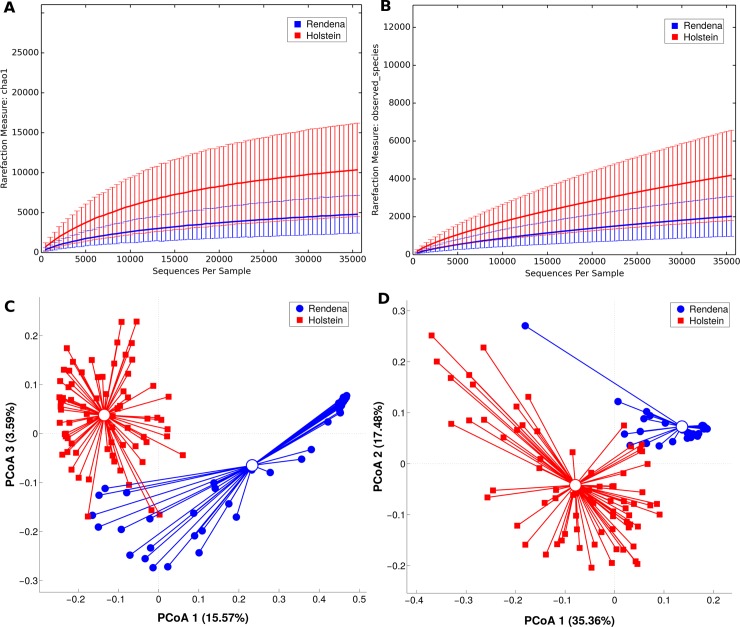
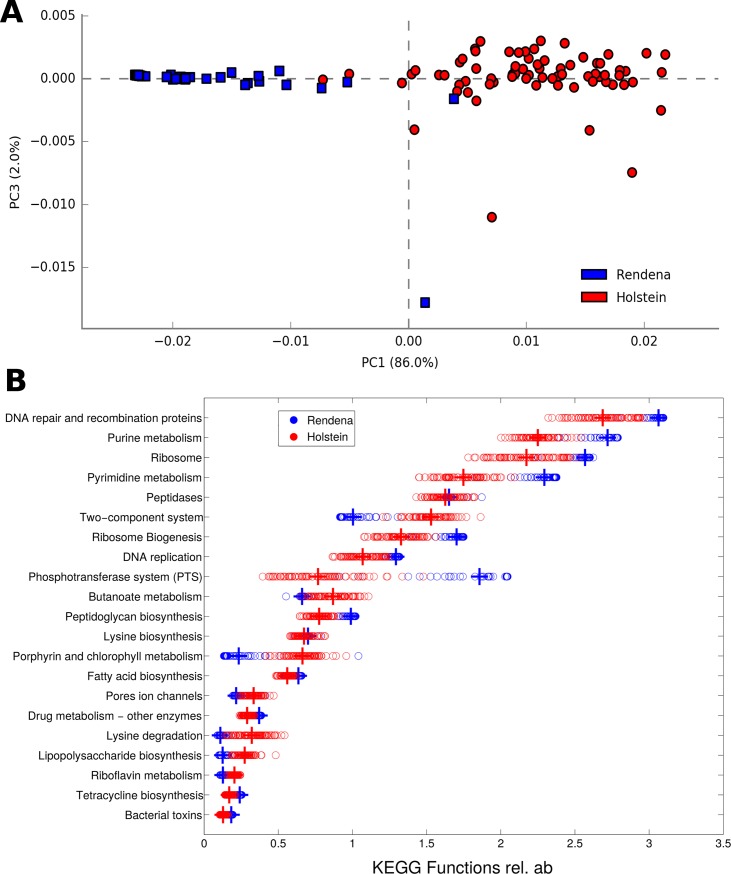
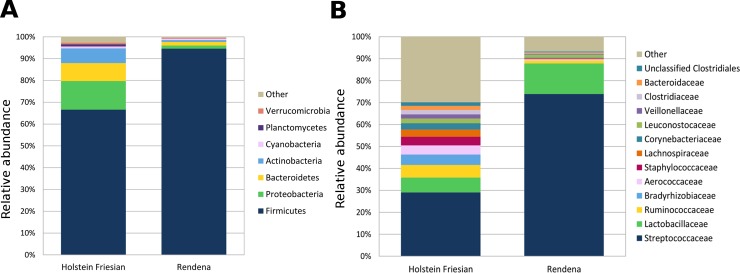
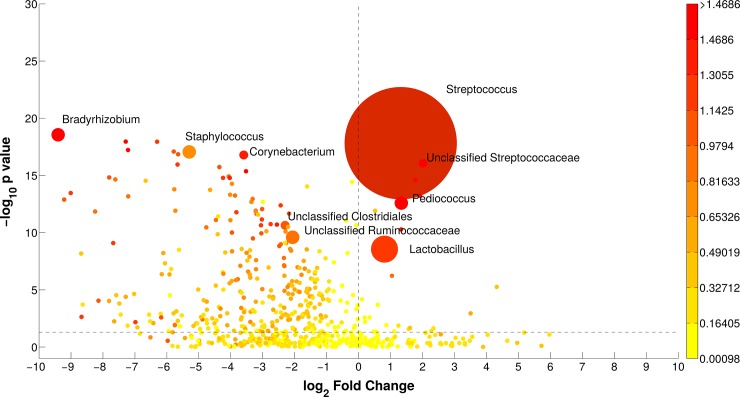
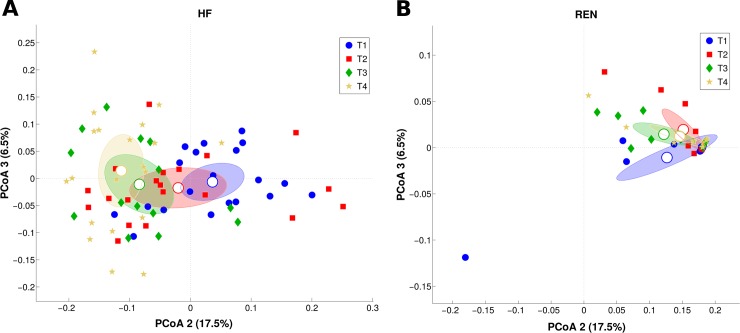
Dry and early lactation periods represent the most critical phases for udder health in cattle, especially in highly productive breeds, such as the Holstein Friesian (HF). On the other hand, some autochthonous cattle breeds, such as the Rendena (REN), have a lower prevalence of mastitis and other transition-related diseases. In this study, milk microbiota of 6 HF and 3 REN cows, all raised on the same farm under the same conditions, was compared. A special focus was placed on the transition period to define bacterial groups' prevalence with a plausible effect on mammary gland health. Four time points (dry-off, 1 d, 7-10 d and 30 d after calving) were considered. Through 16S rRNA sequencing, we characterized the microbiota composition for 117 out of the 144 milk samples initially collected, keeping only the healthy quarters, in order to focus on physiological microbiome changes and avoid shifts due to suspected diseases. Microbial populations were very different in the two breeds along all the time points, with REN milk showing a significantly lower microbial biodiversity. The taxonomic profiles of both cosmopolitan and local breeds were dominated by Firmicutes, mostly represented by the Streptococcus genus, although in very different proportions (HF 27.5%, REN 68.6%). Large differences in HF and REN cows were, also, evident from the metabolic predictive analysis from microbiome data. Finally, only HF milk displayed significant changes in the microbial composition along the transition period, while REN maintained a more stable microbiota. In conclusion, in addition to the influence on the final characteristics of dairy products obtained from milk of the two breeds, differences in the milk microbiome might, also, have an impact on their mammary gland health.
干奶期和泌乳早期是奶牛乳房健康最关键的阶段,尤其是在荷斯坦弗里生牛(HF)等高产品种中。另一方面,一些本土牛种,如伦巴第牛(REN),患乳腺炎和其他与过渡相关的疾病的比例较低。在这项研究中,比较了在同一农场、相同条件下饲养的 6 头 HF 和 3 头 REN 奶牛的牛奶微生物群。特别关注过渡时期,以确定对乳腺健康有合理影响的细菌群的流行情况。考虑了四个时间点(停奶期、产后 1 天、7-10 天和 30 天)。通过 16S rRNA 测序,我们对最初收集的 144 个牛奶样本中的 117 个进行了微生物群落组成的特征描述,只保留了健康的乳房,以便专注于生理微生物组的变化,避免因疑似疾病而导致的变化。在所有时间点,两种牛的微生物种群差异很大,REN 牛奶的微生物生物多样性明显较低。两种牛的分类群谱都以厚壁菌门为主,主要由链球菌属代表,尽管比例非常不同(HF 为 27.5%,REN 为 68.6%)。从微生物组数据的代谢预测分析中,也可以明显看出 HF 和 REN 奶牛之间的巨大差异。最后,只有 HF 牛奶在过渡期间的微生物组成发生了显著变化,而 REN 保持了更稳定的微生物群。总之,除了对两种牛牛奶最终特性的影响外,牛奶微生物组的差异也可能对其乳腺健康产生影响。