Fleming Stephen M, Massoni Sébastien, Gajdos Thibault, Vergnaud Jean-Christophe
Wellcome Trust Centre for Neuroimaging, University College London.
QuBE-School of Economics and Finance, Queensland University of Technology.
Neurosci Conscious. 2016 Jan;2016(1):niw018. doi: 10.1093/nc/niw018. Epub 2016 Oct 10.
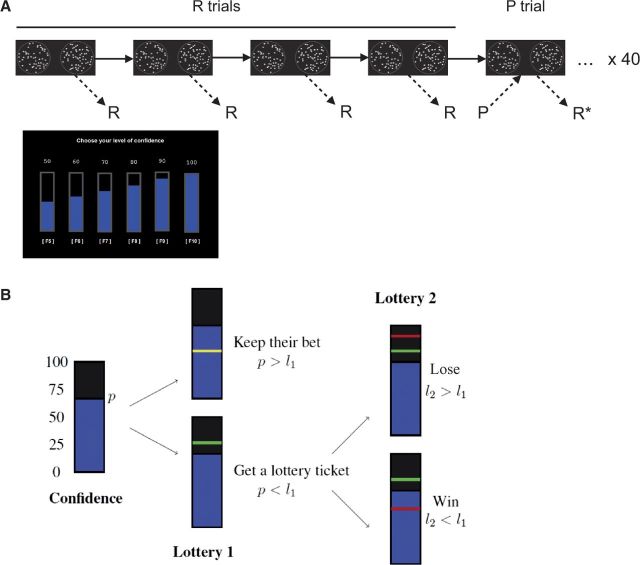
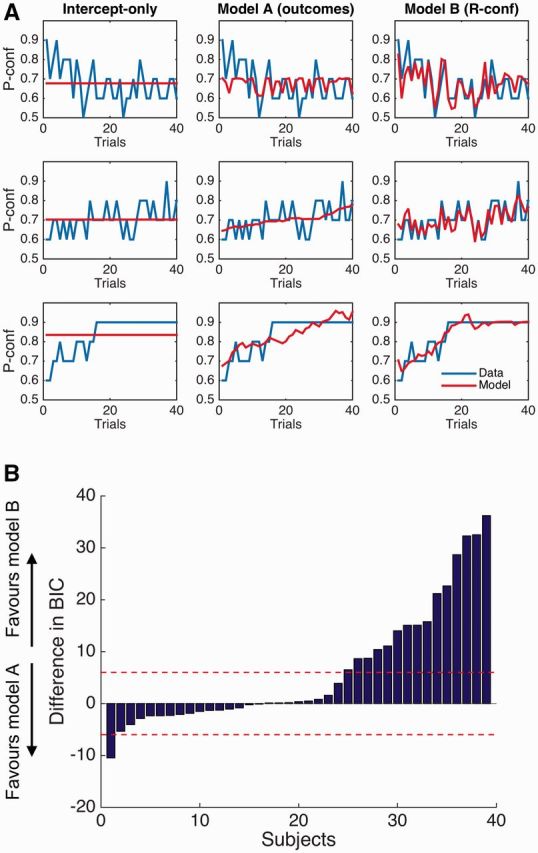
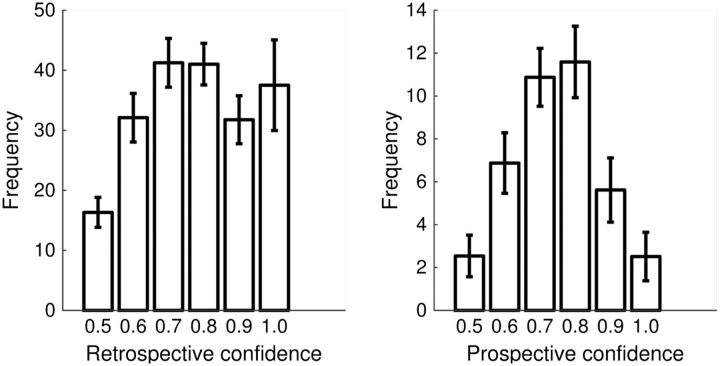
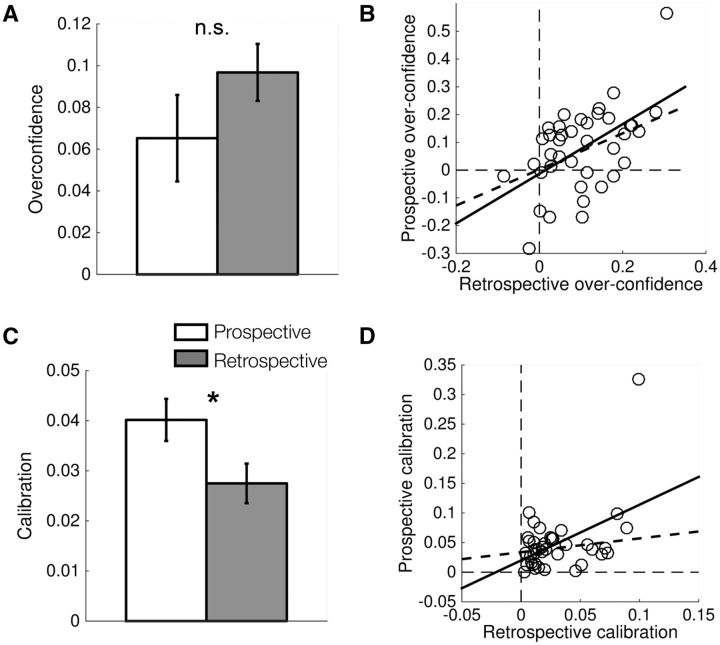
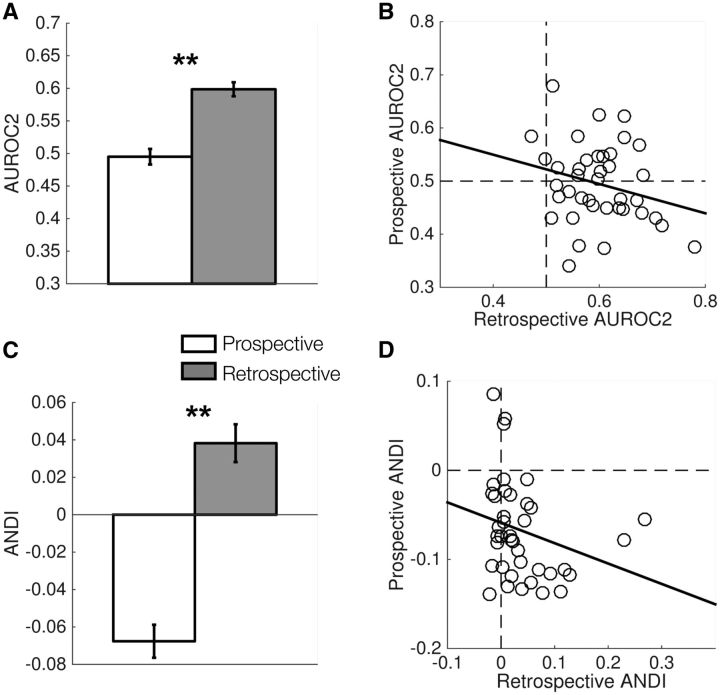
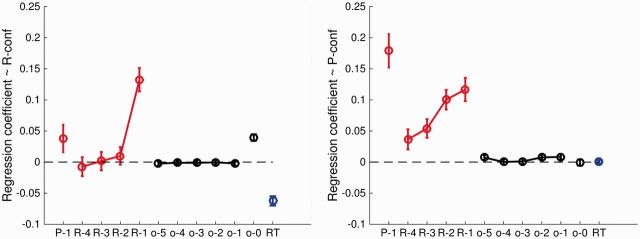
Metacognitive judgments of performance can be retrospective (such as confidence in past choices) or prospective (such as a prediction of success). Several lines of evidence indicate that these two aspects of metacognition are dissociable, suggesting they rely on distinct cues or cognitive resources. However, because prospective and retrospective judgments are often elicited and studied in separate experimental paradigms, their similarities and differences remain unclear. Here we characterize prospective and retrospective judgments of performance in the same perceptual discrimination task using repeated stimuli of constant difficulty. Using an incentive-compatible mechanism for eliciting subjective probabilities, subjects expressed their confidence in past choices together with their predictions of success in future choices. We found distinct influences on each judgment type: retrospective judgments were strongly influenced by the speed and accuracy of the immediately preceding decision, whereas prospective judgments were influenced by previous confidence over a longer time window. In contrast, global levels of confidence were correlated across judgments, indicative of a domain-general overconfidence that transcends temporal focus.
对表现的元认知判断可以是回顾性的(例如对过去选择的信心)或前瞻性的(例如对成功的预测)。几条证据线表明,元认知的这两个方面是可分离的,这表明它们依赖于不同的线索或认知资源。然而,由于前瞻性和回顾性判断通常在不同的实验范式中引发和研究,它们的异同仍不清楚。在这里,我们使用难度恒定的重复刺激,在相同的感知辨别任务中对表现的前瞻性和回顾性判断进行了表征。通过一种激励兼容机制来引出主观概率,受试者表达了他们对过去选择的信心以及对未来选择成功的预测。我们发现了对每种判断类型的不同影响:回顾性判断受到紧接在前的决策的速度和准确性的强烈影响,而前瞻性判断则受到更长时间窗口内先前信心的影响。相比之下,判断之间的总体信心水平是相关的,这表明存在一种超越时间焦点的领域一般性过度自信。