Xu Chang, Feng Qishuai, Yang Haocheng, Wang Guangxue, Huang Liqun, Bai Qianwen, Zhang Chuyi, Wang Yilong, Chen Yingna, Cheng Qian, Chen Mengwei, Han Yu, Yu Zuoren, Lesniak Maciej S, Cheng Yu
The Institute for Translational Nanomedicine Shanghai East Hospital The Institute for Biomedical Engineering & Nano Science Tongji University School of Medicine 150 Jimo Road Shanghai 200120 China.
Research Center for Translational Medicine Key Laboratory of Arrhythmias of the Ministry of Education of China East Hospital Tongji University School of Medicine 150 Jimo Road Shanghai 200120 China.
Adv Sci (Weinh). 2018 Aug 24;5(10):1800382. doi: 10.1002/advs.201800382. eCollection 2018 Oct.
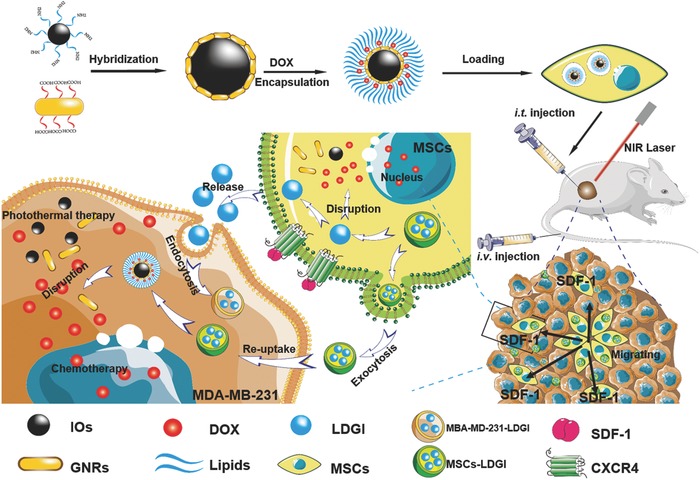
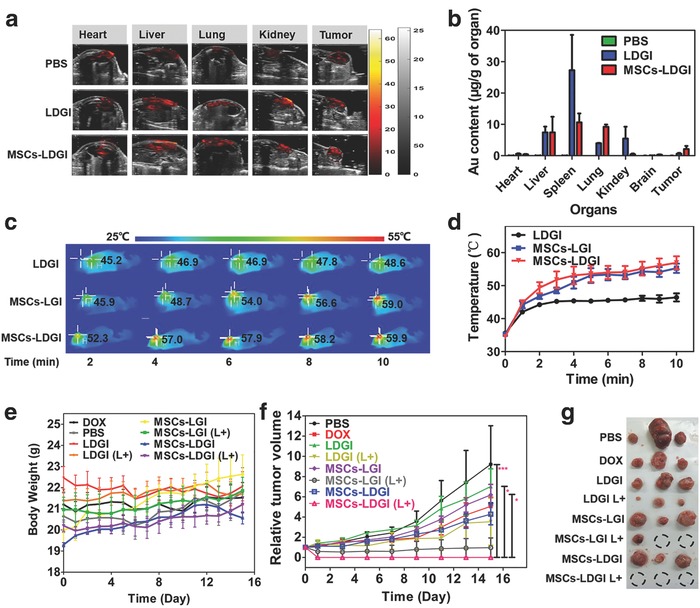
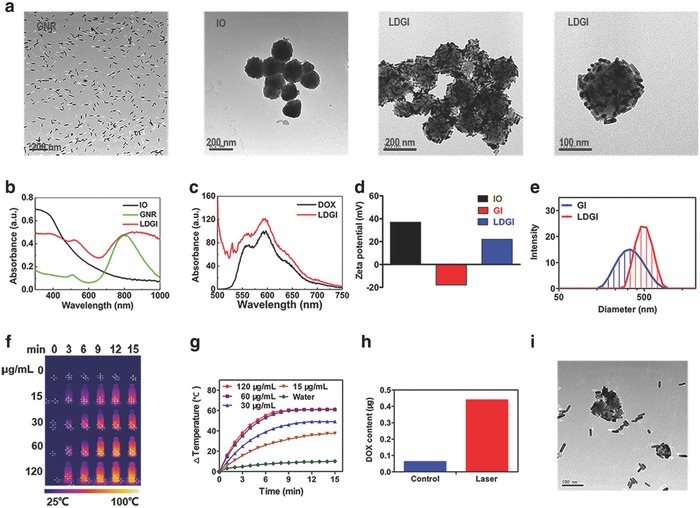
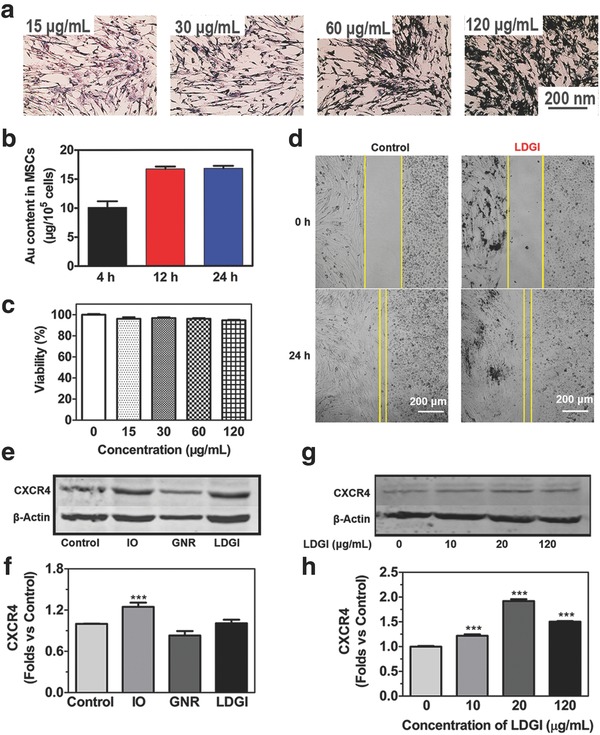
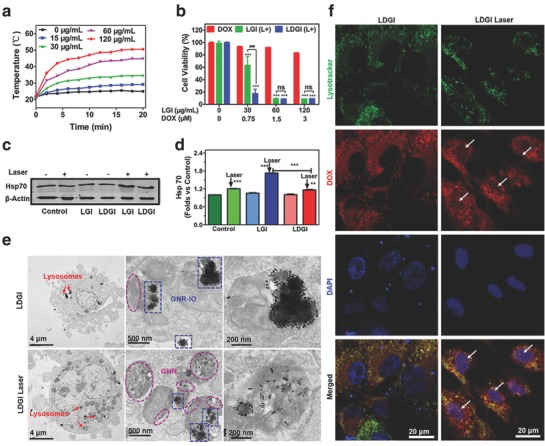
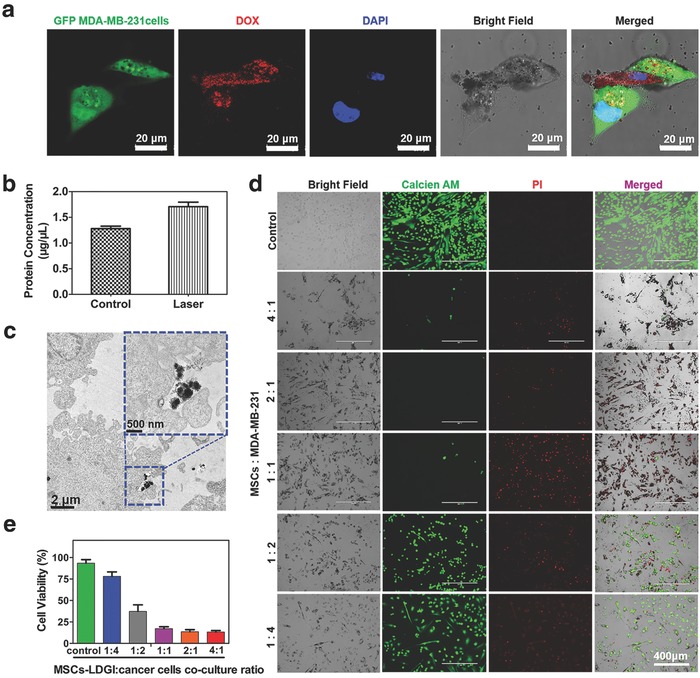
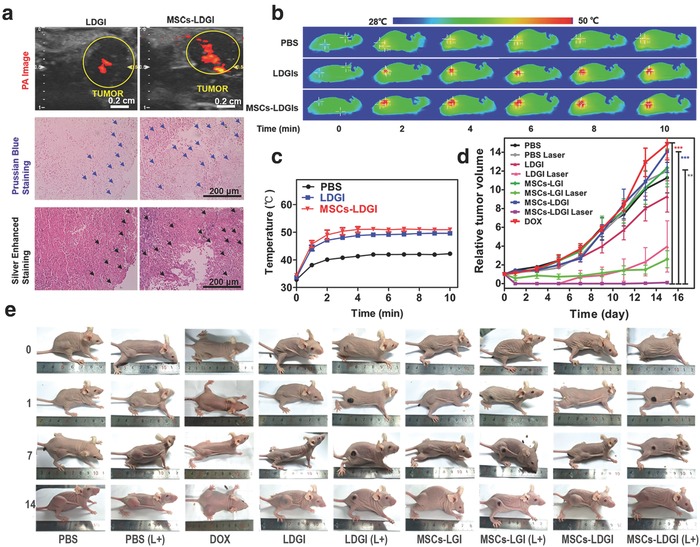
Targeted therapy is highly challenging and urgently needed for patients diagnosed with triple negative breast cancer (TNBC). Here, a synergistic treatment platform with plasmonic-magnetic hybrid nanoparticle (lipids, doxorubicin (DOX), gold nanorods, iron oxide nanocluster (LDGI))-loaded mesenchymal stem cells (MSCs) for photoacoustic imaging, targeted photothermal therapy, and chemotherapy for TNBC is developed. LDGI can be efficiently taken up into the stem cells with good biocompatibility to maintain the cellular functions. In addition, CXCR4 on the MSCs is upregulated by iron oxide nanoparticles in the LDGI. Importantly, the drug release and photothermal therapy can be simultaneously achieved upon light irradiation. The released drug can enter the cell nucleus and promote cell apoptosis. Interestingly, light irradiation can control the secretion of cellular microvehicles carrying LDGI for targeted treatment. A remarkable in vitro anticancer effect is observed in MDA-MB-231 with near-infrared laser irradiation. In vivo studies show that the MSCs-LDGI has the enhanced migration and penetration abilities in the tumor area via both intratumoral and intravenous injection approaches compared with LDGI. Subsequently, MSCs-LDGI shows the best antitumor efficacy via chemo-photothermal therapy compared to other treatment groups in the TNBC model of nude mice. Thus, MSCs-LDGI multifunctional system represents greatly synergistic potential for cancer treatment.
对于被诊断为三阴性乳腺癌(TNBC)的患者而言,靶向治疗极具挑战性且迫切需要。在此,我们开发了一种协同治疗平台,该平台利用负载有等离子体 - 磁性混合纳米颗粒(脂质、阿霉素(DOX)、金纳米棒、氧化铁纳米簇(LDGI))的间充质干细胞(MSCs)进行光声成像、靶向光热疗法以及针对TNBC的化疗。LDGI能够以良好的生物相容性高效地被摄取到干细胞中,以维持细胞功能。此外,LDGI中的氧化铁纳米颗粒可上调MSCs上的CXCR4。重要的是,光照可同时实现药物释放和光热疗法。释放出的药物能够进入细胞核并促进细胞凋亡。有趣的是,光照可控制携带LDGI的细胞微囊泡的分泌以进行靶向治疗。在近红外激光照射下,MDA - MB - 231细胞呈现出显著的体外抗癌效果。体内研究表明,与LDGI相比,通过瘤内注射和静脉注射两种途径,MSCs - LDGI在肿瘤区域具有更强的迁移和渗透能力。随后,在裸鼠TNBC模型中,与其他治疗组相比,MSCs - LDGI通过化学 - 光热疗法显示出最佳的抗肿瘤疗效。因此,MSCs - LDGI多功能系统在癌症治疗中展现出巨大的协同潜力。