Medical Center for Digestive Diseases, The Second Affiliated Hospital of Nanjing Medical University, Nanjing, 210011, China.
Key Lab of Holistic Integrative Enterology, Nanjing Medical University, Nanjing, 210011, China.
Appl Microbiol Biotechnol. 2019 Jan;103(1):349-360. doi: 10.1007/s00253-018-9447-x. Epub 2018 Oct 24.
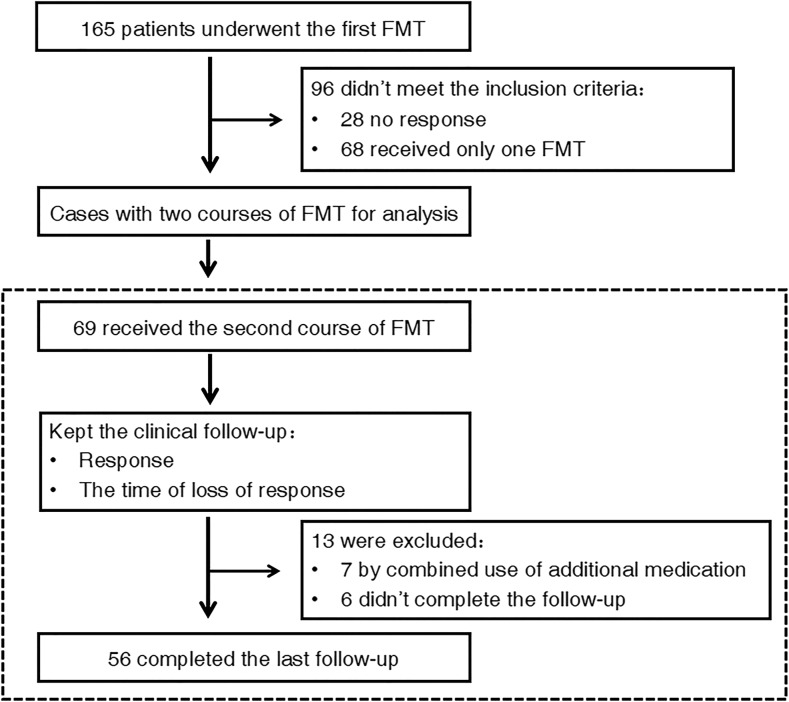
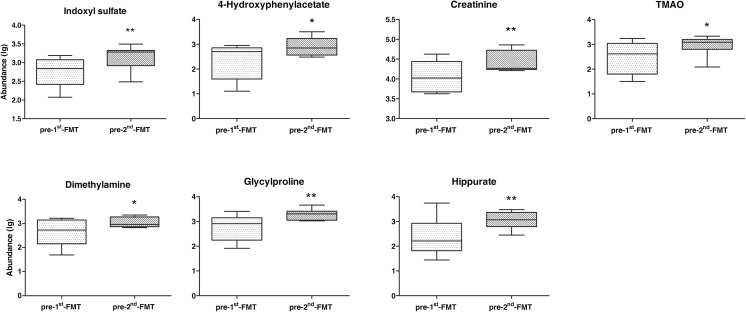
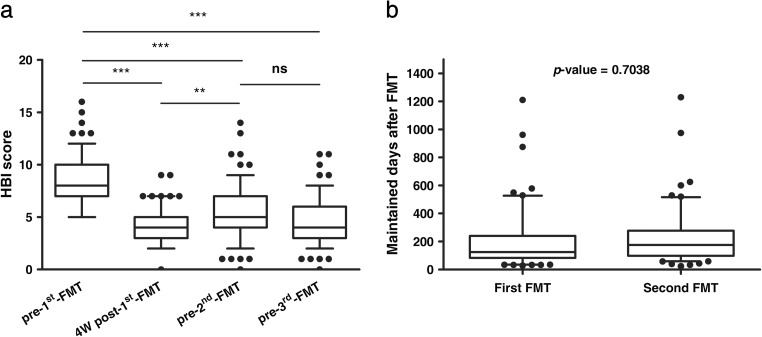
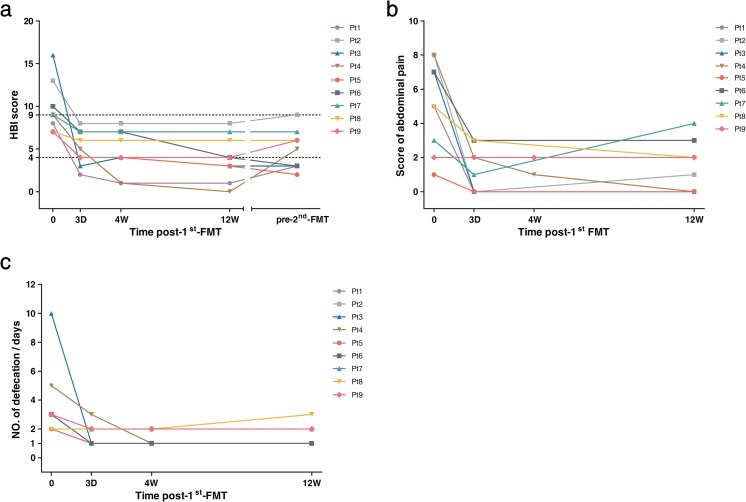
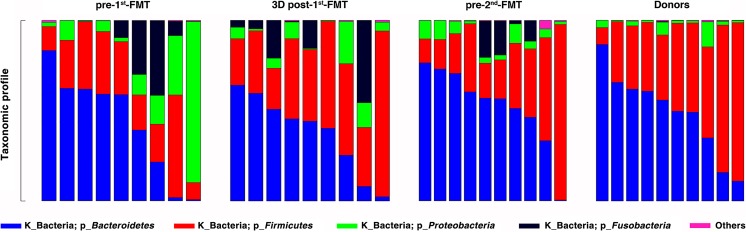
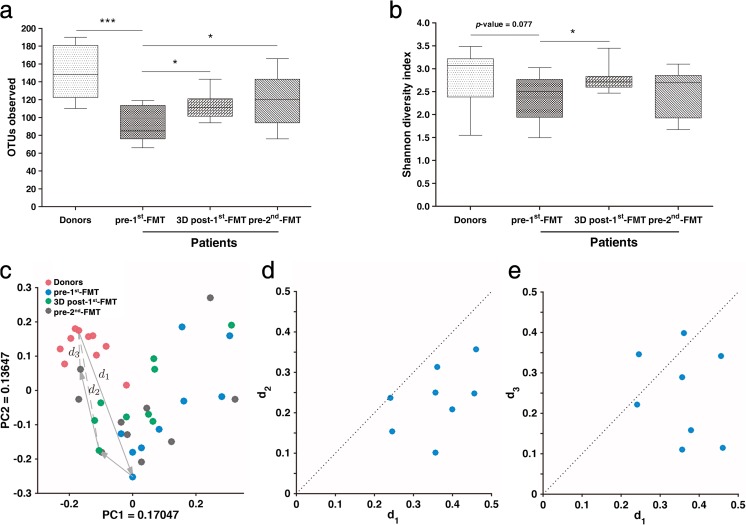
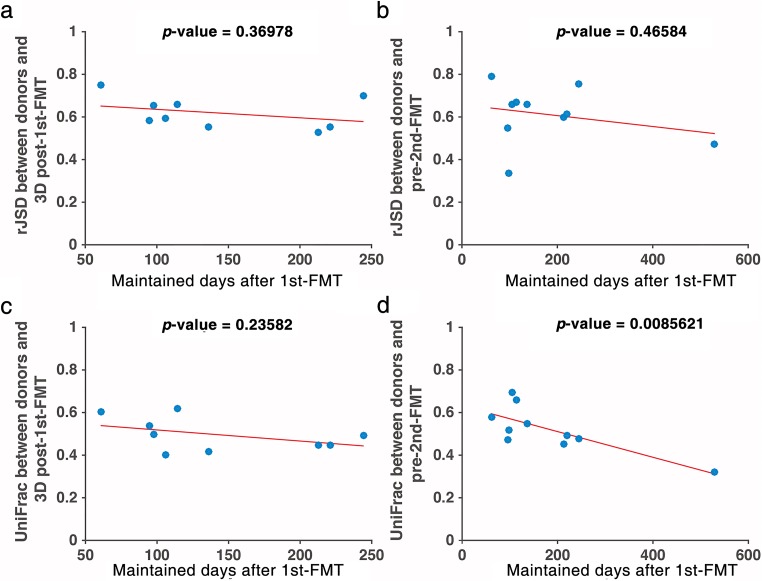
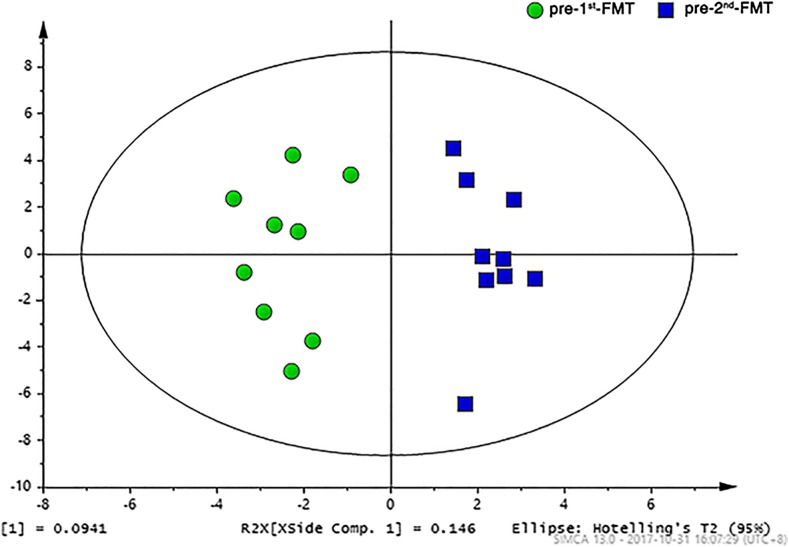
Increasing evidence has shown that fecal microbiota transplantation (FMT) could be a promising treatment option for Crohn's disease (CD). However, the frequency of FMT for CD treatment remains unclear. This study aimed to evaluate the optimal timing for administering the second course of FMT to maintain the long-term clinical effects from the first FMT for patients with CD. Sixty-nine patients with active CD who underwent FMT twice and benefited from the first FMT were enrolled in this study. Clinical response, stool microbiota, and urine metabolome of patients were assessed during the follow-up. The median time of maintaining clinical response to the first FMT in total 69 patients was 125 days (IQR, 82.5-225.5). The time of maintaining clinical response to the second FMT in 56 of 69 patients was 176.5 days (IQR, 98.5-280). The fecal microbiota composition of each patient post the first FMT was closer to that of his/her donor. Compared to that of the baseline, patients prior to the second course of FMT showed significant differences in urinary metabolic profiles characterized by increased indoxyl sulfate, 4-hydroxyphenylacetate, creatinine, dimethylamine, glycylproline, hippurate, and trimethylamine oxide (TMAO). This study demonstrated that patients with CD could be administered the second course of FMT less than 4 months after the first FMT for maintaining the clinical benefits from the first FMT. This was supported by the host-microbial metabolism changes in patients with active CD. Trial registration: ClinicalTrials.gov , NCT01793831. Registered 18 February 2013. https://clinicaltrials.gov/ct2/show/NCT01793831?term=NCT01793831&rank=1.
越来越多的证据表明,粪便微生物群移植(FMT)可能是克罗恩病(CD)的一种有前途的治疗选择。然而,FMT 治疗 CD 的频率仍不清楚。本研究旨在评估第二次 FMT 治疗的最佳时机,以维持 CD 患者首次 FMT 的长期临床效果。
这项研究纳入了 69 名接受过两次 FMT 且首次 FMT 获益的活动期 CD 患者。在随访期间评估患者的临床反应、粪便微生物群和尿液代谢组。
在 69 例患者中,维持首次 FMT 临床反应的中位时间为 125 天(IQR,82.5-225.5)。在 69 例患者中的 56 例中,维持第二次 FMT 临床反应的时间为 176.5 天(IQR,98.5-280)。每位患者首次 FMT 后的粪便微生物群组成更接近供体。与基线相比,在第二次 FMT 前,患者的尿液代谢谱有显著差异,特征为吲哚硫酸、4-羟苯乙酸、肌酐、二甲胺、甘氨酰脯氨酸、马尿酸和三甲胺氧化物(TMAO)增加。
本研究表明,CD 患者在首次 FMT 后不到 4 个月即可接受第二次 FMT,以维持首次 FMT 的临床获益。这得到了活动期 CD 患者宿主-微生物代谢变化的支持。
ClinicalTrials.gov ,NCT01793831。2013 年 2 月 18 日注册。https://clinicaltrials.gov/ct2/show/NCT01793831?term=NCT01793831&rank=1。