Maternal and Fetal Health Research Centre, Division of Developmental Biology and Medicine, Faculty of Biology, Medicine and Health, University of Manchester, 5th Floor (Research), St Mary's Hospital, Oxford Road, Manchester, M13 9WL, UK.
Trust Library, Central Manchester University Hospitals NHS Foundation Trust, Education South, Oxford Road, Manchester, M13 9WL, UK.
BMC Pregnancy Childbirth. 2018 Oct 25;18(1):421. doi: 10.1186/s12884-018-2048-y.
Although exempt, many pregnant Muslim women partake in the daily fast during daylight hours during the month of Ramadan. In other contexts an impoverished diet during pregnancy impacts on birth weight. The aim of this systematic review was to determine whether Ramadan fasting by pregnant women affects perinatal outcomes. Primary outcomes investigated were perinatal mortality, preterm birth and small for gestational age (SGA) infants. Secondary outcomes investigated were stillbirth, neonatal death, maternal death, hypertensive disorders of pregnancy, gestational diabetes, congenital abnormalities, serious neonatal morbidity, birth weight, preterm birth and placental weight.
Systematic review and meta-analysis of observational studies and randomised controlled trials was conducted in EMBASE, MEDLINE, CINAHL, Web of Science, Google Scholar, the Health Management Information Consortium and Applied Social Sciences Index and Abstracts. Studies from any year were eligible. Studies reporting predefined perinatal outcomes in pregnancies exposed to Ramadan fasting were included. Cohort studies with no comparator group or that considered fasting outside pregnancy were excluded, as were studies assuming fasting practice based solely upon family name. Quality of included studies was assessed using the ROBINS-I tool for assessing risk of bias in non-randomised studies. Analyses were performed in STATA.
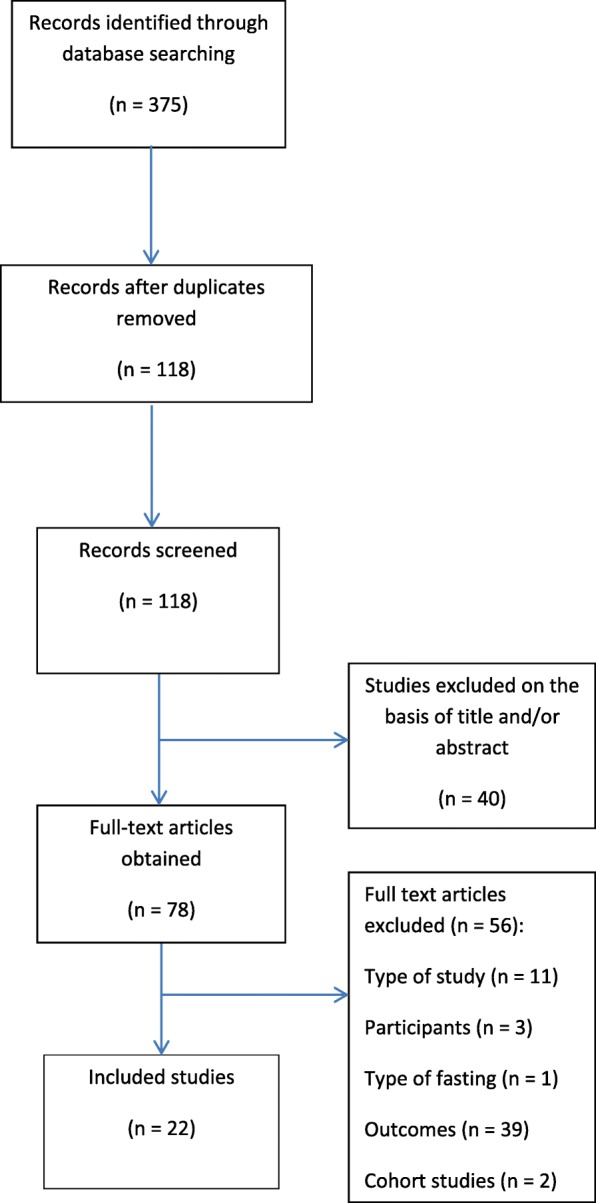
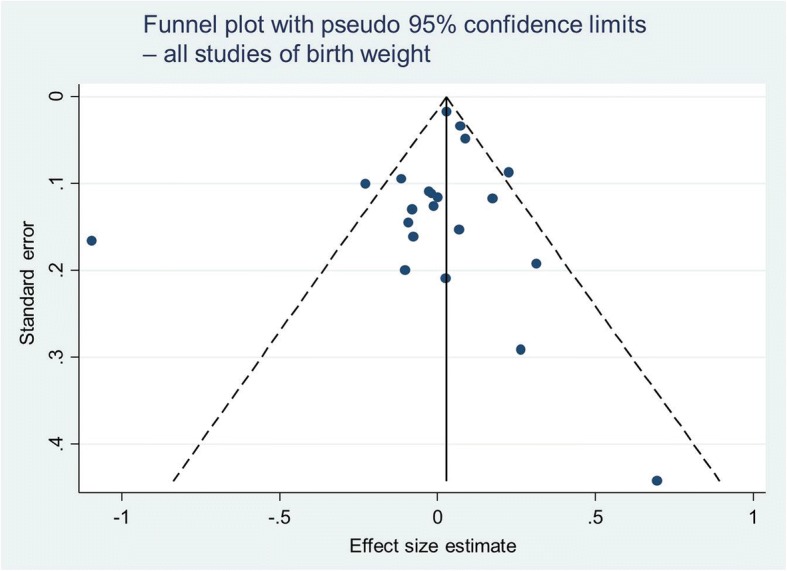
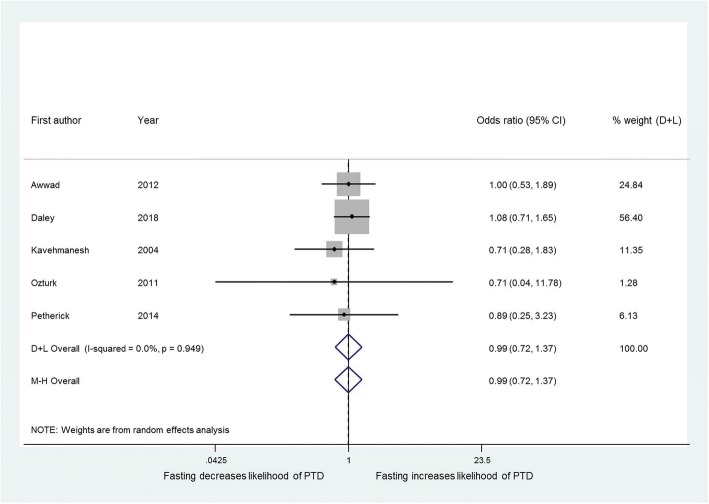
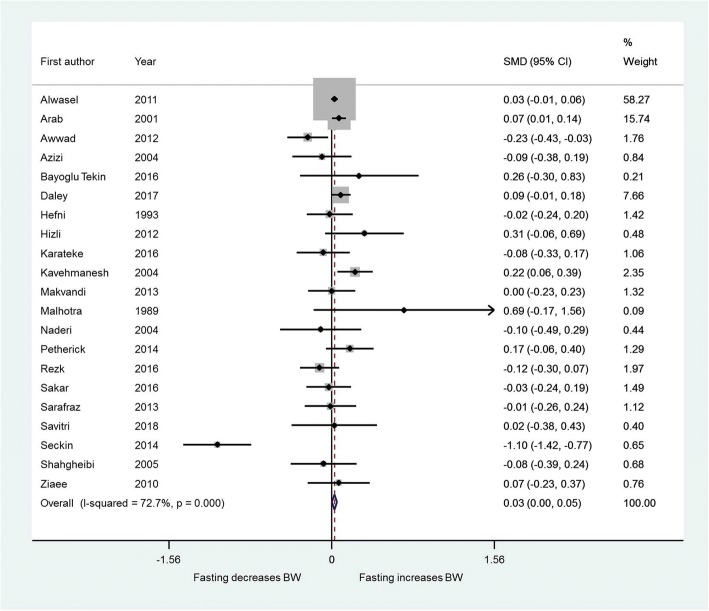
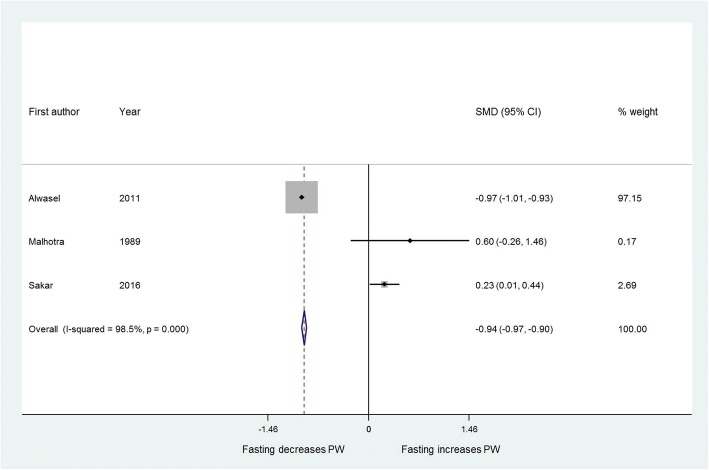
From 375 records, 22 studies of 31,374 pregnancies were included, of which 18,920 pregnancies were exposed to Ramadan fasting. Birth weight was reported in 21 studies and was not affected by maternal fasting (standardised mean difference [SMD] 0.03, 95% CI 0.00 to 0.05). Placental weight was significantly lower in fasting mothers (SMD -0.94, 95% CI -0.97 to -0.90), although this observation was dominated by a single large study. No data were presented for perinatal mortality. Ramadan fasting had no effect on preterm delivery (odds ratio 0.99, 95% CI 0.72 to 1.37) based on 5600 pregnancies (1193 exposed to Ramadan fasting).
Ramadan fasting does not adversely affect birth weight although there is insufficient evidence regarding potential effects on other perinatal outcomes. Further studies are needed to accurately determine whether Ramadan fasting is associated with adverse maternal or neonatal outcome.
尽管穆斯林孕妇被豁免斋戒,但在斋月期间,许多孕妇仍会在白天进行日常斋戒。在其他情况下,孕妇饮食贫困会影响出生体重。本系统评价旨在确定孕妇斋戒是否会影响围产期结局。主要结局指标为围产儿死亡率、早产和小于胎龄儿(SGA)。次要结局指标包括死产、新生儿死亡、产妇死亡、妊娠高血压疾病、妊娠期糖尿病、先天性异常、严重新生儿发病率、出生体重、早产和胎盘重量。
对 EMBASE、MEDLINE、CINAHL、Web of Science、Google Scholar、健康管理信息联盟和应用社会科学索引与摘要进行了系统评价和荟萃分析。所有年份的研究都符合条件。纳入了报告了暴露于斋月禁食的孕妇的预设围产儿结局的研究。排除了没有对照组或仅考虑妊娠外禁食的队列研究,以及仅根据姓氏假设禁食实践的研究。使用 ROBINS-I 工具评估非随机研究的偏倚风险,评估纳入研究的质量。分析在 STATA 中进行。
从 375 条记录中,纳入了 22 项涉及 31374 例妊娠的研究,其中 18920 例妊娠暴露于斋月禁食。21 项研究报告了出生体重,且母亲禁食并未影响出生体重(标准化均数差 [SMD] 0.03,95%CI 0.00 至 0.05)。禁食母亲的胎盘重量明显较低(SMD-0.94,95%CI-0.97 至-0.90),尽管这一观察结果主要由一项大型研究主导。没有提供围产儿死亡率的数据。根据 5600 例妊娠(1193 例暴露于斋月禁食),基于 5600 例妊娠(1193 例暴露于斋月禁食),发现斋月禁食对早产无影响(比值比 0.99,95%CI 0.72 至 1.37)。
斋月禁食不会对出生体重产生不利影响,但关于其对其他围产期结局的潜在影响,证据不足。需要进一步研究以准确确定斋月禁食是否与产妇或新生儿不良结局相关。