Guarino Andrea Maria, Troiano Annaelena, Pizzo Elio, Bosso Andrea, Vivo Maria, Pinto Gabriella, Amoresano Angela, Pollice Alessandra, La Mantia Girolama, Calabrò Viola
Dipartimento di Biologia, Università degli Studi di Napoli, Federico II, 80126 Napoli, Italy.
Dipartimento di Scienze Chimiche, Università degli Studi di Napoli, Federico II, 80126 Napoli, Italy.
Genes (Basel). 2018 Oct 22;9(10):513. doi: 10.3390/genes9100513.
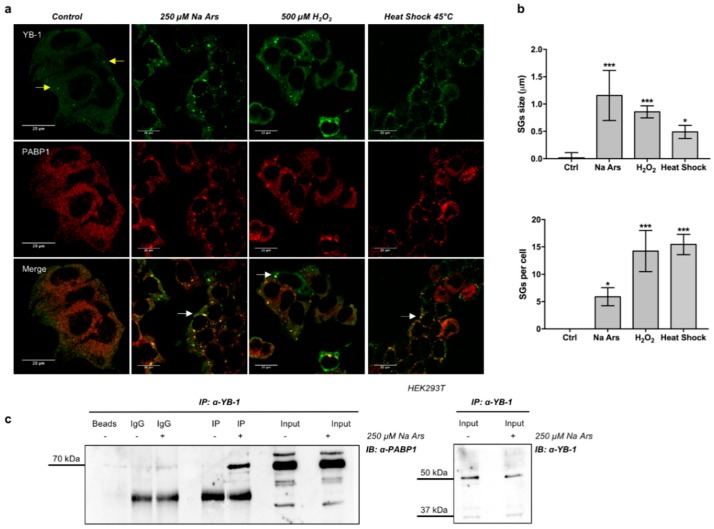
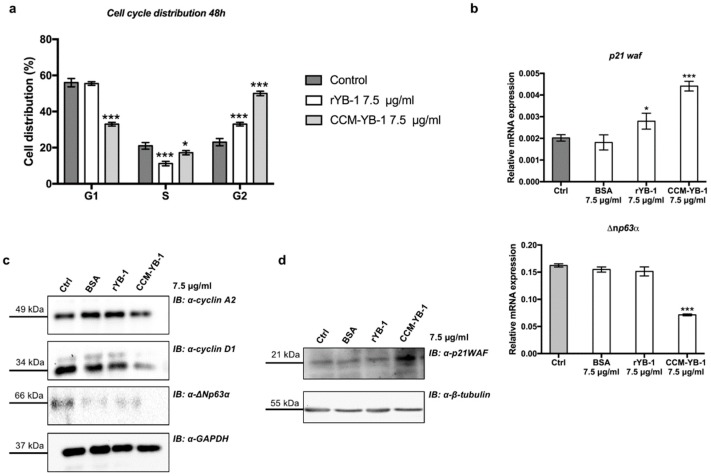
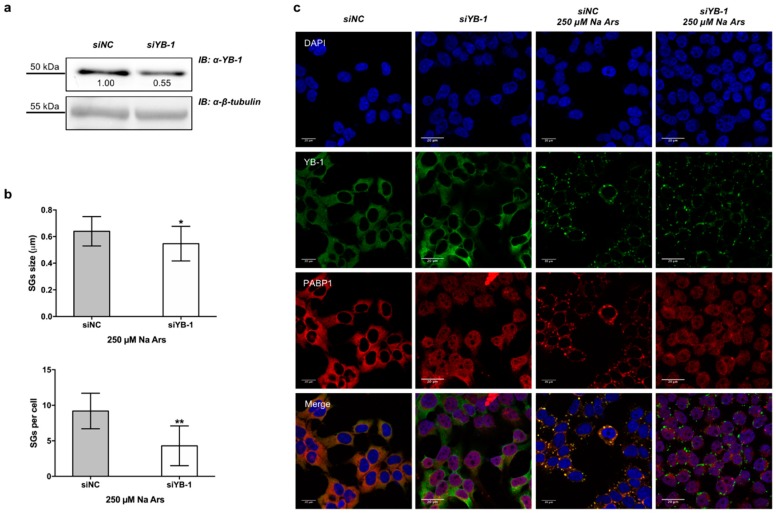
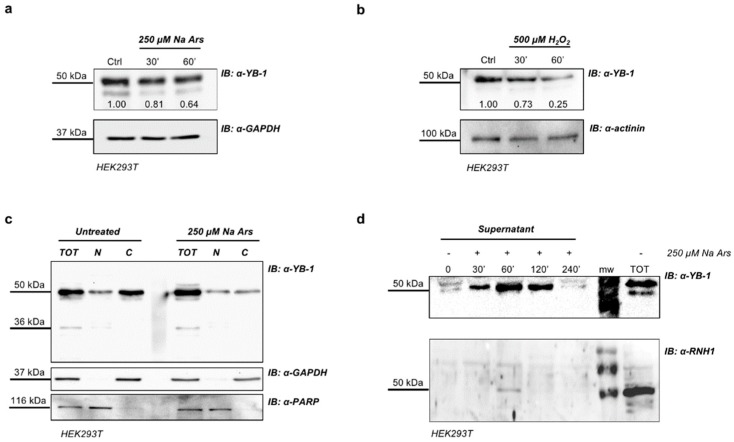
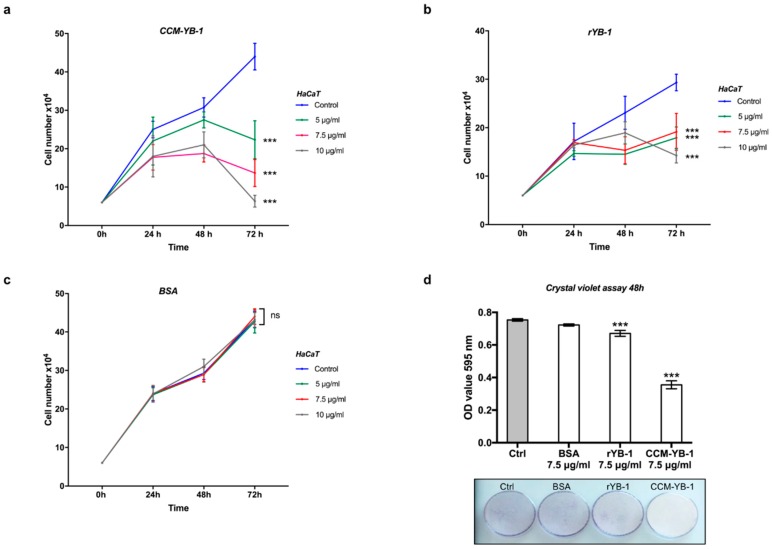
The prototype cold-shock Y-box binding protein 1 (YB-1) is a multifunctional protein that regulates a variety of fundamental biological processes including cell proliferation and migration, DNA damage, matrix protein synthesis and chemotaxis. The plethora of functions assigned to YB-1 is strictly dependent on its subcellular localization. In resting cells, YB-1 localizes to cytoplasm where it is a component of messenger ribonucleoprotein particles. Under stress conditions, YB-1 contributes to the formation of stress granules (SGs), cytoplasmic foci where untranslated messenger RNAs (mRNAs) are sorted or processed for reinitiation, degradation, or packaging into ribonucleoprotein particles (mRNPs). Following DNA damage, YB-1 translocates to the nucleus and participates in DNA repair thereby enhancing cell survival. Recent data show that YB-1 can also be secreted and YB-1-derived polypeptides are found in plasma of patients with sepsis and malignancies. Here we show that in response to oxidative insults, YB-1 assembly in SGs is associated with an enhancement of YB-1 protein secretion. An enriched fraction of extracellular YB-1 (exYB-1) significantly inhibited proliferation of receiving cells and such inhibition was associated to a G2/M cell cycle arrest, induction of p21WAF and reduction of Np63 protein level. All together, these data show that acute oxidative stress causes sustained release of YB-1 as a paracrine/autocrine signal that stimulate cell cycle arrest.
冷休克Y盒结合蛋白1(YB-1)原型是一种多功能蛋白,可调节多种基本生物学过程,包括细胞增殖和迁移、DNA损伤、基质蛋白合成和趋化性。赋予YB-1的众多功能严格取决于其亚细胞定位。在静息细胞中,YB-1定位于细胞质,是信使核糖核蛋白颗粒的组成部分。在应激条件下,YB-1有助于应激颗粒(SGs)的形成,应激颗粒是细胞质中的聚集物,未翻译的信使核糖核酸(mRNA)在此进行分类或加工,以便重新起始、降解或包装成核糖核蛋白颗粒(mRNP)。DNA损伤后,YB-1易位至细胞核并参与DNA修复,从而提高细胞存活率。最近的数据表明,YB-1也可以分泌,败血症和恶性肿瘤患者的血浆中可发现YB-1衍生的多肽。在此我们表明,在氧化损伤反应中,YB-1在SGs中的组装与YB-1蛋白分泌的增强有关。富含细胞外YB-1(exYB-1)的部分显著抑制接受细胞的增殖,这种抑制与G2/M细胞周期阻滞、p21WAF的诱导和Np63蛋白水平的降低有关。总之,这些数据表明急性氧化应激会导致YB-1作为旁分泌/自分泌信号持续释放,从而刺激细胞周期阻滞。