Department of Genetic Medicine and Development, iGE3 and Centre facultaire du diabète, Faculty of Medicine, University of Geneva, Geneva, Switzerland.
Department of Cell Biology, Duke University Medical Center, Durham, NC, USA.
Nat Cell Biol. 2018 Nov;20(11):1267-1277. doi: 10.1038/s41556-018-0216-y. Epub 2018 Oct 22.
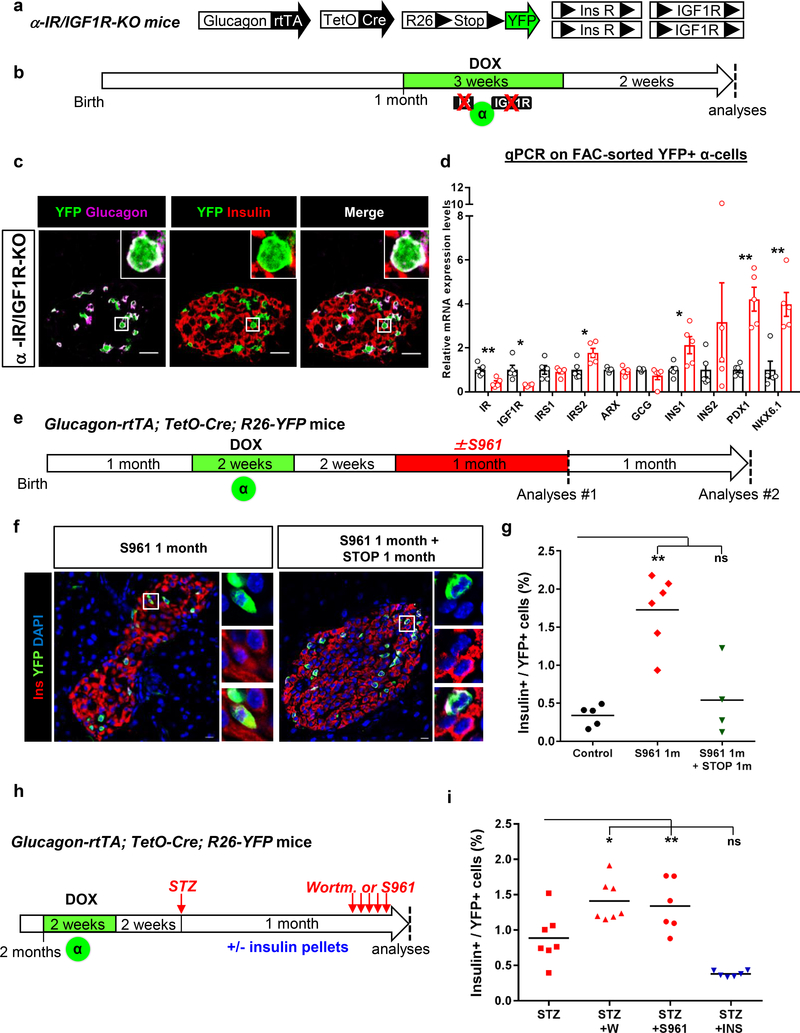
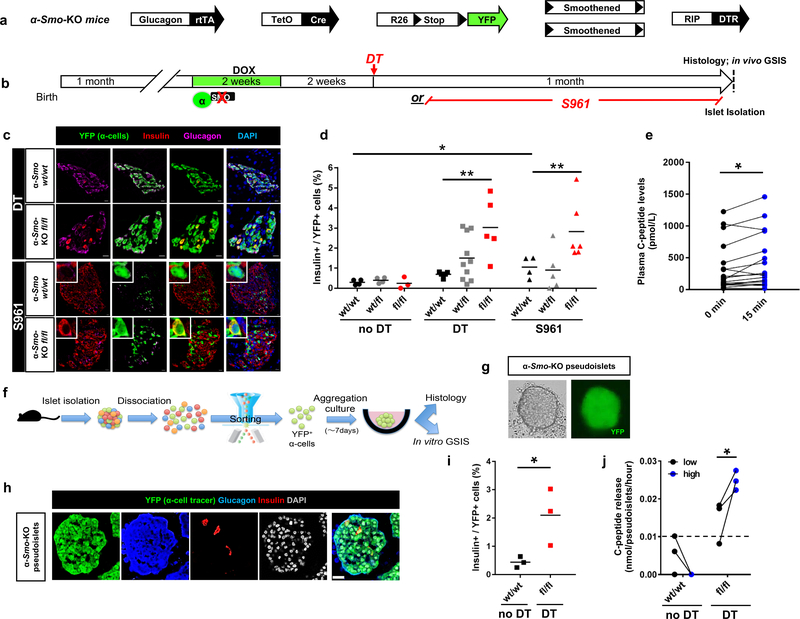
The mechanisms that restrict regeneration and maintain cell identity following injury are poorly characterized in higher vertebrates. Following β-cell loss, 1-2% of the glucagon-producing α-cells spontaneously engage in insulin production in mice. Here we explore the mechanisms inhibiting α-cell plasticity. We show that adaptive α-cell identity changes are constrained by intra-islet insulin- and Smoothened-mediated signalling, among others. The combination of β-cell loss or insulin-signalling inhibition, with Smoothened inactivation in α- or δ-cells, stimulates insulin production in more α-cells. These findings suggest that the removal of constitutive 'brake signals' is crucial to neutralize the refractoriness to adaptive cell-fate changes. It appears that the maintenance of cell identity is an active process mediated by repressive signals, which are released by neighbouring cells and curb an intrinsic trend of differentiated cells to change.
在高等脊椎动物中,限制损伤后再生和维持细胞特性的机制尚未得到很好的描述。在β细胞丢失后,1-2%的胰高血糖素产生α细胞会自发地在小鼠中产生胰岛素。在这里,我们探讨了抑制α细胞可塑性的机制。我们发现,胰岛内胰岛素和 Smoothened 介导的信号等因素限制了适应性α细胞特性的改变。β细胞丢失或胰岛素信号抑制与α或δ细胞中 Smoothened 失活相结合,可刺激更多α细胞产生胰岛素。这些发现表明,消除组成性“制动信号”对于中和对适应性细胞命运变化的抵抗力至关重要。似乎细胞特性的维持是由抑制信号介导的主动过程,这些信号由邻近细胞释放,并抑制分化细胞改变的内在趋势。