Rincé Alain, Balière Charlotte, Hervio-Heath Dominique, Cozien Joëlle, Lozach Solen, Parnaudeau Sylvain, Le Guyader Françoise S, Le Hello Simon, Giard Jean-Christophe, Sauvageot Nicolas, Benachour Abdellah, Strubbia Sofia, Gourmelon Michèle
UNICAEN, U2RM, Normandie Université, Caen, France.
RBE-SG2M-LSEM, Institut Français de Recherche pour l'Exploitation de la Mer, Brest, France.
Front Microbiol. 2018 Oct 11;9:2443. doi: 10.3389/fmicb.2018.02443. eCollection 2018.
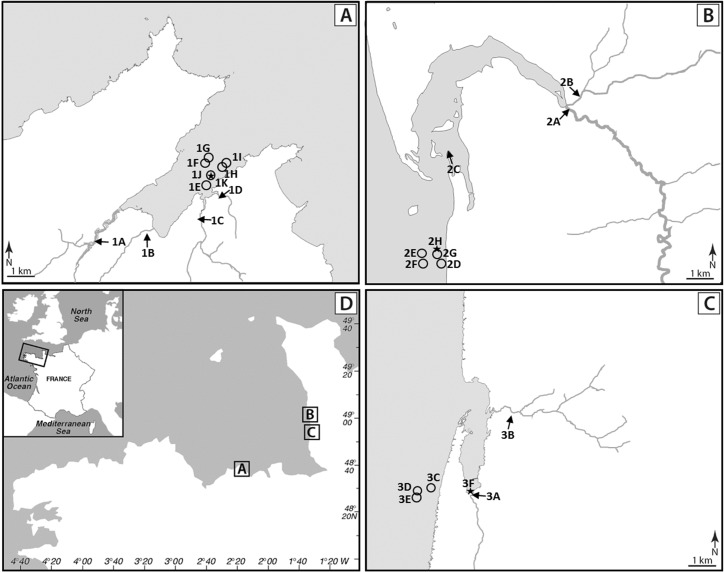
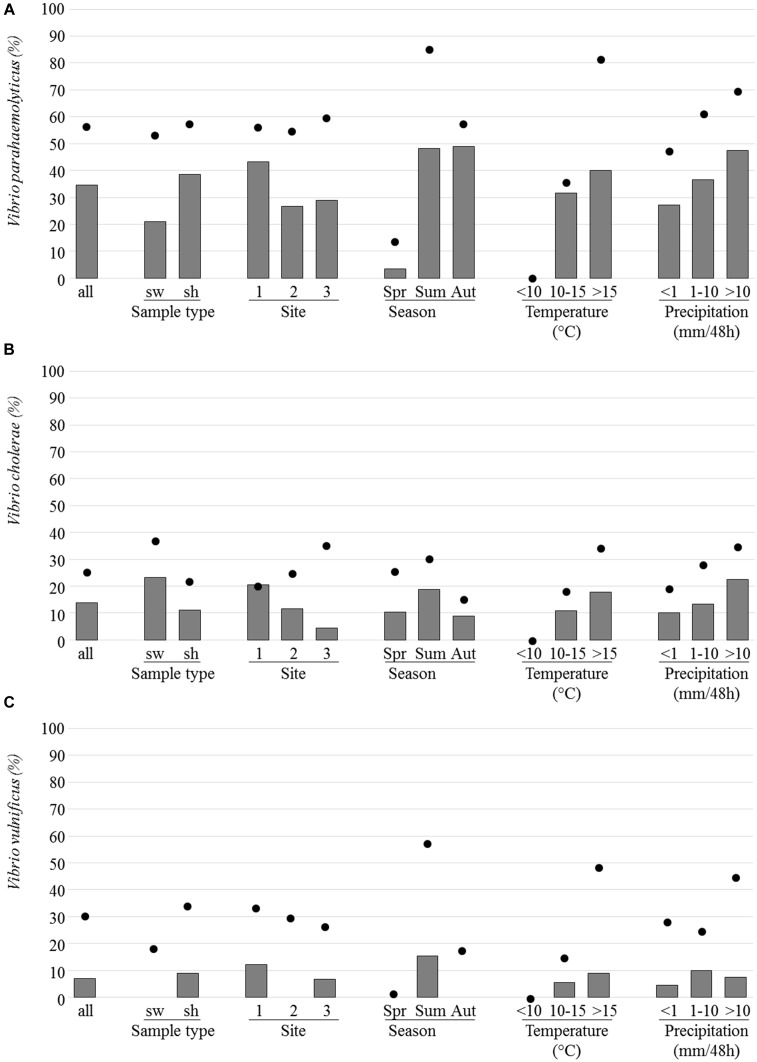
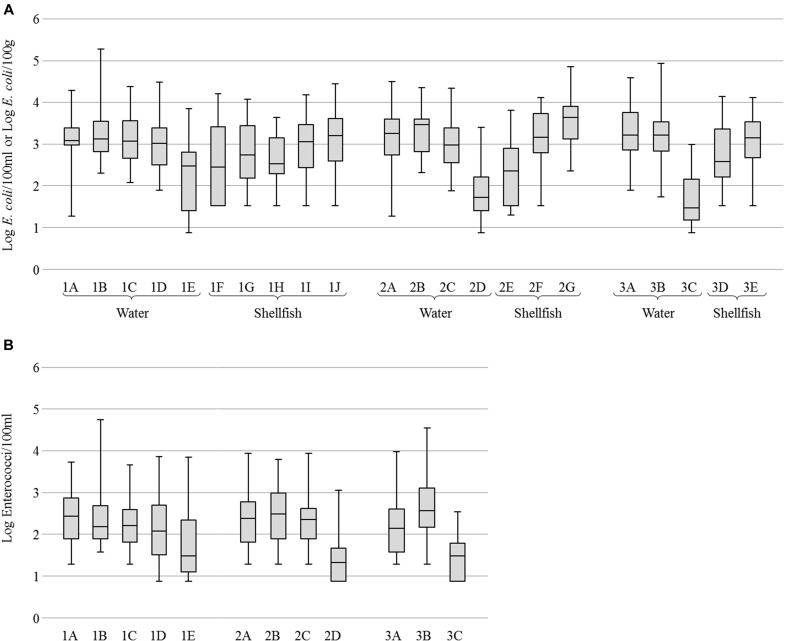
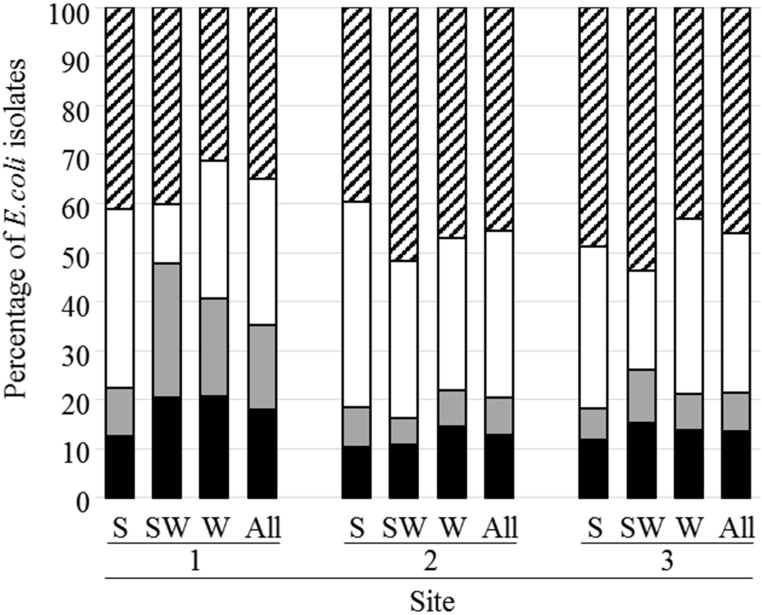
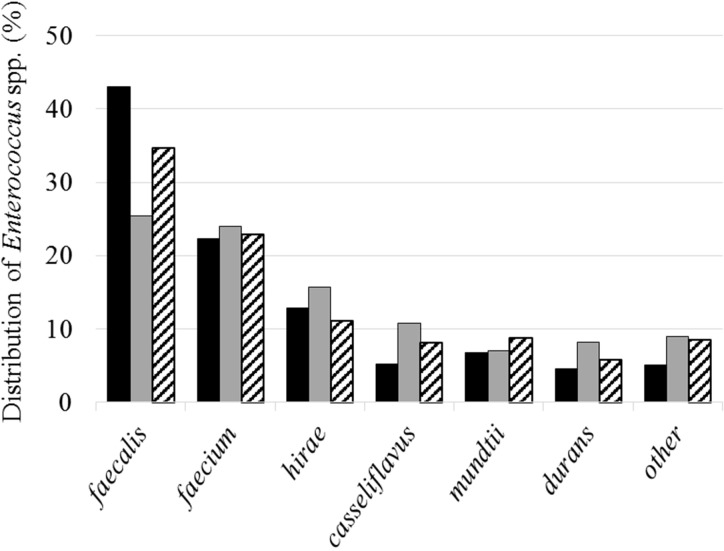
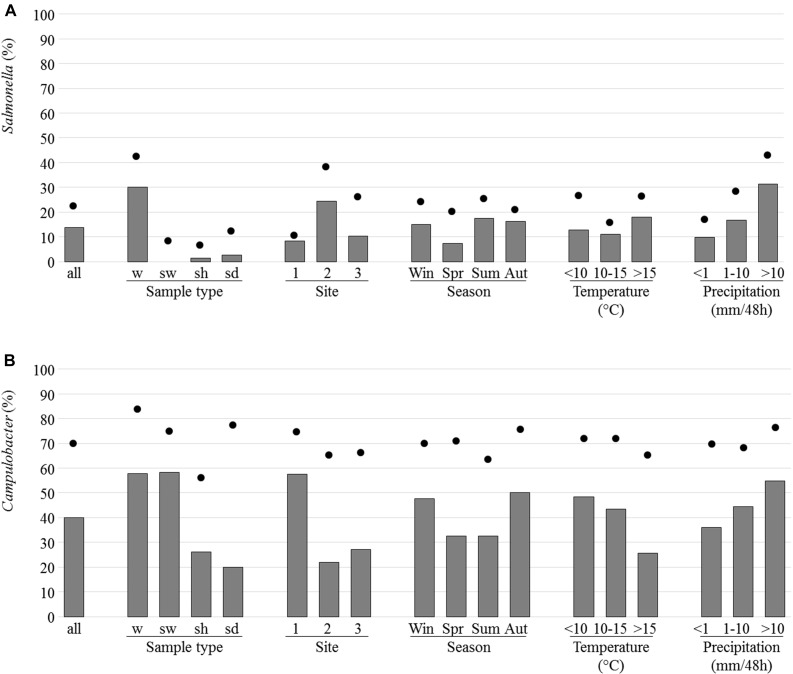
During a 2-year study, the presence of human pathogenic bacteria and noroviruses was investigated in shellfish, seawater and/or surface sediments collected from three French coastal shellfish-harvesting areas as well as in freshwaters from the corresponding upstream catchments. Bacteria isolated from these samples were further analyzed. isolates classified into the phylogenetic groups B2, or D and enterococci from and species were tested for the presence of virulence genes and for antimicrobial susceptibility. members were serotyped and the most abundant serovars (Typhimurium and its monophasic variants and Mbandaka) were genetically characterized by high discriminative subtyping methods. and were identified at the species level, and haemolysin-producing were searched by - and - gene detection. Main results showed a low prevalence of in shellfish samples where only members of Mbandaka were found. were more frequently isolated than and a different distribution of species was observed in shellfish compared to rivers, strongly suggesting possible additional inputs of bacteria. Statistical associations between enteric bacteria, human noroviruses (HuNoVs) and concentration of fecal indicator bacteria revealed that the presence of was correlated with that of and/or as well as to concentration. A positive correlation was also found between the presence of and the detection of HuNoVs. This study highlights the importance of simultaneous detection and characterization of enteric and marine pathogenic bacteria and human noroviruses not only in shellfish but also in catchment waters for a hazard assessment associated with microbial contamination of shellfish.
在一项为期两年的研究中,对从法国三个沿海贝类捕捞区采集的贝类、海水和/或表层沉积物以及相应上游集水区的淡水中的人类致病细菌和诺如病毒的存在情况进行了调查。对从这些样本中分离出的细菌进行了进一步分析。对分类为系统发育组B2或D的分离株以及来自和物种的肠球菌进行了毒力基因存在情况和抗菌药敏试验。对成员进行了血清分型,并用高分辨率亚型分析方法对最丰富的血清型(鼠伤寒沙门氏菌及其单相变体和班达卡沙门氏菌)进行了基因特征分析。在物种水平上鉴定了和,并通过和基因检测寻找产生溶血素的。主要结果表明,在仅发现班达卡沙门氏菌成员的贝类样本中,的流行率较低。比更频繁地被分离出来,并且在贝类中观察到的物种分布与河流不同,强烈表明可能存在细菌的额外输入。肠道细菌、人类诺如病毒(HuNoVs)与粪便指示菌浓度之间的统计关联表明,的存在与和/或的存在以及浓度相关。在的存在与HuNoVs的检测之间也发现了正相关。这项研究强调了同时检测和鉴定肠道和海洋致病细菌以及人类诺如病毒的重要性,不仅在贝类中,而且在集水区水中,以便对与贝类微生物污染相关的危害进行评估。