Zhang Xinxu, Xu Wei, Liu Yang, Cai Mingwei, Luo Zhuhua, Li Meng
Institute for Advanced Study, Shenzhen University, Shenzhen, China.
Key Laboratory of Marine Biogenetic Resources, Third Institute of Oceanography, State Oceanic Administration, Xiamen, China.
Front Microbiol. 2018 Oct 12;9:2402. doi: 10.3389/fmicb.2018.02402. eCollection 2018.
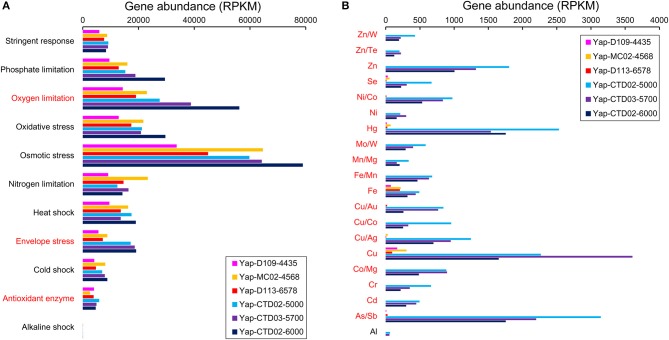
Hadal biosphere represents the deepest part of the ocean with water depth >6,000 m. Accumulating evidence suggests the existence of unique microbial communities dominated by heterotrophic processes in this environment. However, investigations of the microbial diversity and their metabolic potentials are limited because of technical constraints for sample collection. Here, we provide a detailed metagenomic analysis of three seawater samples at water depths 5,000-6,000 m below sea level (mbsl) and three surface sediment samples at water depths 4,435-6,578 mbsl at the Yap Trench of the western Pacific. Distinct microbial community compositions were observed with the dominance of Gammaproteobacteria in seawater and Thaumarchaeota in surface sediment. Comparative analysis of the genes involved in carbon, nitrogen and sulfur metabolisms revealed that heterotrophic processes (i.e., degradation of carbohydrates, hydrocarbons, and aromatics) are the most common microbial metabolisms in the seawater, while chemolithoautotrophic metabolisms such as ammonia oxidation with the HP/HB cycle for CO fixation probably dominated the surface sediment communities of the Yap Trench. Furthermore, abundant genes involved in stress response and metal resistance were both detected in the seawater and sediments, thus the enrichment of metal resistance genes is further hypothesized to be characteristic of the hadal microbial communities. Overall, this study sheds light on the metabolic versatility of microorganisms in the Yap Trench, their roles in carbon, nitrogen, and sulfur biogeochemical cycles, and how they have adapted to this unique hadal environment.
超深渊生物圈代表了海洋中水深>6000米的最深处。越来越多的证据表明,在这种环境中存在着以异养过程为主导的独特微生物群落。然而,由于样本采集的技术限制,对微生物多样性及其代谢潜力的研究有限。在这里,我们对西太平洋雅浦海沟海平面以下5000 - 6000米深度的三个海水样本和水深4435 - 6578米的三个表层沉积物样本进行了详细的宏基因组分析。观察到不同的微生物群落组成,海水样本中γ-变形菌占优势,表层沉积物中奇古菌占优势。对参与碳、氮和硫代谢的基因进行比较分析发现,异养过程(即碳水化合物、碳氢化合物和芳烃的降解)是海水中最常见的微生物代谢,而化能无机自养代谢,如通过HP/HB循环进行氨氧化以固定CO2,可能在雅浦海沟的表层沉积物群落中占主导地位。此外,在海水和沉积物中都检测到了大量参与应激反应和金属抗性的基因,因此进一步推测金属抗性基因的富集是超深渊微生物群落的特征。总体而言,本研究揭示了雅浦海沟中微生物的代谢多样性、它们在碳、氮和硫生物地球化学循环中的作用,以及它们如何适应这种独特的超深渊环境。