Lima Viana José, Zagmignan Adrielle, Lima Lobato Luís Felipe, Gomes Abreu Afonso, da Silva Luís Cláudio Nascimento, de Sá Joicy Cortez, Monteiro Cristina de Andrade, Lago João Henrique Ghilardi, Gonçalves Letícia Machado, Carvalho Rafael Cardoso, Neto Lídio Gonçalves Lima, de Sousa Eduardo Martins
Pós-Graduação em Biologia Parasitária, Laboratório de Imunologia e Microbiologia das Infecções Respiratórias, Universidade Ceuma, São Luís, Brazil.
Pós-Graduação em Biologia Parasitária, Laboratório de Micologia Médica, Programa de Mestrado em Biologia Parasitária, Universidade Ceuma, São Luís, Brazil.
Evid Based Complement Alternat Med. 2018 Oct 2;2018:6091934. doi: 10.1155/2018/6091934. eCollection 2018.
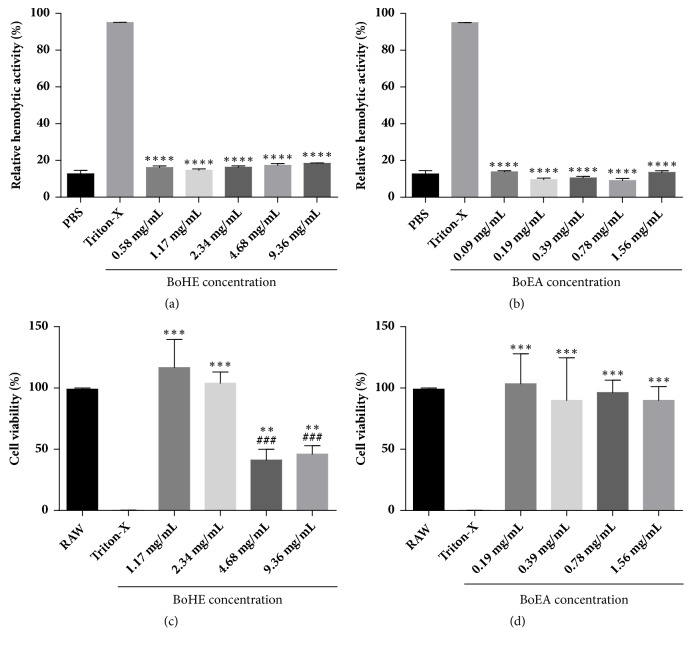
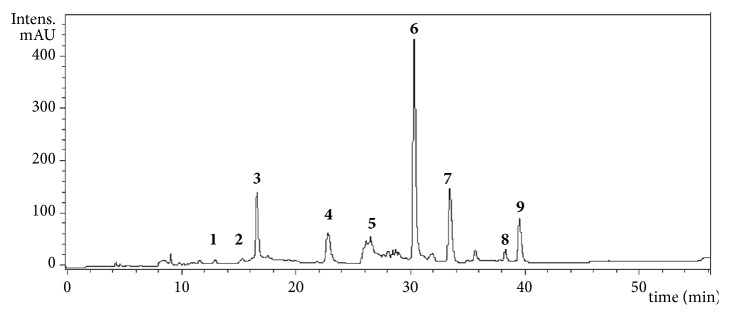
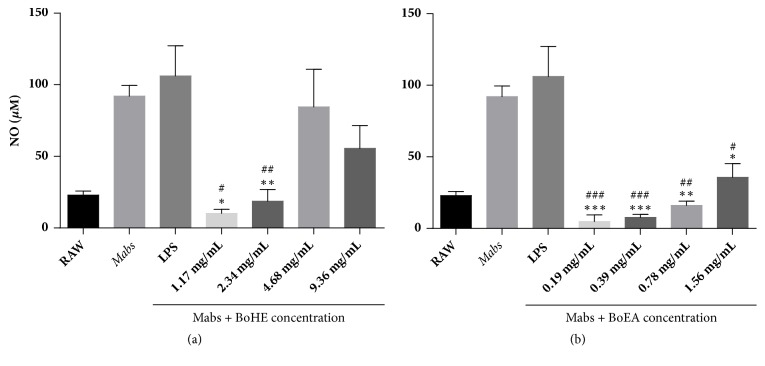
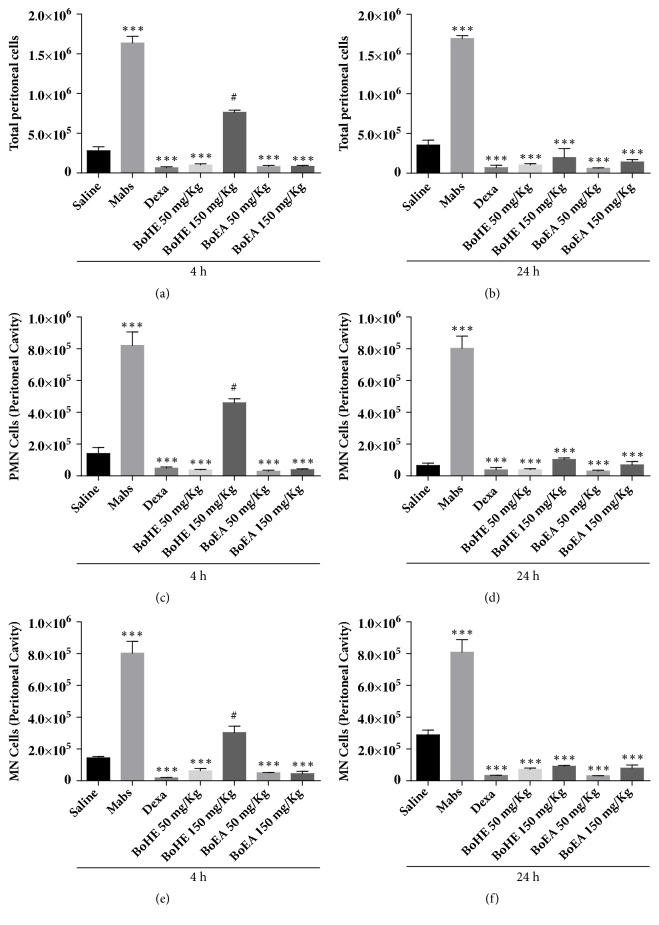
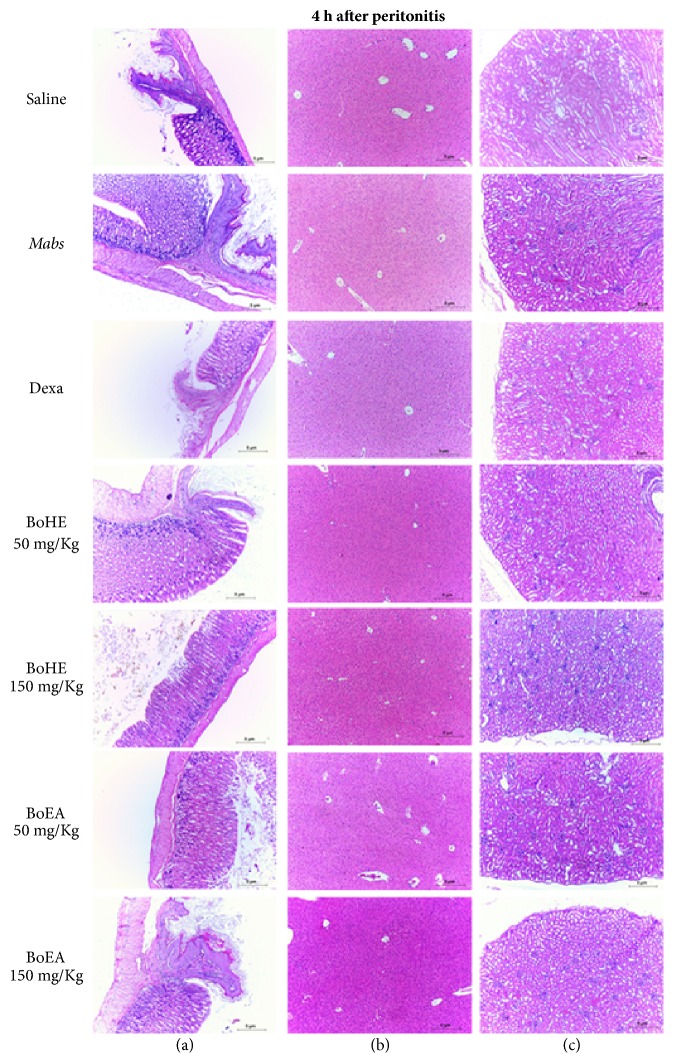
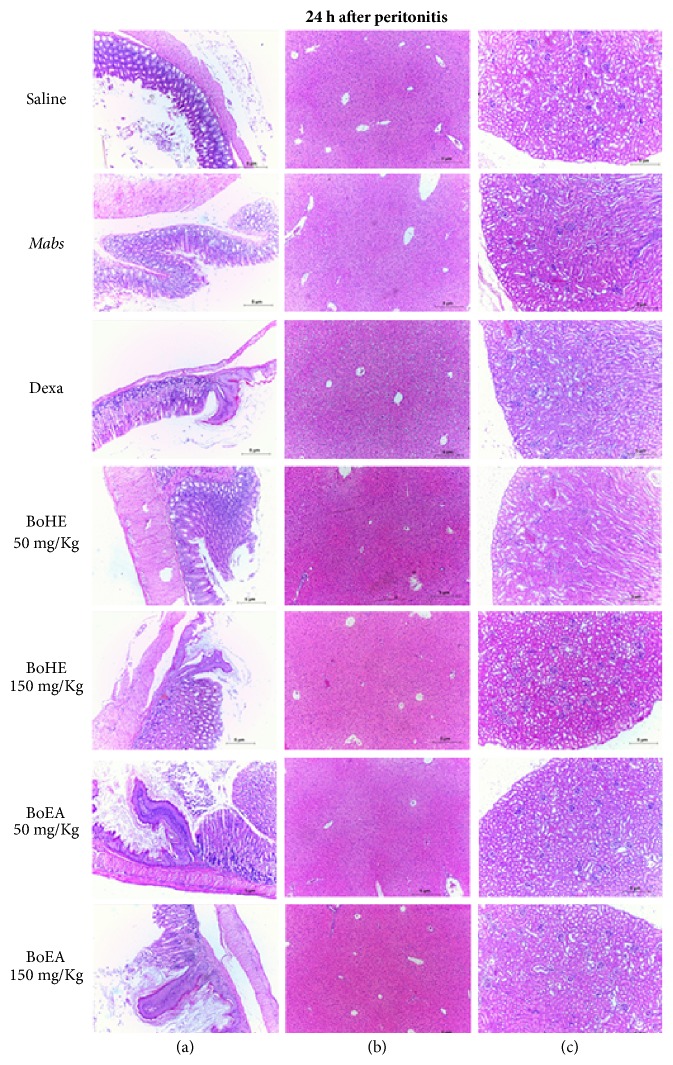
The incidence of infections caused by rapidly growing mycobacteria (RGM), especially subsp. (), is increasing worldwide. Severe infections are associated with abscess formation and strong inflammatory response. This study evaluated the antimicrobial and anti-inflammatory activities of a hydroalcoholic extract (BoHE) and ethyl acetate fraction (BoEA) of leaves. Antimicrobial activity was evaluated by broth microdilution to determine the minimum inhibitory (MIC) and the minimum bactericidal (MBC) concentrations. Cytotoxicity was evaluated using erythrocytes and RAW 264.7 cells. Nitric oxide (NO) was assayed in stimulated RAW 264.7 cells, and inflammatory cell migration and acute toxicity were evaluated in a -induced peritonitis mouse model. The compounds present in BoEA were identified by high performance liquid chromatography and mass spectrometry (HPLC-MS). The MIC and MBC values were 2.34 mg/mL and 37.5 mg/mL for BoHE and 0.39 mg/mL and 6.25 mg/mL for BoEA. The extracts did not induce significant toxicity in erythrocytes and RAW 264.7 cells. High levels of NO induced by were decreased by treatment with both extracts. The anti-inflammatory activity was confirmed by significant reduction of the cell migration to the peritoneum following BoHE and BoEA pretreatment. Animals treated with BoHE or BoEA did not show signs of acute toxicity in stomach, liver, and kidney. The chemical characterization of BoEA (the most active extract) revealed that kaempferol-3-O-coumaroyl glucose is its major component. The extract of may be effective for treating infections caused by
快速生长分枝杆菌(RGM)引起的感染,尤其是亚种()引起的感染,在全球范围内呈上升趋势。严重感染与脓肿形成和强烈的炎症反应相关。本研究评估了叶的水醇提取物(BoHE)和乙酸乙酯馏分(BoEA)的抗菌和抗炎活性。通过肉汤微量稀释法评估抗菌活性,以确定最低抑菌(MIC)和最低杀菌(MBC)浓度。使用红细胞和RAW 264.7细胞评估细胞毒性。在刺激的RAW 264.7细胞中测定一氧化氮(NO),并在诱导的腹膜炎小鼠模型中评估炎症细胞迁移和急性毒性。通过高效液相色谱和质谱(HPLC-MS)鉴定BoEA中存在的化合物。BoHE的MIC和MBC值分别为2.34 mg/mL和37.5 mg/mL,BoEA的MIC和MBC值分别为0.39 mg/mL和6.25 mg/mL。提取物在红细胞和RAW 264.7细胞中未诱导明显毒性。两种提取物处理均可降低由诱导的高水平NO。BoHE和BoEA预处理后,细胞向腹膜的迁移显著减少,从而证实了其抗炎活性。用BoHE或BoEA处理的动物在胃、肝和肾中未显示急性毒性迹象。BoEA(活性最强的提取物)的化学表征表明,山奈酚-3-O-香豆酰葡萄糖是其主要成分。叶提取物可能对治疗由引起的感染有效