Department of Emergency and Critical Care Medicine, The Second Affiliated Hospital of Soochow University, No. 1055, San Xiang Road, Suzhou 215004, Jiangsu, China.
Department of Nutrition and Food Hygiene, School of Public Health, Soochow University, 199 Renai Road, Suzhou, Jiangsu Province 215123, China.
Biomed Res Int. 2018 Oct 2;2018:8014213. doi: 10.1155/2018/8014213. eCollection 2018.
Lactate and lactate clearance were supposed to be associated with cardiac arrest outcomes, but studies obtained different results. Thus, we conducted this meta-analysis to investigate the association between lactate or lactate clearance and neurological outcomes and their usefulness for prediction of neurological outcomes.
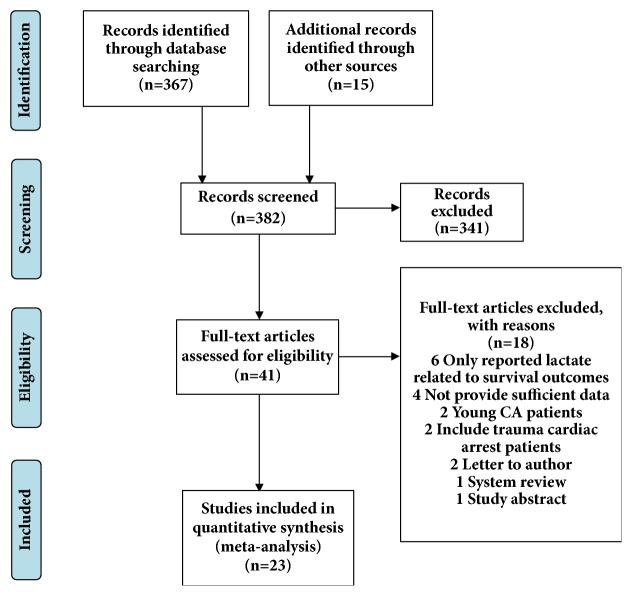
We conducted a systematic search in PubMed, Web of science, EMBASE, Medline, and Google Scholar until May 1, 2018, for relevant studies. Studies reporting lactate, lactate clearance on admission, or other time points after admission associated with neurological outcomes were included in our analysis. Pooled effect date was shown as weighed mean difference (WMD) and 95% confidence interval (CI). To measure the usefulness of lactate on admission to predict neurological outcomes, we also pooled the data of diagnostic test.
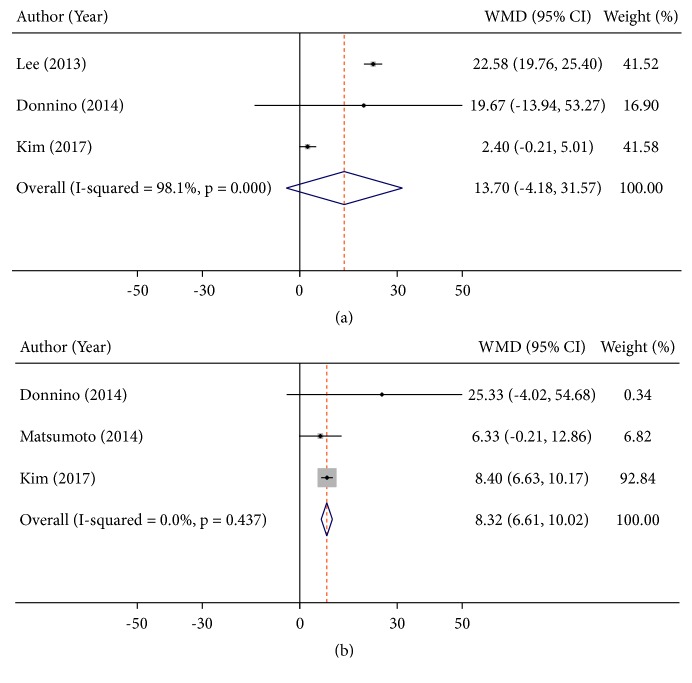
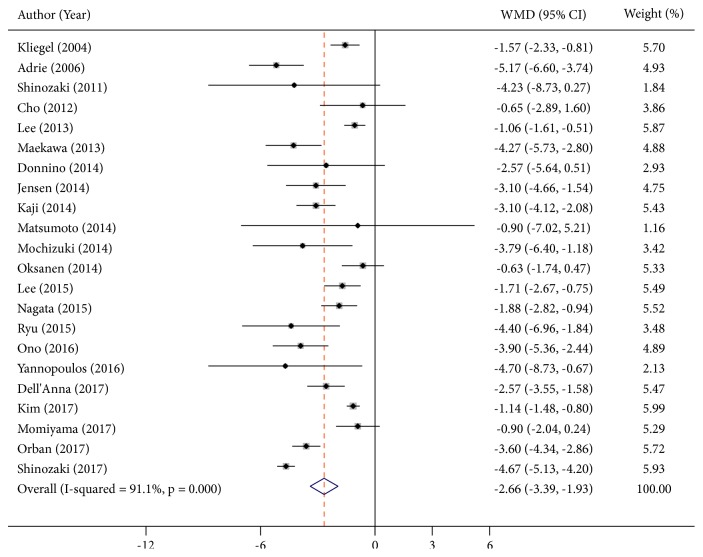
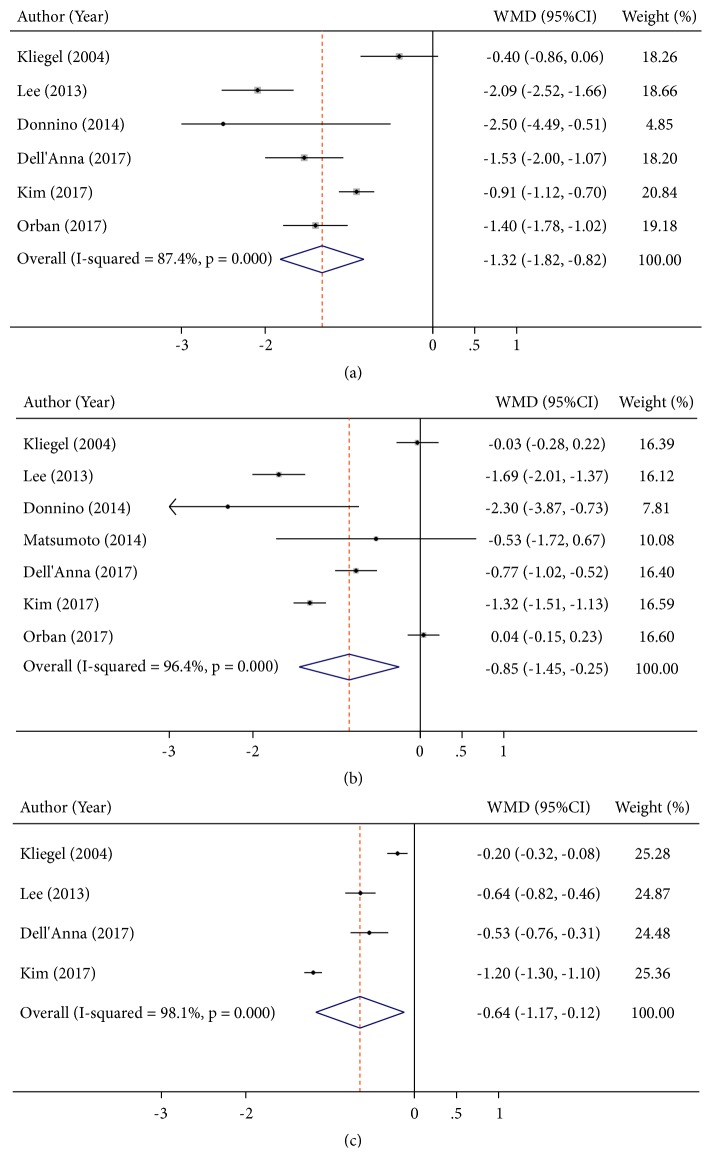
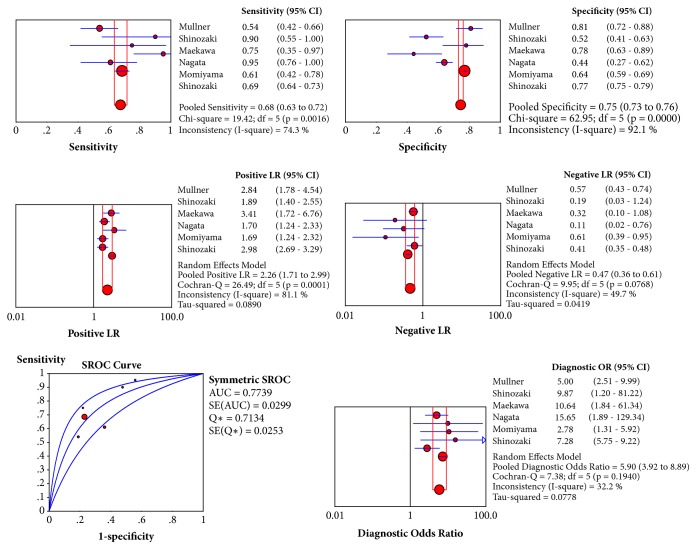
23 studies involving 6720 cardiac arrest (CA) patients were included. Results from our analysis indicated that patients with good neurological outcomes tended to have a lower lactate level on admission (WMD: -2.66 mmol/L, 95%CI: -3.39 to -1.93) and 12h, 24h, and 48h after admission (<0.001). Furthermore, the pooled AUC for lactate level on admission to predict neurological outcomes was 0.77 (95%CI: 0.73-0.80). However, a significant association between lactate clearance and neurological outcomes was only found in 24h but not 12h lactate clearance rate.
Lactate levels on admission and all time points up to 48h were associated with neurological outcomes after CA, whereas the association between lactate clearance and neurological outcomes was not so stable. Lactate was a more robust surrogate marker than lactate clearance to predict neurological outcomes after CA.
乳酸和乳酸清除率与心搏骤停结局相关,但研究结果存在差异。因此,我们进行了这项荟萃分析,以调查入院时乳酸或乳酸清除率与神经结局的关系及其对神经结局预测的价值。
我们在 PubMed、Web of Science、EMBASE、Medline 和 Google Scholar 中进行了系统检索,检索时间截至 2018 年 5 月 1 日,以获取相关研究。我们纳入了报告入院时乳酸、乳酸清除率或入院后其他时间点与神经结局相关的研究。汇总的效应数据显示为加权均数差(WMD)和 95%置信区间(CI)。为了衡量入院时乳酸对预测神经结局的有用性,我们还汇总了诊断试验的数据。
纳入了 23 项涉及 6720 例心搏骤停(CA)患者的研究。分析结果表明,神经结局良好的患者入院时(WMD:-2.66mmol/L,95%CI:-3.39 至-1.93)和入院后 12h、24h 和 48h 的乳酸水平较低(<0.001)。此外,入院时乳酸水平预测神经结局的汇总 AUC 为 0.77(95%CI:0.73-0.80)。然而,只有在 24h 时发现乳酸清除率与神经结局之间存在显著关联,而在 12h 时则不然。
入院时及 48h 内各时间点的乳酸水平与 CA 后神经结局相关,而乳酸清除率与神经结局之间的关联则不那么稳定。乳酸作为预测 CA 后神经结局的替代标志物比乳酸清除率更可靠。