Department of Chemical, Biological, Pharmaceutical and Environmental Sciences, University of Messina, V.le F. Stagno d'Alcontres 31, 98166 Messina, Italy.
CNR-ISMN c/o Department of Chemical, Biological, Pharmaceutical and Environmental Sciences of the University of Messina, V.le F. Stagno d'Alcontres 31, 98166 Messina, Italy.
Int J Mol Sci. 2018 Oct 27;19(11):3365. doi: 10.3390/ijms19113365.
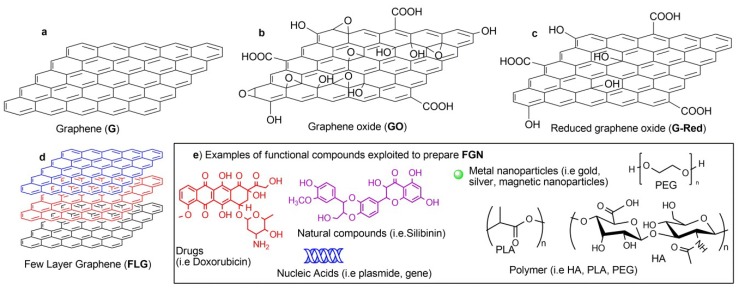
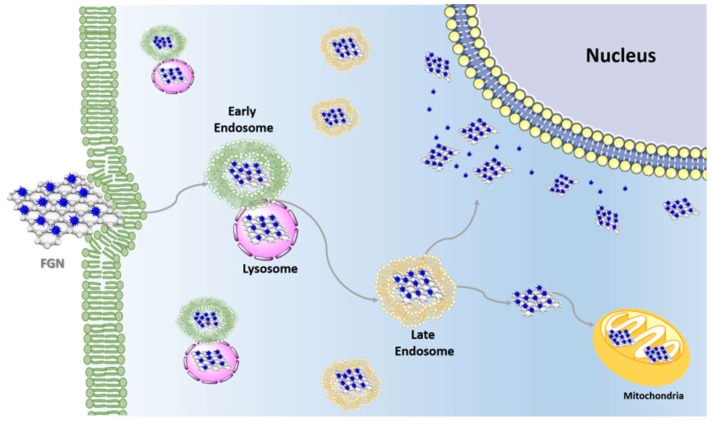
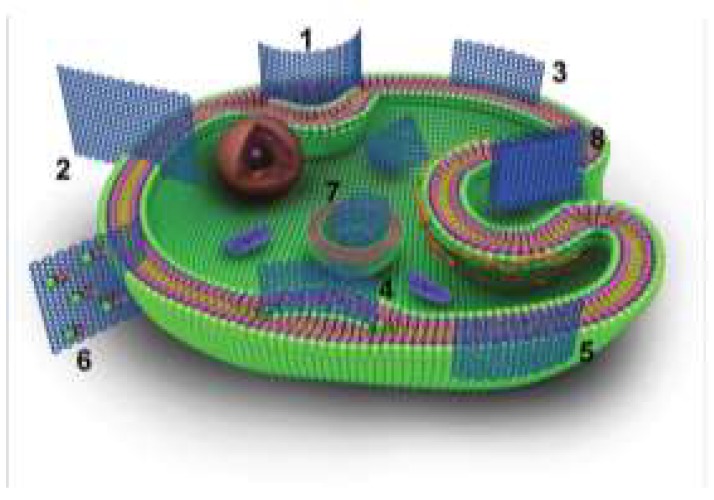
The paper reviews the network of cellular signaling pathways activated by Functional Graphene Nanomaterials (FGN) designed as a platform for multi-targeted therapy or scaffold in tissue engineering. Cells communicate with each other through a molecular device called signalosome. It is a transient co-cluster of signal transducers and transmembrane receptors activated following the binding of transmembrane receptors to extracellular signals. Signalosomes are thus efficient and sensitive signal-responding devices that amplify incoming signals and convert them into robust responses that can be relayed from the plasma membrane to the nucleus or other target sites within the cell. The review describes the state-of-the-art biomedical applications of FGN focusing the attention on the cell/FGN interactions and signalosome activation.
本文综述了功能性石墨烯纳米材料(FGN)激活的细胞信号通路网络,FGN 被设计为多靶点治疗的平台或组织工程中的支架。细胞通过一种称为信号osomes 的分子装置相互通讯。它是信号转导器和跨膜受体的瞬时共簇,这些信号转导器和跨膜受体在跨膜受体与细胞外信号结合后被激活。因此,信号osomes 是一种高效灵敏的信号响应装置,可放大传入信号,并将其转化为强大的响应,从而可从质膜传递到细胞核或细胞内的其他靶位。本文综述了 FGN 的最新生物医学应用,重点介绍了细胞/FGN 相互作用和信号osomes 的激活。