From the Departments of Pathology and Laboratory Medicine & Genetics, Lineberger Comprehensive Cancer Center, University of North Carolina School of Medicine, Chapel Hill (Dr Merker); the Departments of Pathology (Drs Devereaux and Montgomery, and Mr Smail) and Genetics (Dr Montgomery), Stanford University School of Medicine, and the Biomedical Informatics Program (Mr Smail), Stanford University, Stanford, California; the Department of Pathology, Massachusetts General Hospital (Dr Iafrate), and the Department of Pathology, Brigham and Women's Hospital (Drs Kim and Lindeman), Harvard University, Boston; the Departments of Pathology and Clinical Laboratory Genetics, The University Health Network and the University of Toronto, Toronto, Ontario, Canada (Dr Kamel-Reid); the Department of Pathology, Walter Reed National Military Medical Center, Bethesda, Maryland (Dr Moncur); PierianDx, St Louis, Missouri (Dr Nagarajan); the Department of Global Medical Affairs, Roche, Tucson, Arizona (Dr Portier); the Departments of Hematopathology (Dr Routbort) and Pathology, Genomic Medicine, and Translational Molecular Pathology (Dr Lazar), he University of Texas MD Anderson Cancer Center, Houston (Dr Routbort); the Department of Pathology, Children's Hospital of Philadelphia, University of Pennsylvania, Philadelphia (Dr Surrey); and Proficiency Testing, College of American Pathologists, Northfield, Illinois (Ms Vasalos).
Arch Pathol Lab Med. 2019 Apr;143(4):463-471. doi: 10.5858/arpa.2018-0336-CP. Epub 2018 Oct 30.
CONTEXT.—: Next-generation sequencing-based assays are being increasingly used in the clinical setting for the detection of somatic variants in solid tumors, but limited data are available regarding the interlaboratory performance of these assays.
OBJECTIVE.—: To examine proficiency testing data from the initial College of American Pathologists (CAP) Next-Generation Sequencing Solid Tumor survey to report on laboratory performance.
DESIGN.—: CAP proficiency testing results from 111 laboratories were analyzed for accuracy and associated assay performance characteristics.
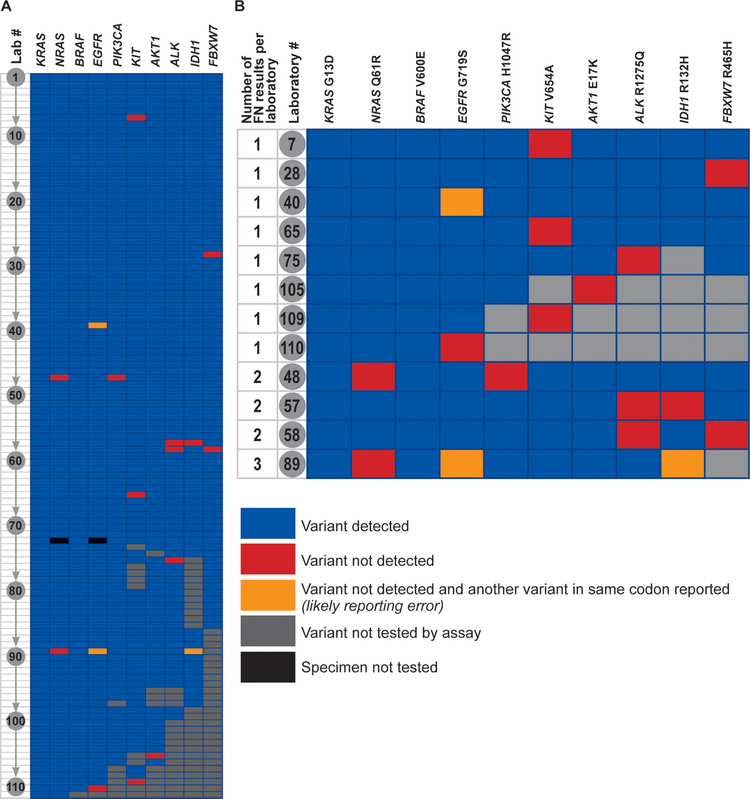
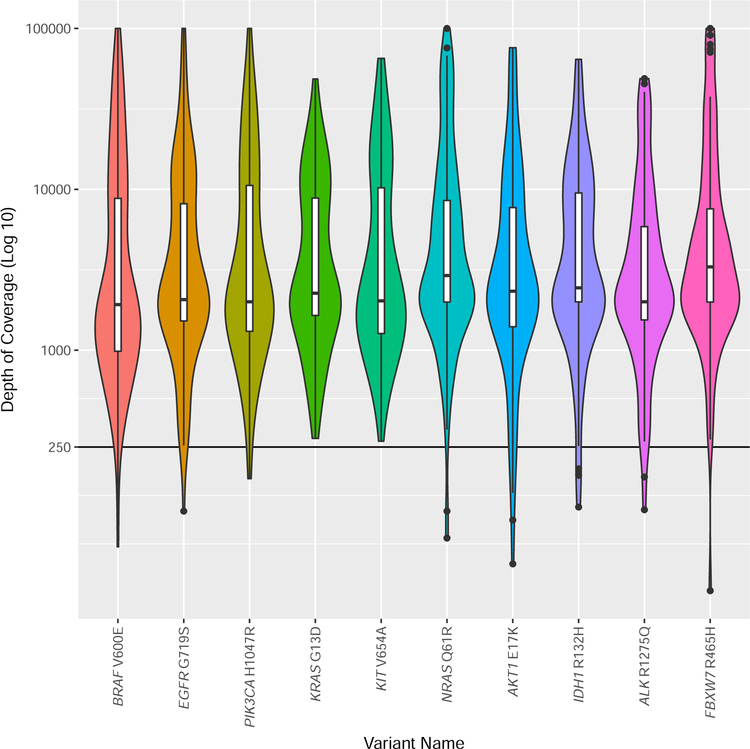
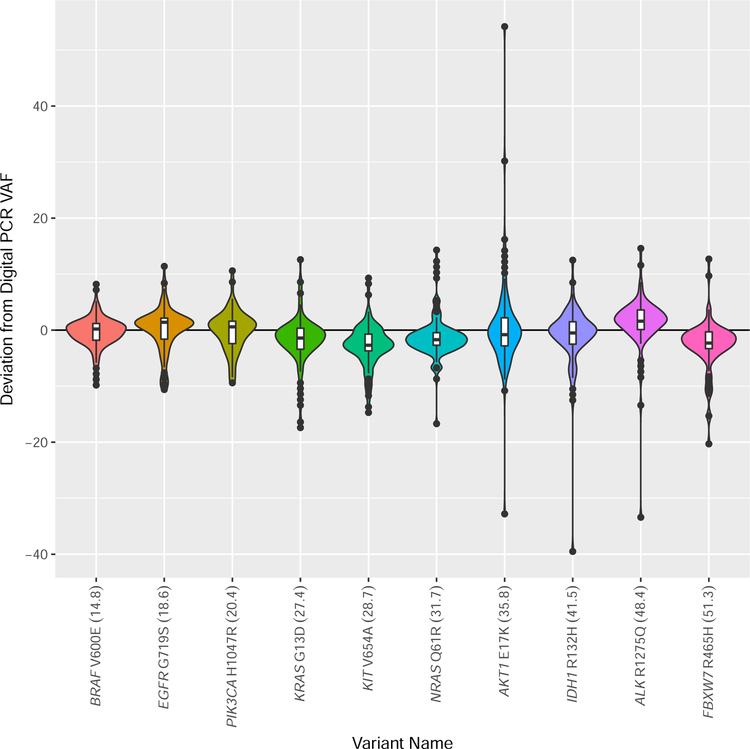
RESULTS.—: The overall accuracy observed for all variants was 98.3%. Rare false-negative results could not be attributed to sequencing platform, selection method, or other assay characteristics. The median and average of the variant allele fractions reported by the laboratories were within 10% of those orthogonally determined by digital polymerase chain reaction for each variant. The median coverage reported at the variant sites ranged from 1922 to 3297.
CONCLUSIONS.—: Laboratories demonstrated an overall accuracy of greater than 98% with high specificity when examining 10 clinically relevant somatic single-nucleotide variants with a variant allele fraction of 15% or greater. These initial data suggest excellent performance, but further ongoing studies are needed to evaluate the performance of lower variant allele fractions and additional variant types.
基于下一代测序的检测方法正越来越多地用于实体肿瘤中体细胞变异的临床检测,但关于这些检测方法的实验室间性能的有限数据。
检查初始美国病理学家学院(CAP)下一代测序实体肿瘤调查的能力验证数据,以报告实验室性能。
分析了 111 个实验室的 CAP 能力验证结果,以评估准确性和相关的检测性能特征。
所有变异的总体准确率为 98.3%。罕见的假阴性结果不能归因于测序平台、选择方法或其他检测特征。实验室报告的变异等位基因分数的中位数和平均值与每种变异的数字聚合酶链反应正交确定的分数相差 10%以内。报告的变异位点的中位覆盖范围为 1922 至 3297。
实验室在检测具有 15%或更高变异等位基因分数的 10 种临床相关单核苷酸变异时,总体准确率超过 98%,具有很高的特异性。这些初步数据表明性能良好,但需要进一步的持续研究来评估较低变异等位基因分数和其他变异类型的性能。