Laboratory of Bioressources: Integrative Biology & Recovery, High Institute of Biotechnology, University of Monastir, Monastir 5000, Tunisia.
Department of Biology, College of Science, University of Ha'il, Hai'l 2440, Saudi Arabia.
Molecules. 2018 Oct 30;23(11):2818. doi: 10.3390/molecules23112818.
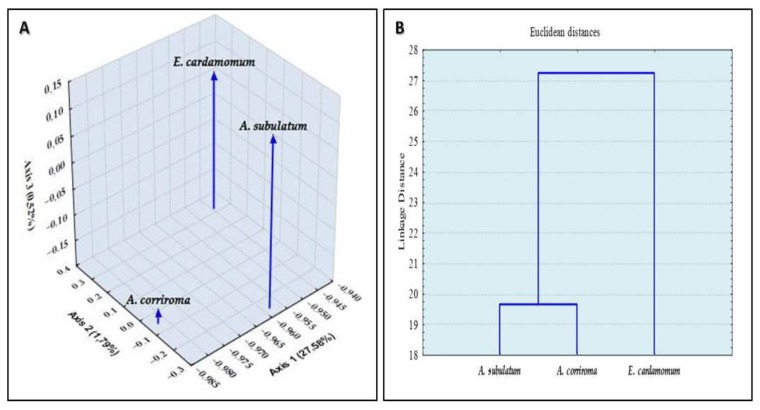
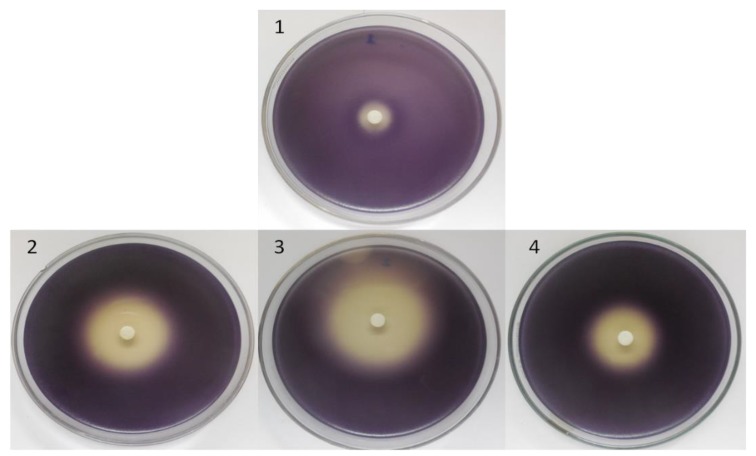
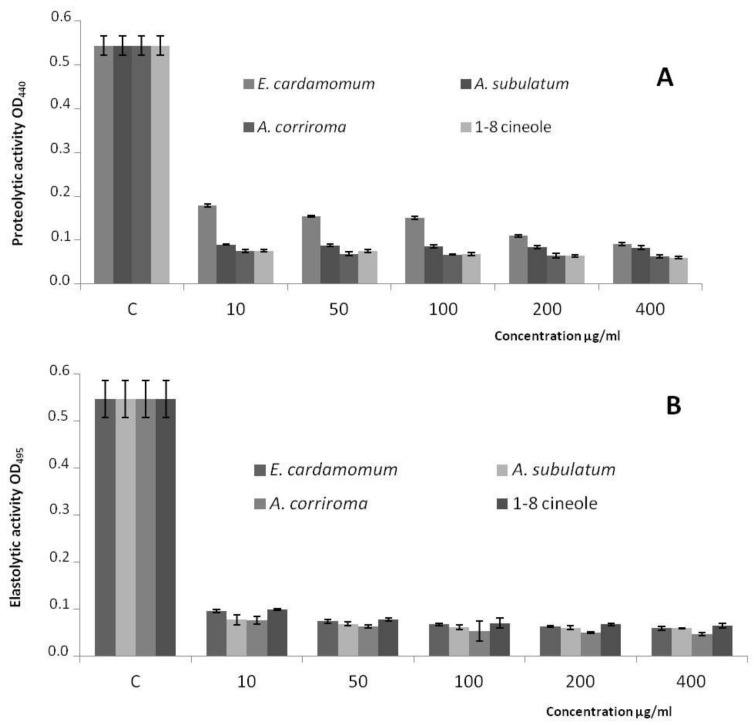
To highlight the importance of the spices in the Mediterranean diet, the aim of the paper was to study the essential oil compositions and to clarify the potential differences in the biological activities of the three cardamom species. In the study, we compared the phytochemical profiles and biological activities of essential oils from , and . The oils were analyzed using the GC and GC/MS techniques and were mainly constituted of the oxygenated monoterpenes which represents 71.4%, 63.0%, and 51.0% of all compounds detected in , and essential oils, respectively, 1,8-cineole was the main common compound between the tree tested volatile oil. The essential oils showed significant antimicrobial activity against Gram-positive and Gram-negative microorganisms tested especially the fungal strains. The Ethiopian cardamom was the most active essential oil with fungal growth inhibition zone ranging from 12.67 to 34.33 mm, MICs values ranging from 0.048 to 0.19 mg/mL, and MBCs values from 0.19 to 1.75 mg/mL. The three tested essential oils and their main component (1,8-cineole) significantly increased the production of elastase and protease production, and motility in PAO1 in a dose dependent manner. In fact, at 10 mg/mL concentration, the three essential oils showed more than 50% of inhibition of elastolytic and proteolytic activities in PAO1. The same oils inhibited also the violacein production in strain. It was also noticed that at high concentrations, the essential oil significantly inhibited the germination of radish. A thorough knowledge of the biological and safety profiles of essential oils can produce applications of economic importance.
为了强调香料在地中海饮食中的重要性,本文旨在研究三种小豆蔻属植物精油的化学成分,并阐明其生物活性的潜在差异。在本研究中,我们比较了 和 以及 的植物化学特征和生物活性。使用 GC 和 GC/MS 技术对精油进行了分析,结果表明,这些油主要由含氧单萜组成,分别占 和 精油中所有化合物的 71.4%、63.0%和 51.0%,1,8-桉叶油醇是三种测试挥发性油之间的主要共同化合物。精油对革兰氏阳性和革兰氏阴性微生物表现出显著的抗菌活性,特别是对真菌菌株。埃塞俄比亚小豆蔻精油具有最强的抗菌活性,其对真菌的生长抑制区范围为 12.67-34.33mm,最低抑菌浓度(MIC)值范围为 0.048-0.19mg/mL,最低杀菌浓度(MBC)值范围为 0.19-1.75mg/mL。三种测试的精油及其主要成分(1,8-桉叶油醇)以剂量依赖的方式显著增加了 PAO1 中弹性蛋白酶和蛋白酶的产生以及运动性。事实上,在 10mg/mL 浓度下,三种精油对 PAO1 中弹性酶和蛋白酶活性的抑制率均超过 50%。这些油还抑制了 菌株中紫色素的产生。此外,在高浓度下, 精油显著抑制了萝卜的萌发。对精油的生物和安全特性有深入的了解,可以产生具有经济重要性的应用。