• 文献检索
  • 文档翻译
  • 深度研究
  • 学术资讯
  • Suppr Zotero 插件Zotero 插件
  • 邀请有礼
  • 套餐&价格
  • 历史记录
应用&插件
Suppr Zotero 插件Zotero 插件浏览器插件Mac 客户端Windows 客户端微信小程序
定价
高级版会员购买积分包购买API积分包
服务
文献检索文档翻译深度研究API 文档MCP 服务
关于我们
关于 Suppr公司介绍联系我们用户协议隐私条款
关注我们

Suppr 超能文献

核心技术专利:CN118964589B侵权必究
粤ICP备2023148730 号-1Suppr @ 2026

文献检索

告别复杂PubMed语法,用中文像聊天一样搜索,搜遍4000万医学文献。AI智能推荐,让科研检索更轻松。

立即免费搜索

文件翻译

保留排版,准确专业,支持PDF/Word/PPT等文件格式,支持 12+语言互译。

免费翻译文档

深度研究

AI帮你快速写综述,25分钟生成高质量综述,智能提取关键信息,辅助科研写作。

立即免费体验

美国网络学习课程对乌克兰情况的适应性:经验教训和前进方向。

US e-learning course adaptation to the Ukrainian context: lessons learned and way forward.

机构信息

International Training and Education Center for Health (I-TECH), Department of Global Health, University of Washington, 908 Jefferson Street, Seattle, WA, 98104, USA.

International Training and Education Center for Health (I-TECH) Ukraine, Kyiv, Ukraine.

出版信息

BMC Med Educ. 2018 Nov 1;18(1):247. doi: 10.1186/s12909-018-1349-1.

DOI:10.1186/s12909-018-1349-1
PMID:30382853
原文链接:https://pmc.ncbi.nlm.nih.gov/articles/PMC6211463/
Abstract

BACKGROUND

Access to continuing education opportunities is limited for Ukrainian healthcare workers, and the need is acute in order to support healthcare reform efforts currently underway in Ukraine. Online learning is a cost-effective mechanism for continuing education since healthcare workers can remain on the job during training. It also provides a means of keeping health professionals up to date on their knowledge and skills in rapidly changing and increasingly complex healthcare environments.

METHODS

This paper describes the process of adapting an existing e-learning course from a US institution to the Ukrainian setting. Course participants' feedback was used to evaluate the effectiveness of the adapted version that was piloted twice in 2016-2017 with 53 participants in total, 46 of whom completed the course and contributed to the evaluation.

RESULTS

This was the first fully online course on Leadership and Management in Health (LMiH) to be offered in Ukraine. Several lessons were learned during course adaptation when multiple aspects of the Ukrainian environment were taken into account including 1) linguistic accessibility, 2) access to the Internet, 3) computer literacy, and 4) novelty of online learning. Based on these findings, course material was first adapted by translating it from English to Ukrainian with the emphasis on cultural adjustment of idioms and real life examples. Then, using the first pilot results and participants suggestions, videotaped interviews with local healthcare management experts were added in order to further enhance cultural suitability as well as relevance and applicability of the course concepts. The last but not least lesson learned consisted in the fact that enhancing, transitioning, and sustaining online learning to new contexts required engagement of key stakeholders, national level support, and technical assistance through implementation and beyond yet turned out to be both cost-effective and sustainable investment of limited resources. Formative evaluation confirmed that the adaptation efforts resulted in a course relevant and acceptable to healthcare professionals in Ukraine.

CONCLUSION

Transition of the course to local ownership was accomplished in partnership with the Ukrainian Family Medicine Training Center in the Bogomolets National Medical University in Kyiv: LMiH is now certified for continuing medical education credit and offered twice a year by this institution. Lessons learned from this experience provide a roadmap for rapidly increasing access to new knowledge and skills for healthcare workers by adapting existing online resources to local needs; they are used to facilitate rapid expansion of other continuing education offerings in Ukraine: additional online courses from the University of Washington (UW) are planned for adaptation.
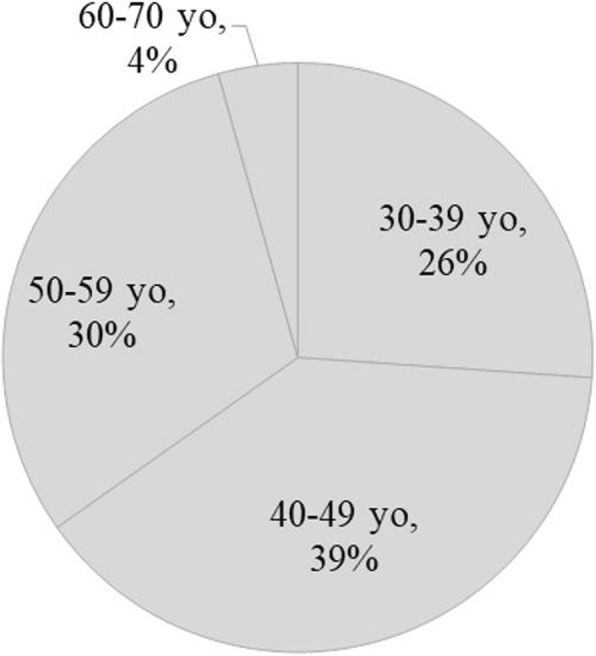
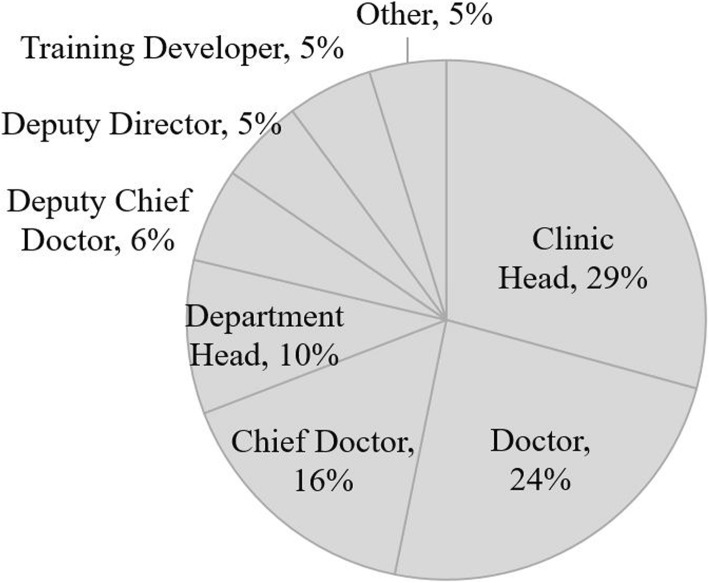
https://cdn.ncbi.nlm.nih.gov/pmc/blobs/26d8/6211463/7b6fdfc93bfd/12909_2018_1349_Fig2_HTML.jpg
https://cdn.ncbi.nlm.nih.gov/pmc/blobs/26d8/6211463/274e18216662/12909_2018_1349_Fig1_HTML.jpg
https://cdn.ncbi.nlm.nih.gov/pmc/blobs/26d8/6211463/7b6fdfc93bfd/12909_2018_1349_Fig2_HTML.jpg
https://cdn.ncbi.nlm.nih.gov/pmc/blobs/26d8/6211463/274e18216662/12909_2018_1349_Fig1_HTML.jpg
https://cdn.ncbi.nlm.nih.gov/pmc/blobs/26d8/6211463/7b6fdfc93bfd/12909_2018_1349_Fig2_HTML.jpg
摘要

背景

乌克兰医疗工作者获取继续教育机会的途径有限,而目前乌克兰正在进行医疗改革,因此对继续教育的需求非常迫切。在线学习是继续教育的一种具有成本效益的机制,因为医疗工作者可以在培训期间继续工作。它还为卫生专业人员在快速变化和日益复杂的医疗环境中保持知识和技能的更新提供了一种手段。

方法

本文介绍了将美国机构的现有电子学习课程改编为乌克兰环境的过程。课程参与者的反馈用于评估在 2016-2017 年两次试点的改编版本的有效性,共有 53 名参与者参加,其中 46 名完成了课程并为评估做出了贡献。

结果

这是乌克兰首次提供的关于领导和管理的全在线课程(LMiH)。在课程改编过程中,考虑到乌克兰环境的多个方面,例如 1)语言可访问性、2)互联网接入、3)计算机素养和 4)在线学习的新颖性,学到了一些经验。基于这些发现,首先将课程材料从英语翻译成乌克兰语,重点是调整成语和现实生活例子的文化适应性。然后,根据第一次试点结果和参与者的建议,添加了与当地医疗保健管理专家的录像访谈,以进一步提高课程概念的文化适宜性以及相关性和适用性。最后但并非最不重要的一点是,向新环境过渡、转变和维持在线学习需要吸引利益相关者、国家层面的支持以及通过实施和超越实施阶段提供技术援助,尽管这是对有限资源的具有成本效益且可持续的投资。形成性评价证实,改编工作使该课程与乌克兰的医疗保健专业人员相关且可接受。

结论

与基辅的波格莫莱茨国立医科大学的乌克兰家庭医学培训中心合作,完成了课程向当地所有权的过渡:LMiH 现在获得继续医学教育学分认证,并由该机构每年提供两次。从这一经验中吸取的教训为通过改编现有在线资源以满足当地需求,为医疗工作者快速获取新知识和技能提供了一个途径;它们被用于促进乌克兰其他继续教育课程的快速扩展:计划改编来自华盛顿大学(UW)的其他在线课程。

相似文献

1
US e-learning course adaptation to the Ukrainian context: lessons learned and way forward.美国网络学习课程对乌克兰情况的适应性:经验教训和前进方向。
BMC Med Educ. 2018 Nov 1;18(1):247. doi: 10.1186/s12909-018-1349-1.
2
The effectiveness of internet-based e-learning on clinician behavior and patient outcomes: a systematic review protocol.基于互联网的电子学习对临床医生行为和患者结局的有效性:一项系统评价方案。
JBI Database System Rev Implement Rep. 2015 Jan;13(1):52-64. doi: 10.11124/jbisrir-2015-1919.
3
Experiences and perceptions of online continuing professional development among clinicians in sub-Saharan Africa.撒哈拉以南非洲临床医生对在线继续专业发展的经验和看法。
Hum Resour Health. 2017 Dec 29;15(1):89. doi: 10.1186/s12960-017-0266-4.
4
Faculty development initiatives designed to promote leadership in medical education. A BEME systematic review: BEME Guide No. 19.旨在促进医学教育领导力的教师发展计划。BEME 系统评价:BEME 指南第 19 号。
Med Teach. 2012;34(6):483-503. doi: 10.3109/0142159X.2012.680937.
5
Health care professionals from developing countries report educational benefits after an online diabetes course.发展中国家的医疗保健专业人员报告称,在线糖尿病课程后获得了教育收益。
BMC Med Educ. 2017 May 31;17(1):97. doi: 10.1186/s12909-017-0935-y.
6
Collaborative online learning: a new approach to distance CME.协作式在线学习:远程继续医学教育的新方法。
Acad Med. 2002 Sep;77(9):928-9.
7
The RAFT network: 5 years of distance continuing medical education and tele-consultations over the Internet in French-speaking Africa.RAFT网络:在非洲法语地区开展5年的远程继续医学教育和互联网远程会诊。
Int J Med Inform. 2007 May-Jun;76(5-6):351-6. doi: 10.1016/j.ijmedinf.2007.01.012. Epub 2007 Feb 28.
8
A Web-based distance education course in nutrition in public health: case study.基于网络的公共卫生营养远程教育课程:案例研究
J Med Internet Res. 2001 Apr-Jun;3(2):E16. doi: 10.2196/jmir.3.2.e16.
9
An integrative review of e-learning in the delivery of self-management support training for health professionals.电子学习在提供健康专业人员自我管理支持培训中的综合回顾。
BMC Med Educ. 2017 Oct 10;17(1):183. doi: 10.1186/s12909-017-1022-0.
10
Blended learning: strengths, challenges, and lessons learned in an interprofessional training program.混合式学习:在跨专业培训项目中的优势、挑战与经验教训。
Matern Child Health J. 2013 Nov;17(9):1725-34. doi: 10.1007/s10995-012-1175-8.

引用本文的文献

1
Where do we invest money to implement active learning on caries detection? An economic evaluation.我们应该把钱投资在哪里来实施龋病检测的主动学习?一项经济评估。
Braz Oral Res. 2024 Jun 24;38:e055. doi: 10.1590/1807-3107bor-2024.vol38.0055. eCollection 2024.

本文引用的文献

1
Online Versus Face-To-Face Training of Critical Time Intervention: A Matching Cluster Randomized Trial.关键时间干预的在线培训与面对面培训:一项匹配整群随机试验
Am J Distance Educ. 2016;30(4):237-249. doi: 10.1080/08923647.2016.1232107. Epub 2016 Dec 16.
2
Impact of distance education on academic performance in a pharmaceutical care course.远程教育对药学服务课程学业成绩的影响。
PLoS One. 2017 Apr 6;12(4):e0175117. doi: 10.1371/journal.pone.0175117. eCollection 2017.
3
Ukraine: health system review.乌克兰:卫生系统评估。
Health Syst Transit. 2015 Mar;17(2):1-154.
4
Organisational aspects and benchmarking of e-learning initiatives: a case study with South African community health workers.电子学习计划的组织方面与基准评估:以南非社区卫生工作者为例的案例研究
Glob Health Promot. 2016 Jun;23(2):57-66. doi: 10.1177/1757975914567178. Epub 2015 Mar 2.
5
Self-directed e-learning at a tertiary hospital in Malawi--a qualitative evaluation and lessons learnt.马拉维一家三级医院的自主式电子学习——定性评估及经验教训
GMS Z Med Ausbild. 2015 Feb 11;32(1):Doc7. doi: 10.3205/zma000949. eCollection 2015.
6
Quality of care and health status in Ukraine.乌克兰的医疗服务质量与健康状况。
BMC Health Serv Res. 2014 Sep 30;14:446. doi: 10.1186/1472-6963-14-446.
7
Online eLearning for undergraduates in health professions: A systematic review of the impact on knowledge, skills, attitudes and satisfaction.在线电子学习在健康专业本科生中的应用:对知识、技能、态度和满意度影响的系统评价。
J Glob Health. 2014 Jun;4(1):010406. doi: 10.7189/jogh.04.010406.
8
E-learning in medical education in resource constrained low- and middle-income countries.资源有限的中低收入国家的医学教育中的电子学习。
Hum Resour Health. 2013 Feb 4;11:4. doi: 10.1186/1478-4491-11-4.
9
Distance education for physicians: adaptation of a Canadian experience to Uruguay.针对医生的远程教育:将加拿大的经验应用于乌拉圭。
J Contin Educ Health Prof. 2008 Spring;28(2):79-85. doi: 10.1002/chp.161.