Luo Chaobing, Li Yuanqiu, Liao Hong, Yang Yaojun
1Bamboo Diseases and Pests Control and Resources Development Key Laboratory of Sichuan Province, College of Life Science, Leshan Normal University, No. 778, Riverside Road, Central District, Leshan, 614000 China.
2College of Food and Biological Engineering, Xihua University, Chengdu, China.
Biotechnol Biofuels. 2018 Oct 27;11:292. doi: 10.1186/s13068-018-1291-9. eCollection 2018.
The bamboo weevil , which is considered a pest species, damages bamboo shoots via its piercing-sucking mode of feeding. is well known for its ability to transform bamboo shoot biomass into nutrients and energy for growth, development and reproduction with high specificity and efficacy of bioconversion. Woody bamboo is a perennial grass that is a potential feedstock for lignocellulosic biomass because of its high growth rate and lignocellulose content. To verify our hypothesis that efficiently degrades bamboo lignocellulose, we assessed the bamboo lignocellulose-degrading ability of this insect through RNA sequencing for identifying a potential route for utilisation of bamboo biomass.
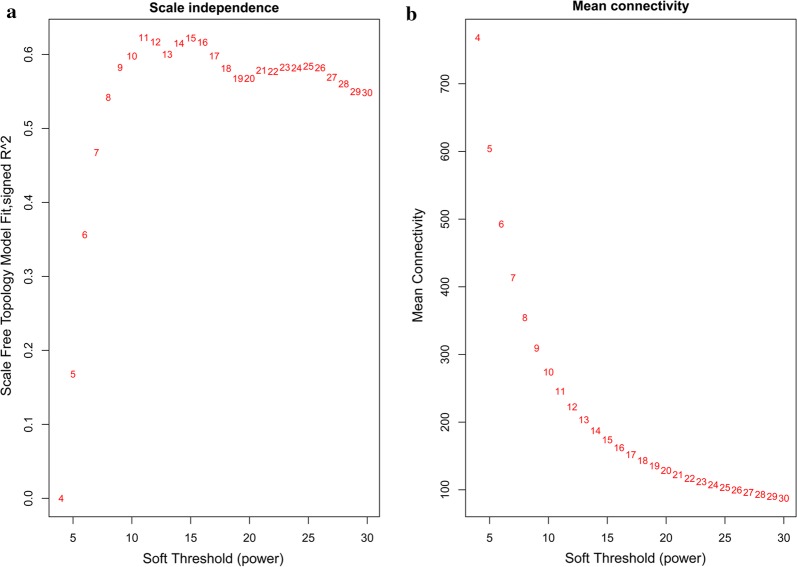
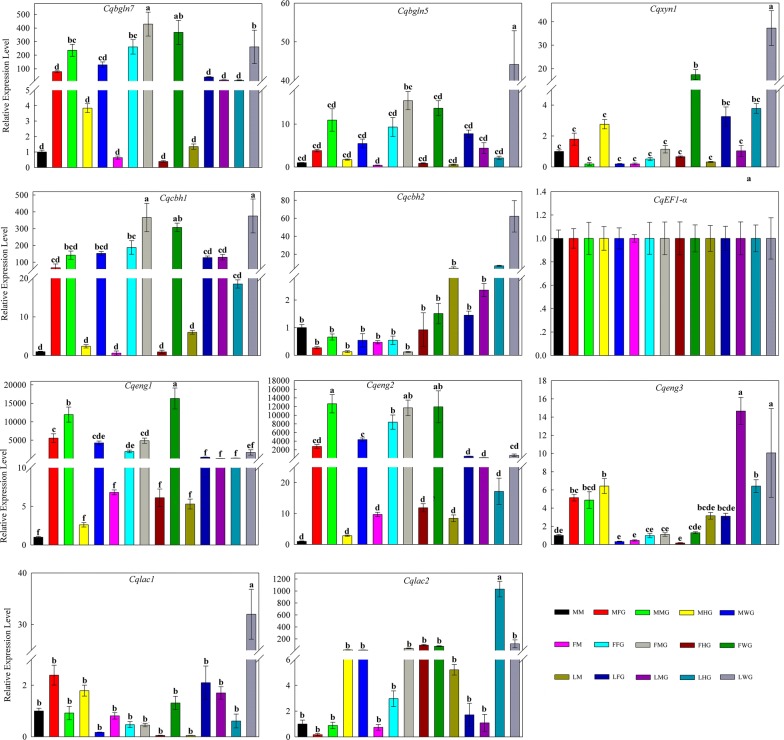
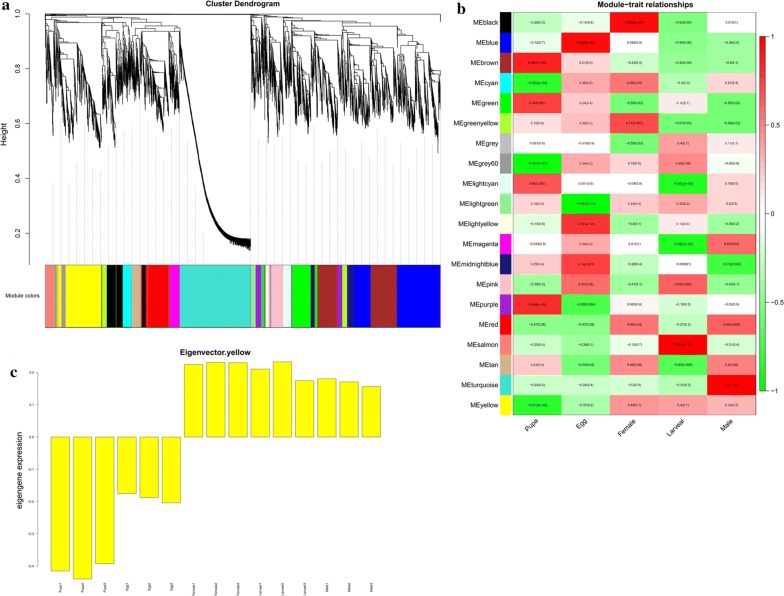
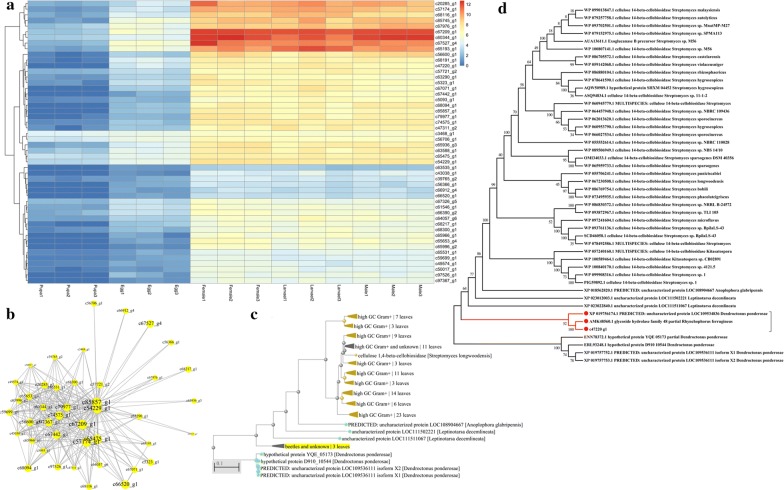
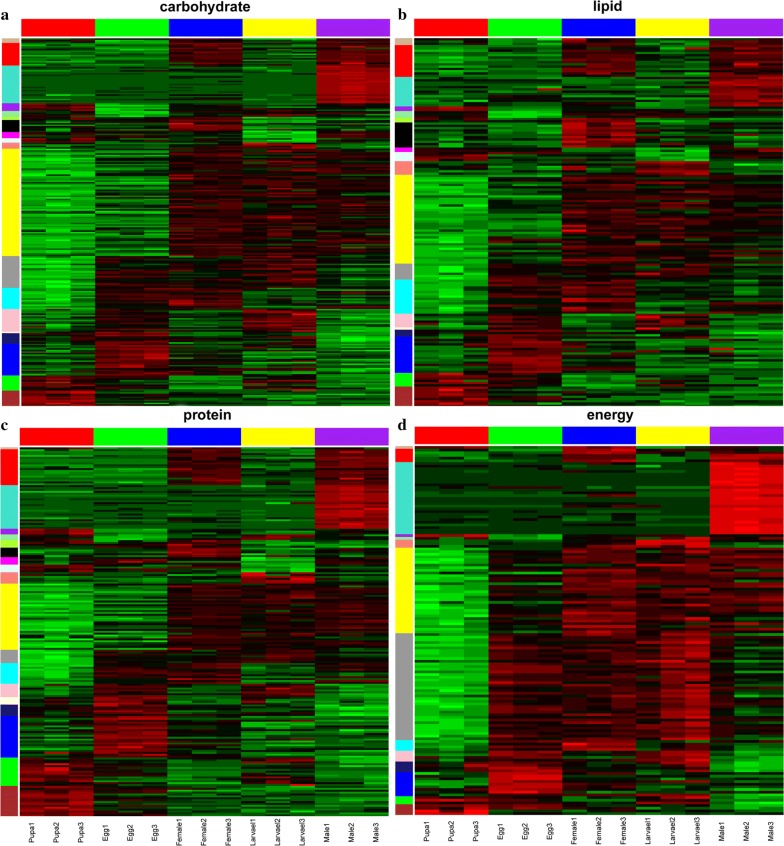
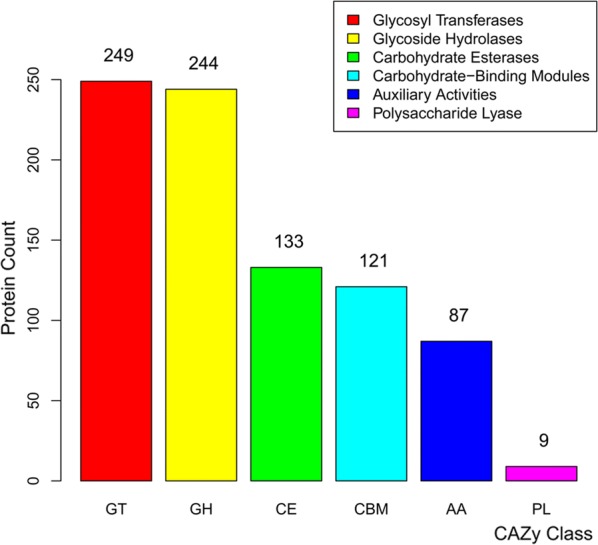
Analysis of carbohydrate-active enzyme (CAZyme) family genes in the developmental transcriptome of revealed 1082 unigenes, including 55 glycoside hydrolases (GH) families containing 309 GHs, 51 glycosyltransferases (GT) families containing 329 GTs, 8 carbohydrate esterases (CE) families containing 174 CEs, 6 polysaccharide lyases (PL) families containing 11 PLs, 8 auxiliary activities (AA) families containing 131 enzymes with AAs and 17 carbohydrate-binding modules (CBM) families containing 128 CBMs. We used weighted gene co-expression network analysis to analyse developmental RNA sequencing data, and 19 unique modules were identified in the analysis. Of these modules, the expression of MEyellow module genes was unique and the module included numerous CAZyme family genes. CAZyme genes in this module were divided into two groups depending on whether gene expression was higher in the adult/larval stages or in the egg/pupal stages. Enzyme assays revealed that cellulase activity was highest in the midgut whereas lignin-degrading enzyme activity was highest in the hindgut, consistent with findings from intestinal gene expression studies. We also analysed the expression of CAZyme genes in the transcriptome of from two cities and found that several genes were also assigned to CAZyme families. The insect had genes and enzymes associated with lignocellulose degradation, the expression of which differed with developmental stage and intestinal region.
exhibits lignocellulose degradation-related enzymes and genes, most notably CAZyme family genes. CAZyme family genes showed differences in expression at different developmental stages, with adults being more effective at cellulose degradation and larvae at lignin degradation, as well as at different regions of the intestine, with the midgut being more cellulolytic than the hindgut. This degradative system could be utilised for the bioconversion of bamboo lignocellulosic biomass.
竹象甲被视为害虫,通过刺吸式取食方式损害竹笋。它以能够将竹笋生物量高效且特异性地转化为生长、发育和繁殖所需的营养物质和能量而闻名。木质竹是一种多年生草本植物,因其高生长速率和木质纤维素含量,是木质纤维素生物质的潜在原料。为验证我们关于竹象甲能有效降解竹木质纤维素的假设,我们通过RNA测序评估了这种昆虫降解竹木质纤维素的能力,以确定利用竹生物质的潜在途径。
对竹象甲发育转录组中的碳水化合物活性酶(CAZyme)家族基因分析发现了1082个单基因,包括55个糖苷水解酶(GH)家族,含309个GHs;51个糖基转移酶(GT)家族,含329个GTs;8个碳水化合物酯酶(CE)家族,含174个CEs;6个多糖裂解酶(PL)家族,含11个PLs;8个辅助活性(AA)家族,含131个具有AA活性的酶;以及17个碳水化合物结合模块(CBM)家族,含128个CBMs。我们使用加权基因共表达网络分析来分析发育RNA测序数据,分析中鉴定出19个独特模块。在这些模块中,MEyellow模块基因的表达独特,该模块包含众多CAZyme家族基因。此模块中的CAZyme基因根据基因表达在成虫/幼虫阶段还是卵/蛹阶段较高分为两组。酶活性测定表明,纤维素酶活性在中肠最高,而木质素降解酶活性在后肠最高,这与肠道基因表达研究结果一致。我们还分析了来自两个城市的竹象甲转录组中CAZyme基因的表达,发现一些基因也属于CAZyme家族。该昆虫具有与木质纤维素降解相关的基因和酶,其表达随发育阶段和肠道区域而不同。
竹象甲表现出与木质纤维素降解相关的酶和基因,最显著的是CAZyme家族基因。CAZyme家族基因在不同发育阶段的表达存在差异,成虫在纤维素降解方面更有效,幼虫在木质素降解方面更有效,在肠道的不同区域也是如此,中肠比后肠更具纤维素分解能力。这种降解系统可用于竹木质纤维素生物质的生物转化。