Department of Biomolecular Sciences, Weizmann Institute of Science, Rehovot, 76100, Israel.
Cell Death Dis. 2018 Nov 2;9(11):1116. doi: 10.1038/s41419-018-1155-z.
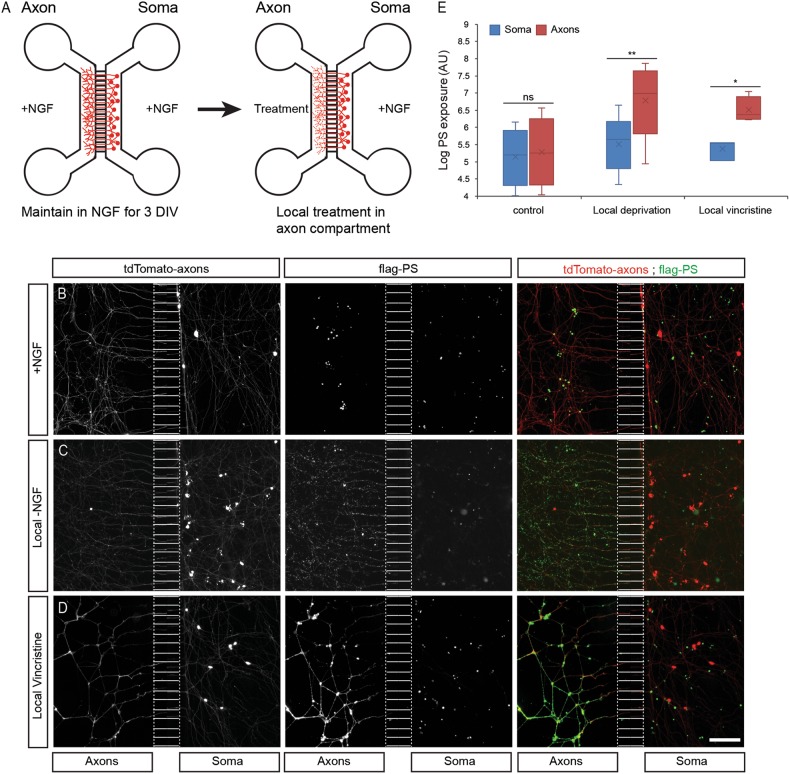
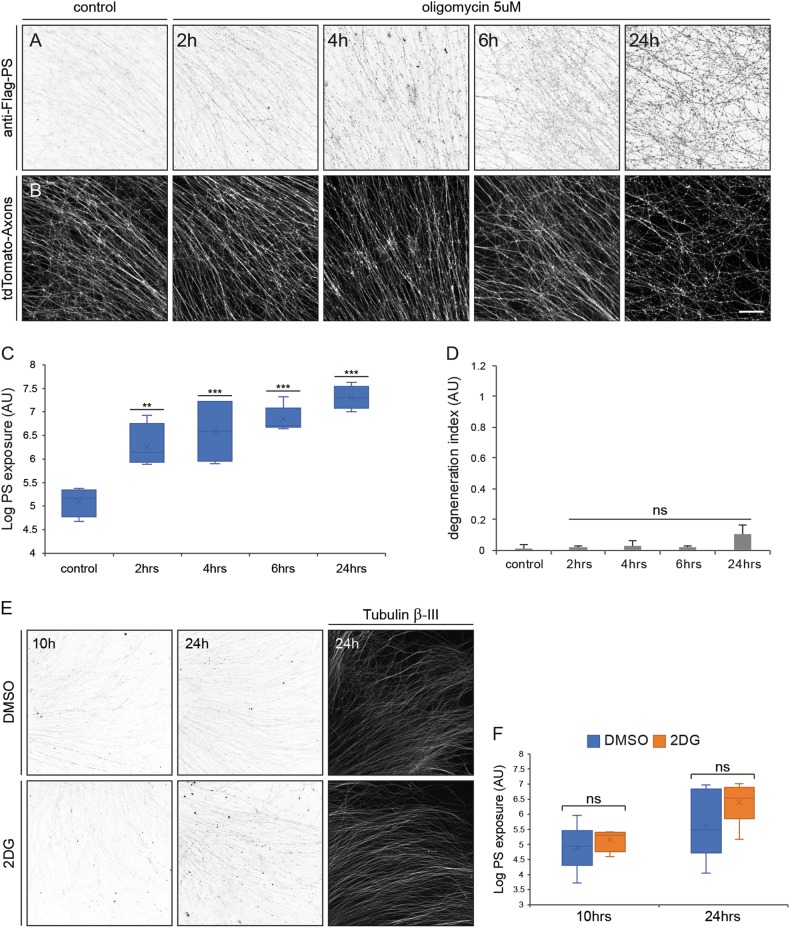
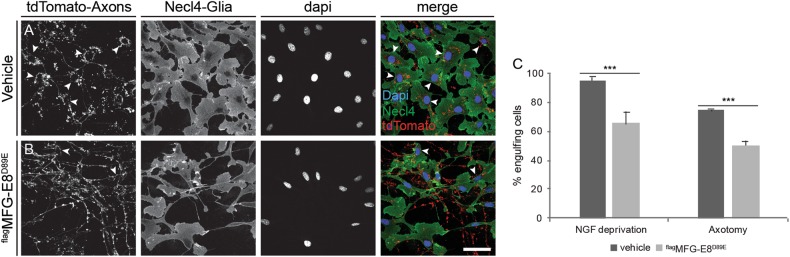
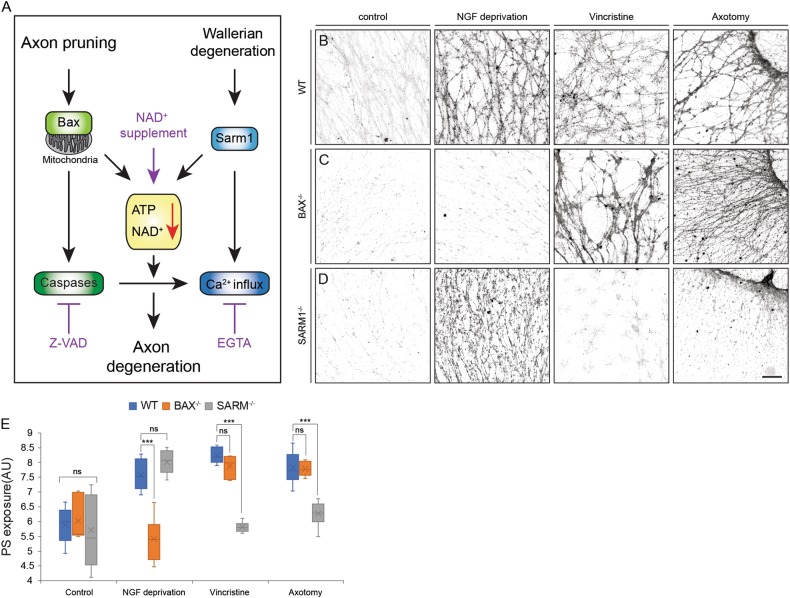
Apoptotic cells expose Phosphatidylserine (PS), that serves as an "eat me" signal for engulfing cells. Previous studies have shown that PS also marks degenerating axonsduring developmental pruning or in response to insults (Wallerian degeneration), but the pathways that control PS exposure on degenerating axons are largely unknown. Here, we used a series of in vitro assays to systematically explore the regulation of PS exposure during axonal degeneration. Our results show that PS exposure is regulated by the upstream activators of axonal pruning and Wallerian degeneration. However, our investigation of signaling further downstream revealed divergence between axon degeneration and PS exposure. Importantly, elevation of the axonal energetic status hindered PS exposure, while inhibition of mitochondrial activity caused PS exposure, without degeneration. Overall, our results suggest that the levels of PS on the outer axonal membrane can be dissociated from the degeneration process and that the axonal energetic status plays a key role in the regulation of PS exposure.
凋亡细胞暴露磷脂酰丝氨酸(PS),PS 作为吞噬细胞的“吃我”信号。先前的研究表明,PS 也标记发育性修剪过程中或受到损伤时(Wallerian 变性)退化轴突,但控制退化轴突上 PS 暴露的途径在很大程度上是未知的。在这里,我们使用一系列体外测定法系统地研究了轴突变性过程中 PS 暴露的调控。我们的结果表明,PS 暴露受轴突修剪和 Wallerian 变性的上游激活剂调控。然而,我们对信号的进一步下游研究表明,轴突变性和 PS 暴露之间存在分歧。重要的是,升高轴突能量状态会阻碍 PS 暴露,而抑制线粒体活性则会导致 PS 暴露而不导致变性。总的来说,我们的结果表明,外轴突膜上 PS 的水平可以与变性过程分离,并且轴突能量状态在 PS 暴露的调控中起着关键作用。