Department of Neurosurgery, Center of Pituitary Tumor, Ruijin Hospital, Shanghai Jiao Tong University School of Medicine, 200025, Shanghai, China.
Department of Neurosurgery, First Affiliated Hospital of Wenzhou Medical University, 325000, Wenzhou, China.
Nat Commun. 2018 Nov 5;9(1):4624. doi: 10.1038/s41467-018-06853-3.
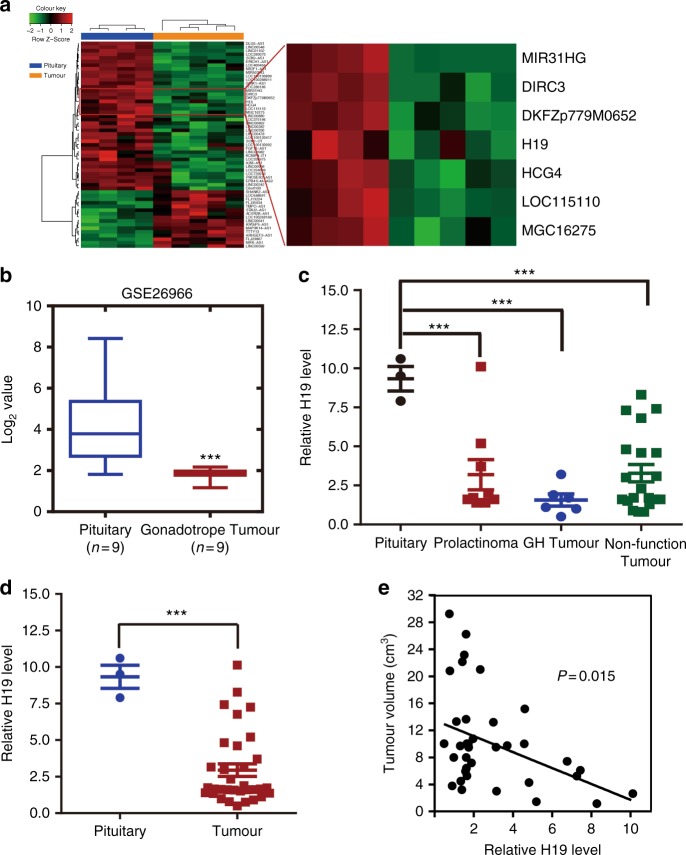
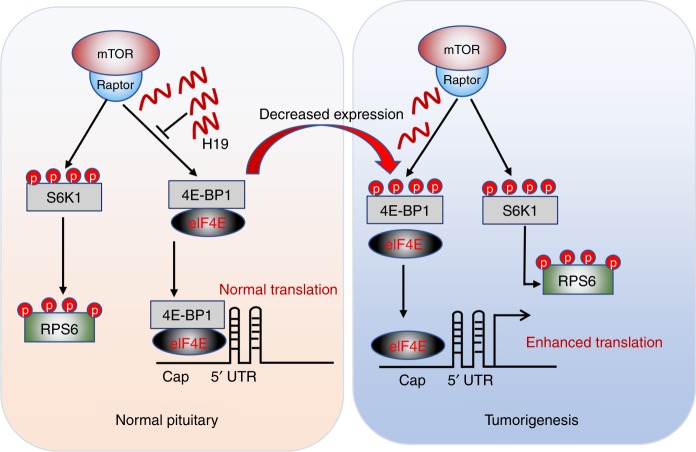
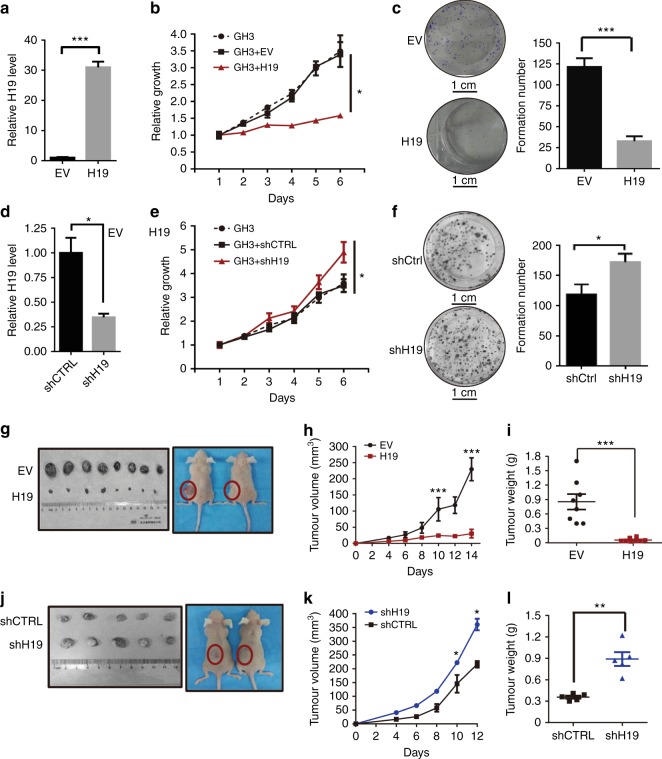
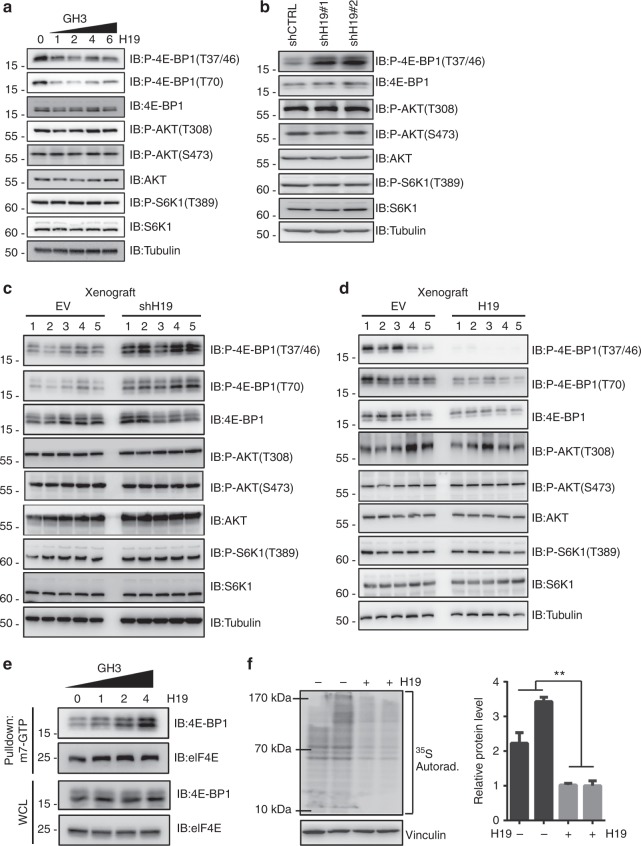
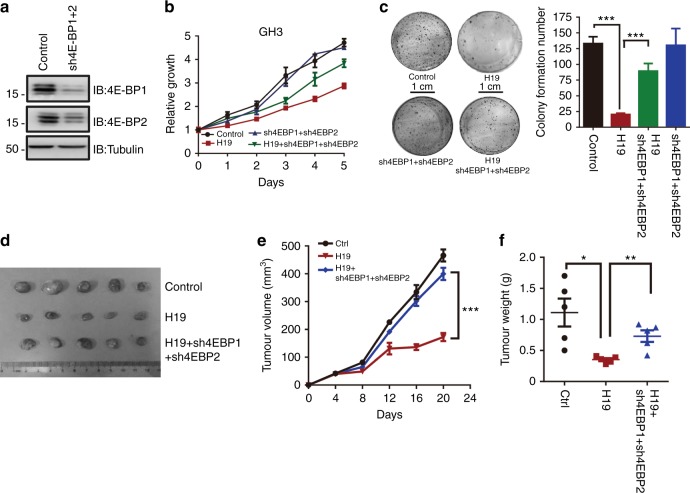
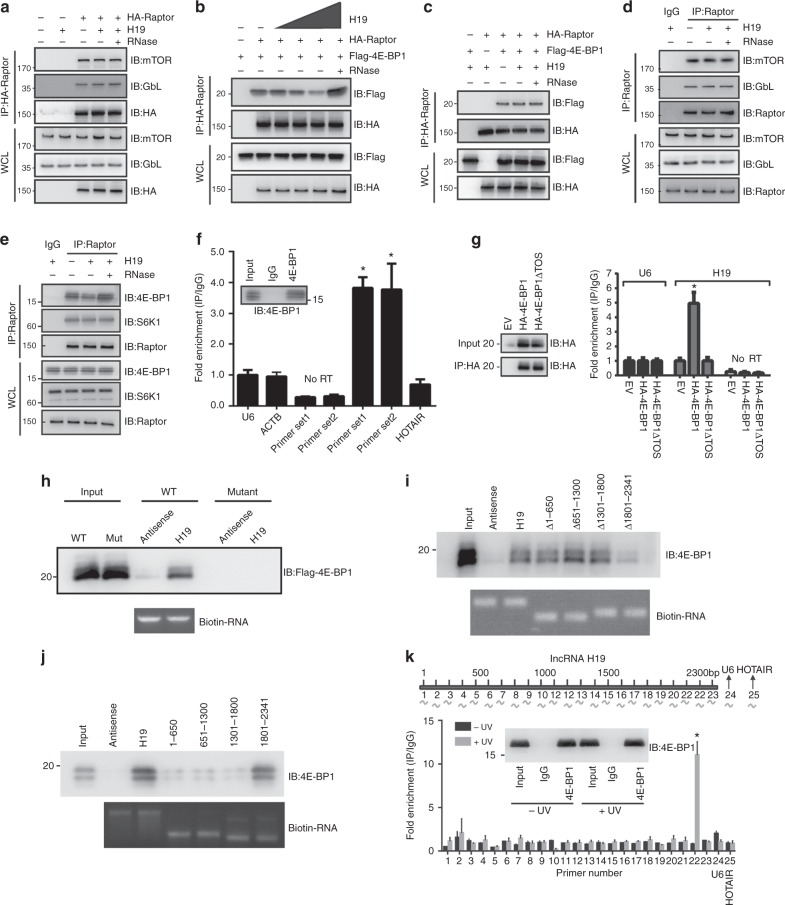
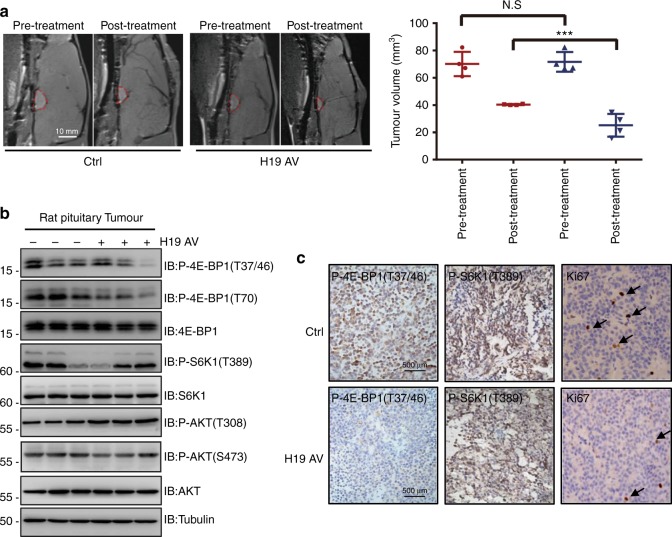
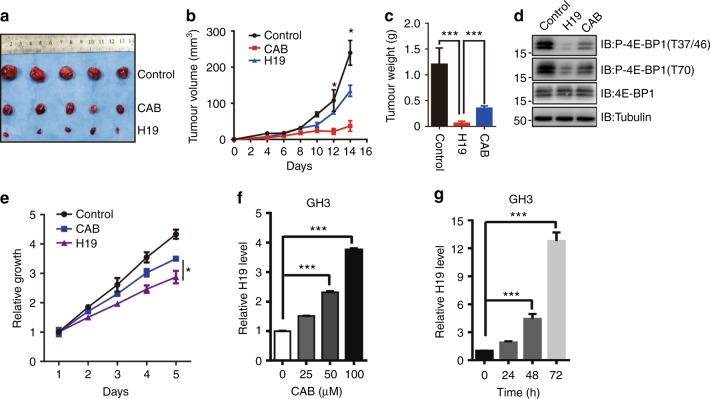
Aberrant expression of long noncoding RNA H19 has been associated with tumour progression, but the underlying molecular tumourigenesis mechanisms remain largely unknown. Here, we report that H19 expression is frequently downregulated in human primary pituitary adenomas and is negatively correlated with tumour progression. Consistently, upregulation of H19 expression inhibits pituitary tumour cell proliferation in vitro and tumour growth in vivo. Importantly, we uncover a function of H19, which controls cell/tumour growth through inhibiting function of mTORC1 but not mTORC2. Mechanistically, we show that H19 could block mTORC1-mediated 4E-BP1 phosphorylation without affecting S6K1 activation. At the molecular level, H19 interacted with 4E-BP1 at the TOS motif and competitively inhibited 4E-BP1 binding to Raptor. Finally, we demonstrate that H19 is more effective than cabergoline treatment in the suppression of pituitary tumours. Together, our study uncovered the role of H19-mTOR-4E-BP1 axis in pituitary tumour growth regulation that may be a potential therapeutic target for human pituitary tumours.
长链非编码 RNA H19 的异常表达与肿瘤进展有关,但潜在的分子肿瘤发生机制在很大程度上仍不清楚。在这里,我们报告 H19 的表达在人类原发性垂体腺瘤中经常下调,并与肿瘤进展呈负相关。一致地,H19 表达的上调抑制了体外垂体肿瘤细胞的增殖和体内肿瘤的生长。重要的是,我们发现了 H19 的一个功能,它通过抑制 mTORC1 而不是 mTORC2 的功能来控制细胞/肿瘤的生长。在机制上,我们表明 H19 可以阻止 mTORC1 介导的 4E-BP1 磷酸化,而不影响 S6K1 的激活。在分子水平上,H19 在 TOS 基序上与 4E-BP1 相互作用,并竞争性抑制 4E-BP1 与 Raptor 的结合。最后,我们证明 H19 在抑制垂体肿瘤方面比卡麦角林治疗更有效。总之,我们的研究揭示了 H19-mTOR-4E-BP1 轴在垂体肿瘤生长调控中的作用,这可能是人类垂体肿瘤的一个潜在治疗靶点。