Centre for Biodiversity and Conservation Science, The University of Queensland, 4072, Brisbane, QLD, Australia.
CSIRO Land & Water, EcoSciences Precinct, 41 Boggo Road, Dutton Park, QLD, 4102, Australia.
Nat Commun. 2018 Nov 5;9(1):4621. doi: 10.1038/s41467-018-07049-5.
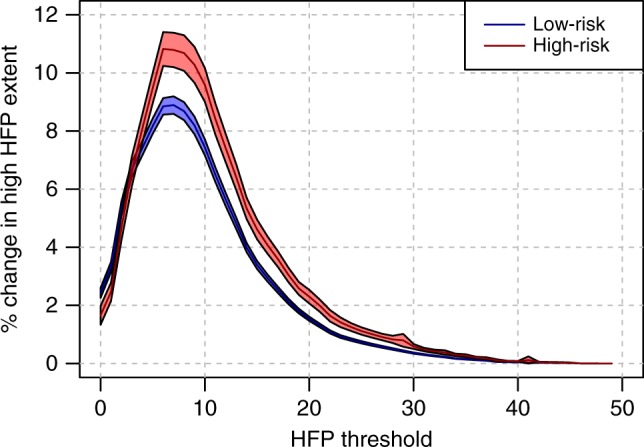
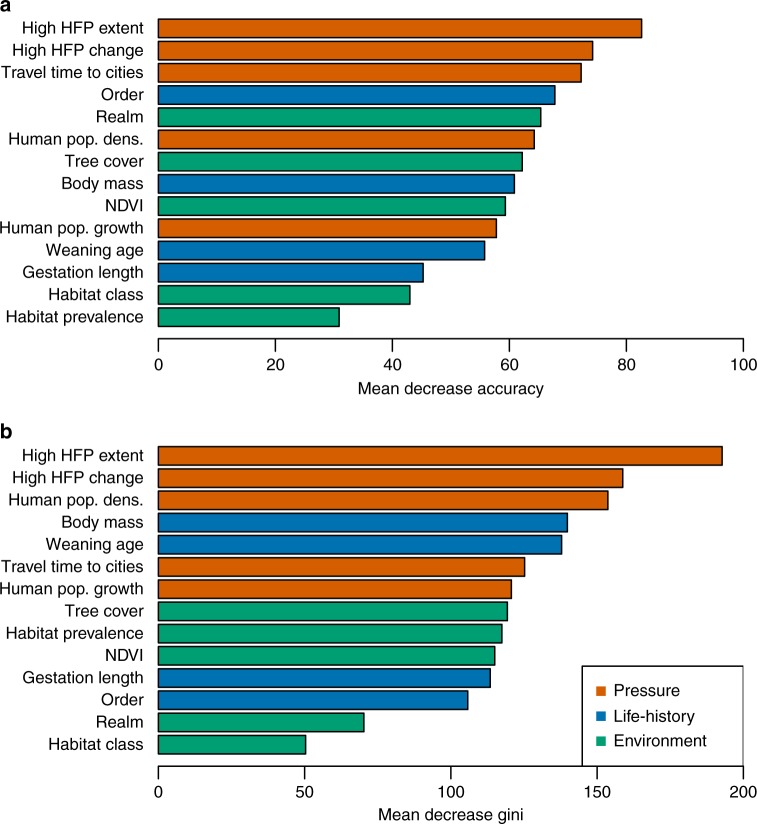
Predicting how species respond to human pressure is essential to anticipate their decline and identify appropriate conservation strategies. Both human pressure and extinction risk change over time, but their inter-relationship is rarely considered in extinction risk modelling. Here we measure the relationship between the change in terrestrial human footprint (HFP)-representing cumulative human pressure on the environment-and the change in extinction risk of the world's terrestrial mammals. We find the values of HFP across space, and its change over time, are significantly correlated to trends in species extinction risk, with higher predictive importance than environmental or life-history variables. The anthropogenic conversion of areas with low pressure values (HFP < 3 out of 50) is the most significant predictor of change in extinction risk, but there are biogeographical variations. Our framework, calibrated on past extinction risk trends, can be used to predict the impact of increasing human pressure on biodiversity.
预测物种如何应对人类压力对于预测其衰退和确定适当的保护策略至关重要。人类压力和灭绝风险都会随着时间的推移而变化,但在灭绝风险建模中很少考虑它们之间的相互关系。在这里,我们测量了陆地人类足迹(HFP)变化与世界陆地哺乳动物灭绝风险变化之间的关系。我们发现,HFP 的空间值及其随时间的变化与物种灭绝风险的趋势显著相关,其预测重要性高于环境或生活史变量。人类对低压力值(HFP<50 中的 3)区域的人为转化是灭绝风险变化的最显著预测因素,但存在生物地理差异。我们的框架是根据过去的灭绝风险趋势进行校准的,可以用来预测不断增加的人类压力对生物多样性的影响。