Belachew A B, Abrha M B, Gebrezgi Z A, Tekle D Y
School of Public Health, College of Health Sciences, Mekelle University, Mekelle, Ethiopia.
J Prev Med Hyg. 2018 Sep 28;59(3):E219-E225. doi: 10.15167/2421-4248/jpmh2018.59.3.826. eCollection 2018 Sep.
Despite concerted efforts by governmental and non-governmental organizations, water and adequate sanitation still remain a challenge worldwide. Therefore, this study assessed the availability and utilization of sanitation facilities in Enderta district of Tigray, Ethiopia.
A cross-sectional study was conducted in May 2016. An interview and observation were conducted in a total of 450 households. An interviewer administered questionnaire and observation checklist were used to collect the data. Multivariable logistic regression was done to identify the predictors of availability and utilization of latrine, hand washing, and drinking water.
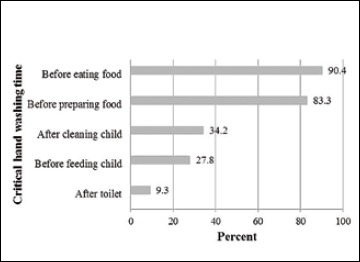
Out of 450 households, only 68.4% had latrine of which only 21.4% had hand washing facility near the toilet. Likewise, only 9.3% washed their hand after toilet. However, all households had access to improved water source. In this study, proper utilization of latrine, hand washing, and water facilities was observed in 53%, 42.4% and 36.2% of the study households, respectively. The family size and getting sanitation information from health care providers, health extension workers, and health development army had a positive effect on availability and utilization.
Though Community-Led total sanitation and hygiene approach has been implemented in the study area, the availability and proper utilization of latrine, and hand washing are still low. Only few households used drinking water properly. The education or information on hygienic practices found to affect the availability and utilization of the sanitation facilities positively. Therefore, strengthening the health extension workers and health development army to provide sustainable education and health information is needed.
尽管政府和非政府组织共同努力,但水和充足的卫生设施在全球范围内仍然是一项挑战。因此,本研究评估了埃塞俄比亚提格雷州恩代尔塔区卫生设施的可及性和使用情况。
2016年5月进行了一项横断面研究。共对450户家庭进行了访谈和观察。使用访谈员管理的问卷和观察清单收集数据。进行多变量逻辑回归以确定厕所、洗手和饮用水的可及性和使用情况的预测因素。
在450户家庭中,只有68.4%有厕所,其中只有21.4%在厕所附近有洗手设施。同样,只有9.3%的人在便后洗手。然而,所有家庭都能获得改善后的水源。在本研究中,分别有53%、42.4%和36.2%的研究家庭正确使用了厕所、洗手和水设施。家庭规模以及从医疗保健提供者、健康推广工作者和健康发展军那里获得卫生信息对可及性和使用情况有积极影响。
尽管研究地区已实施了社区主导的全面卫生和卫生方法,但厕所和洗手设施的可及性和正确使用率仍然很低。只有少数家庭正确使用了饮用水。发现关于卫生习惯的教育或信息对卫生设施的可及性和使用情况有积极影响。因此,需要加强健康推广工作者和健康发展军,以提供可持续的教育和健康信息。