Chemical Biology of Cancer Team, Labellisée Ligue Contre le Cancer. PSL Research University, CNRS UMR3666 -INSERM U1143, Institut Curie, Paris, France.
IGF, University of Montpellier, CNRS-INSERM, Montpellier, France.
PLoS One. 2018 Nov 6;13(11):e0206764. doi: 10.1371/journal.pone.0206764. eCollection 2018.
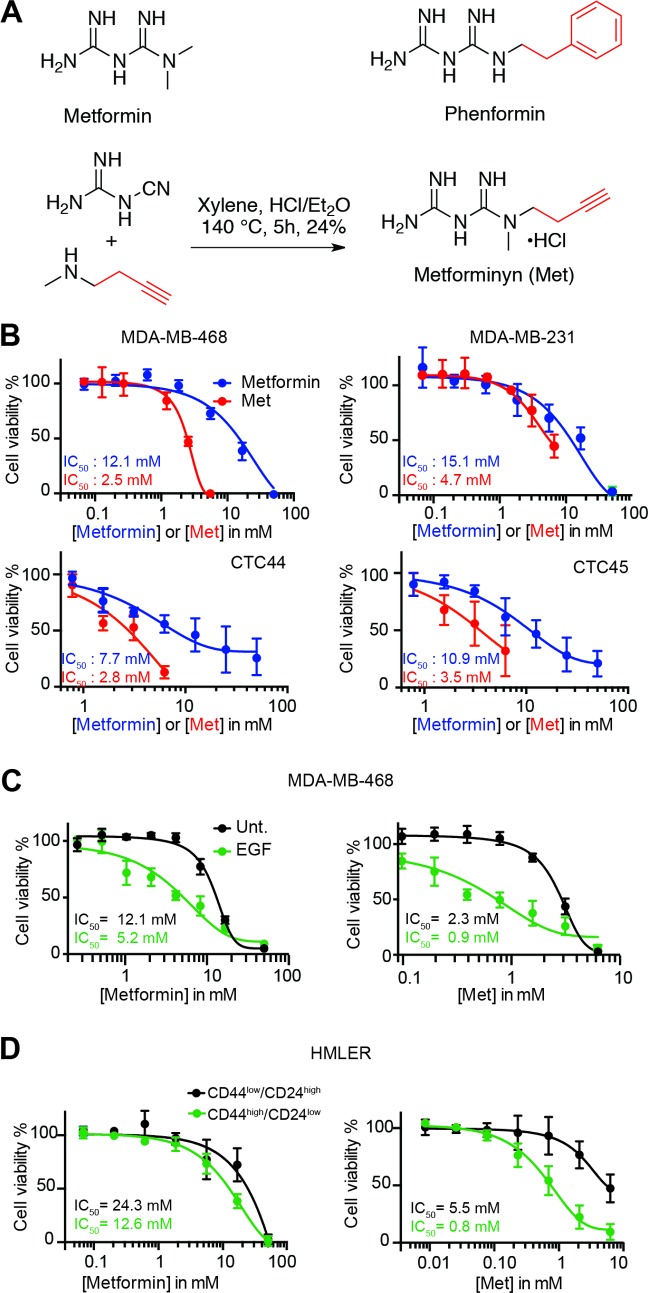
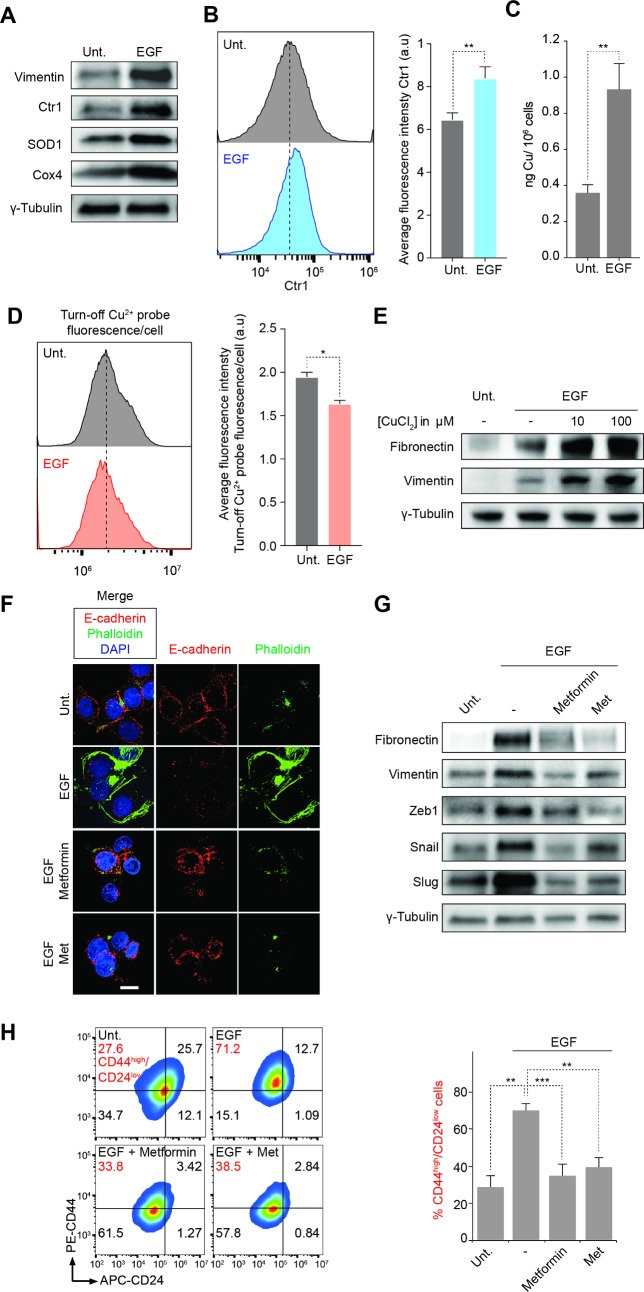
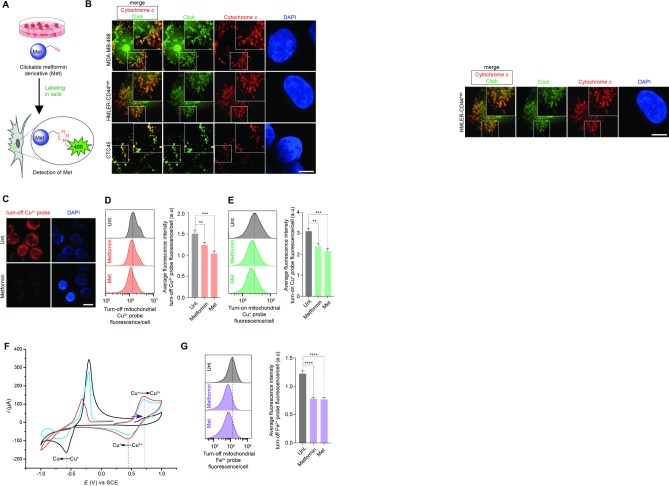
The clinically approved drug metformin has been shown to selectively kill persister cancer cells through mechanisms that are not fully understood. To provide further mechanistic insights, we developed a drug surrogate that phenocopies metformin and can be labeled in situ by means of click chemistry. Firstly, we found this molecule to be more potent than metformin in several cancer cell models. Secondly, this technology enabled us to provide visual evidence of mitochondrial targeting with this class of drugs. A combination of fluorescence microscopy and cyclic voltammetry indicated that metformin targets mitochondrial copper, inducing the production of reactive oxygen species in this organelle, mitochondrial dysfunction and apoptosis. Importantly, this study revealed that mitochondrial copper is required for the maintenance of a mesenchymal state of human cancer cells, and that metformin can block the epithelial-to-mesenchymal transition, a biological process that normally accounts for the genesis of persister cancer cells, through direct copper targeting.
临床批准的药物二甲双胍已被证明通过尚未完全了解的机制选择性地杀死耐药性癌细胞。为了提供进一步的机制见解,我们开发了一种药物替代物,可通过点击化学原位标记二甲双胍。首先,我们发现该分子在几种癌细胞模型中比二甲双胍更有效。其次,该技术使我们能够提供此类药物靶向线粒体的直观证据。荧光显微镜和循环伏安法的组合表明,二甲双胍靶向线粒体铜,在该细胞器中诱导活性氧的产生、线粒体功能障碍和细胞凋亡。重要的是,这项研究表明,线粒体铜对于维持人类癌细胞的间充质状态是必需的,并且二甲双胍可以通过直接靶向铜来阻断上皮-间充质转化,上皮-间充质转化通常是耐药性癌细胞产生的生物学过程。