Tenda Keisuke, Ota Riki, Yamada Kentaro, Henares Terence G, Suzuki Koji, Citterio Daniel
Department of Applied Chemistry, Keio University, 3-14-1 Hiyoshi, Kohoku-ku, Yokohama 223-8522, Kanagawa, Japan.
Micromachines (Basel). 2016 May 2;7(5):80. doi: 10.3390/mi7050080.
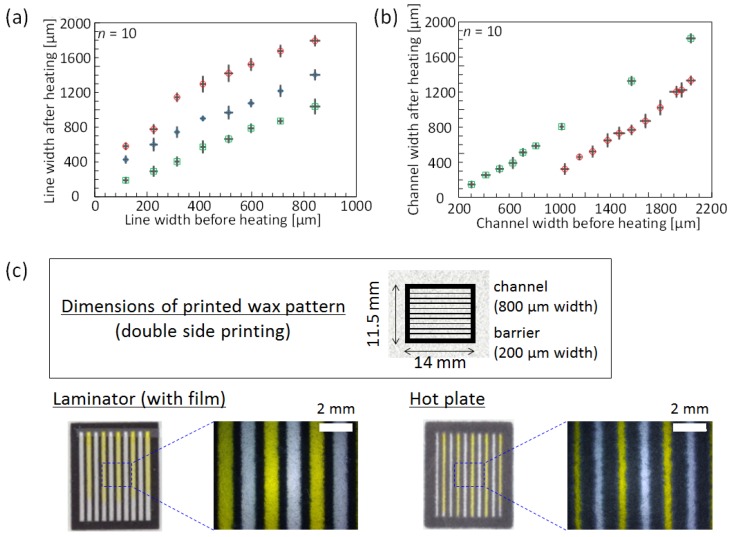
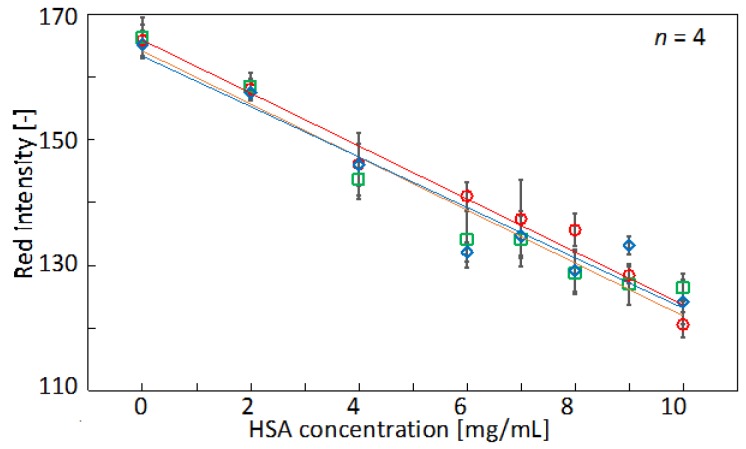
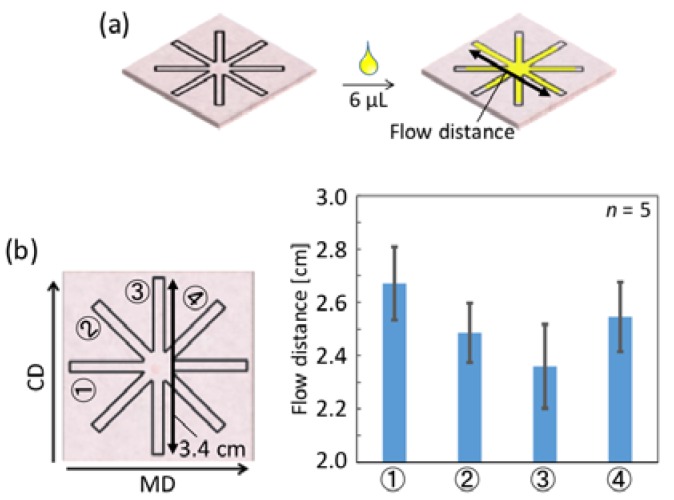
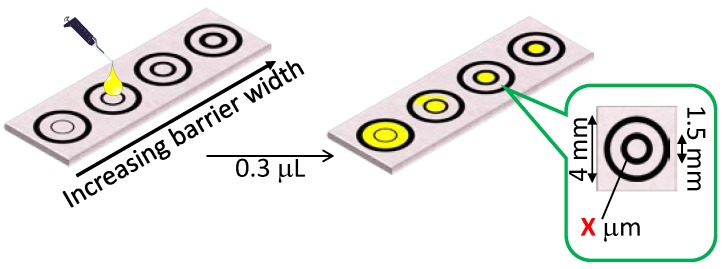
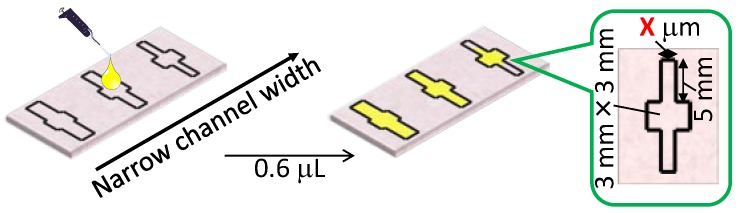
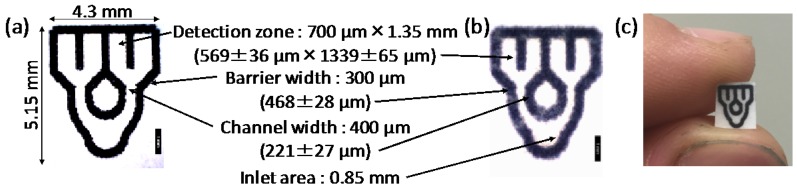
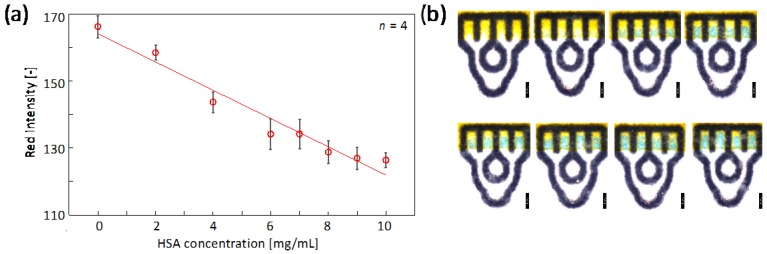
This work demonstrates the fabrication of microfluidic paper-based analytical devices (µPADs) suitable for the analysis of sub-microliter sample volumes. The wax-printing approach widely used for the patterning of paper substrates has been adapted to obtain high-resolution microfluidic structures patterned in filter paper. This has been achieved by replacing the hot plate heating method conventionally used to melt printed wax features into paper by simple hot lamination. This patterning technique, in combination with the consideration of device geometry and the influence of cellulose fiber direction in filter paper, led to a model µPAD design with four microfluidic channels that can be filled with as low as 0.5 µL of liquid. Finally, the application to a colorimetric model assay targeting total protein concentrations is shown. Calibration curves for human serum albumin (HSA) were recorded from sub-microliter samples (0.8 µL), with tolerance against ±0.1 µL variations in the applied liquid volume.
这项工作展示了适用于分析亚微升样品体积的微流控纸基分析装置(µPADs)的制造方法。广泛用于纸基图案化的蜡印方法已被调整,以在滤纸中获得高分辨率的微流控结构。这是通过用简单的热层压取代传统用于将印刷蜡特征熔化到纸中的热板加热方法来实现的。这种图案化技术,结合对装置几何形状的考虑以及滤纸中纤维素纤维方向的影响,导致了一种具有四个微流控通道的模型µPAD设计,该通道可填充低至0.5 µL的液体。最后,展示了其在针对总蛋白浓度的比色模型分析中的应用。从亚微升样品(0.8 µL)记录了人血清白蛋白(HSA)的校准曲线,对所施加液体体积±0.1 µL的变化具有耐受性。