Facultad de Ciencias Económicas y Empresariales, Universidad de Castilla-La Mancha (UCLM), Plaza de la Universidad, 1 C.P.: 02071, Albacete, Spain.
Centro de Estudios Sociosanitarios (CESS), Universidad de Castilla-La Mancha (UCLM), Albacete, Spain.
BMC Public Health. 2018 Nov 7;18(1):1241. doi: 10.1186/s12889-018-6149-3.
Food habits are important to promote and maintain good health throughout life, and unhealthy diet is a modifiable and preventable risk factor. University students are a key group of adults among whom to promote healthy lifestyles. The aim of this study is to determine the factors associated with unhealthy diet in a sample of university students.
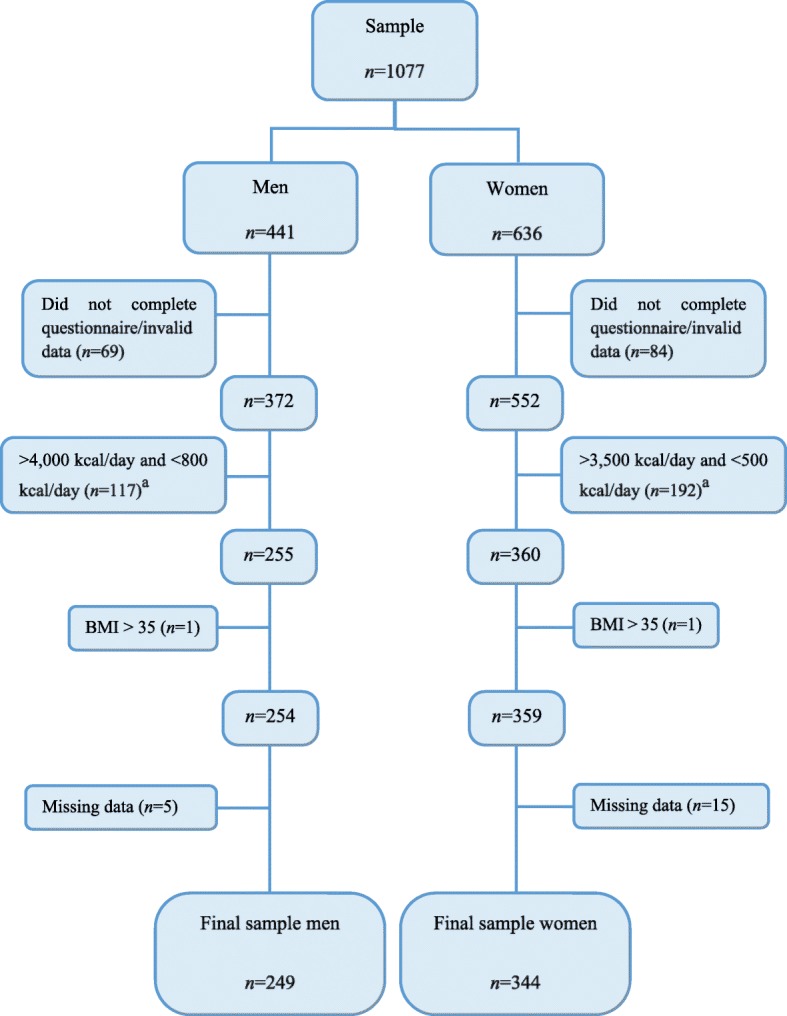
An electronic cross-sectional survey was conducted with university students (n=593) from inland Spain, during the 2016-2017 academic year. The survey collected information on the participants' food habits using an annual food frequency questionnaire. We also collected socioeconomic and demographic data and lifestyle-related information. A multivariate logistic regression was used for analysis.
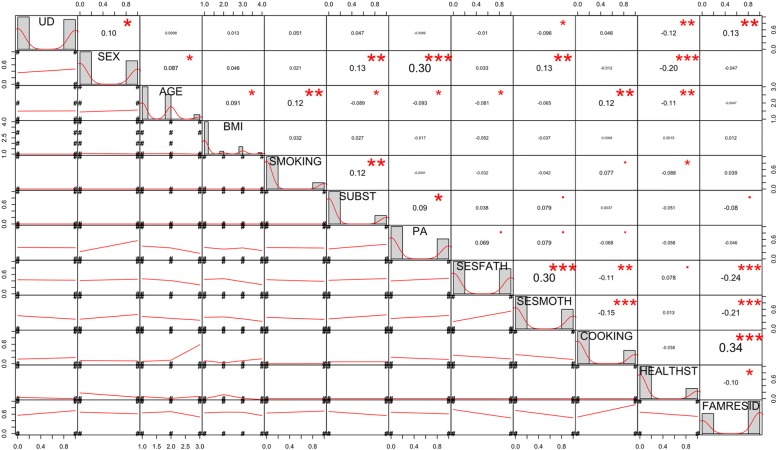
The multivariate logistic regression revealed that the factors associated with an unhealthy diet were: being male, being underweight compared to the reference category (normal weight), having a mother of low socioeconomic status, the family home not being in the university city and, finally, studying a non health-related course CONCLUSION: Among students of the University of Castilla-La Mancha, being male, being underweight, the family home not being in the university city, having a mother of low socioeconomic status, and, finally, not studying a health-related course are the factors associated with a lower quality diet. Following a healthy diet is key in reducing the health costs of non-communicable diseases, and ensuring an acceptable long-term quality of life in populations.
饮食习惯对于促进和维持终生健康非常重要,而不健康的饮食是可改变和可预防的风险因素。大学生是成年人中的一个关键群体,需要在他们中间倡导健康的生活方式。本研究旨在确定与大学生群体中不健康饮食相关的因素。
本研究于 2016-2017 学年期间,采用电子横断面调查的方式,对西班牙内陆地区的大学生(n=593)进行了调查。该调查使用年度食物频率问卷收集了参与者的饮食习惯信息。我们还收集了社会经济和人口统计学数据以及与生活方式相关的信息。采用多变量逻辑回归进行分析。
多变量逻辑回归显示,与不健康饮食相关的因素包括:男性、与参考类别(正常体重)相比体重过轻、母亲社会经济地位较低、家庭住址不在大学城以及最后,学习非健康相关课程。
在卡斯蒂利亚-拉曼恰大学的学生中,男性、体重过轻、家庭住址不在大学城、母亲社会经济地位较低以及最后,不学习健康相关课程,是饮食质量较差的相关因素。遵循健康饮食是降低非传染性疾病健康成本和确保人群可接受的长期生活质量的关键。