Harder Bryan G, Blomquist Mylan R, Wang Junwen, Kim Anthony J, Woodworth Graeme F, Winkles Jeffrey A, Loftus Joseph C, Tran Nhan L
Departments of Cancer Biology and Neurosurgery, Mayo Clinic Arizona, Scottsdale, AZ, United States.
Department of Health Sciences Research, Center for Individualized Medicine, Mayo Clinic Arizona, Scottsdale, AZ, United States.
Front Oncol. 2018 Oct 23;8:462. doi: 10.3389/fonc.2018.00462. eCollection 2018.
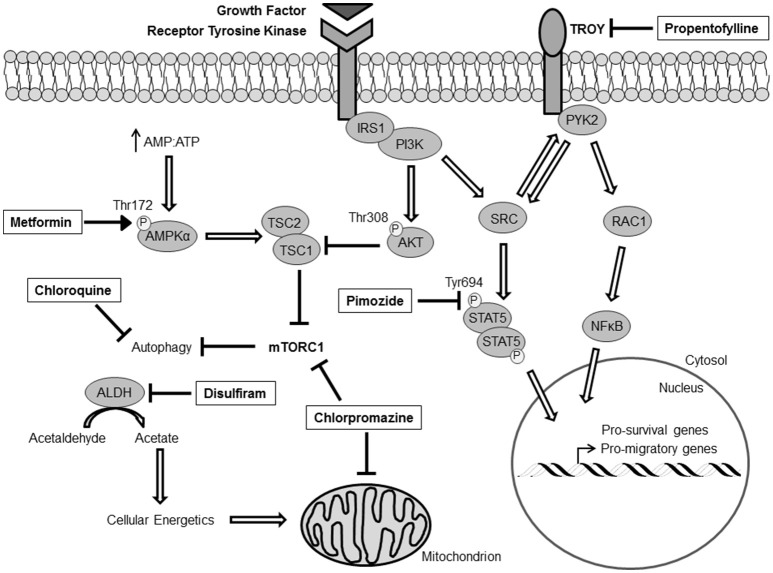
Glioblastoma (GBM) is one of the most common, deadly, and difficult-to-treat adult brain tumors. Surgical removal of the tumor, followed by radiotherapy (RT) and temozolomide (TMZ) administration, is the current treatment modality, but this regimen only modestly improves overall patient survival. Invasion of cells into the surrounding healthy brain tissue prevents complete surgical resection and complicates treatment strategies with the goal of preserving neurological function. Despite significant efforts to increase our understanding of GBM, there have been relatively few therapeutic advances since 2005 and even fewer treatments designed to effectively treat recurrent tumors that are resistant to therapy. Thus, while there is a pressing need to move new treatments into the clinic, emerging evidence suggests that key features unique to GBM location and biology, the blood-brain barrier (BBB) and intratumoral molecular heterogeneity, respectively, stand as critical unresolved hurdles to effective therapy. Notably, genomic analyses of GBM tissues has led to the identification of numerous gene alterations that govern cell growth, invasion and survival signaling pathways; however, the drugs that show pre-clinical potential against signaling pathways mediated by these gene alterations cannot achieve effective concentrations at the tumor site. As a result, identifying BBB-penetrating drugs and utilizing new and safer methods to enhance drug delivery past the BBB has become an area of intensive research. Repurposing and combining FDA-approved drugs with evidence of penetration into the central nervous system (CNS) has also seen new interest for the treatment of both primary and recurrent GBM. In this review, we discuss emerging methods to strategically enhance drug delivery to GBM and repurpose currently-approved and previously-studied drugs using rational combination strategies.
胶质母细胞瘤(GBM)是最常见、最致命且最难治疗的成人脑肿瘤之一。目前的治疗方式是手术切除肿瘤,随后进行放疗(RT)和给予替莫唑胺(TMZ),但这种治疗方案仅适度提高了患者的总体生存率。肿瘤细胞侵入周围健康脑组织会妨碍手术完全切除,并使旨在保留神经功能的治疗策略变得复杂。尽管人们付出了巨大努力来加深对GBM的了解,但自2005年以来治疗方面的进展相对较少,针对耐药复发性肿瘤的有效治疗方法更是少之又少。因此,虽然迫切需要将新的治疗方法引入临床,但新出现的证据表明,GBM位置和生物学所特有的关键特征,即血脑屏障(BBB)和肿瘤内分子异质性,分别是有效治疗的关键未解决障碍。值得注意的是,对GBM组织的基因组分析已导致鉴定出许多控制细胞生长、侵袭和存活信号通路的基因改变;然而,对这些基因改变介导的信号通路显示出临床前潜力的药物无法在肿瘤部位达到有效浓度。因此,识别能够穿透血脑屏障的药物并利用新的、更安全的方法增强药物透过血脑屏障的递送已成为一个深入研究的领域。重新利用并将已获美国食品药品监督管理局(FDA)批准且有证据表明可穿透中枢神经系统(CNS)的药物联合使用,也引起了治疗原发性和复发性GBM的新兴趣。在本综述中,我们讨论了战略性增强向GBM递送药物的新方法,以及使用合理联合策略重新利用目前已批准和先前已研究药物的方法。