O'Sullivan Grace, O'Higgins Siobhán, Caes Line, Saetes Sophia, McGuire Brian E, Stinson Jennifer
Centre for Pain Research; School of Psychology, College of Arts, Social Sciences & Celtic Studies, Galway, NUI, Ireland.
Division of Psychology; Faculty of Natural Sciences, University of Stirling, Stirling, Scotland, UK.
Pediatr Rheumatol Online J. 2018 Nov 8;16(1):68. doi: 10.1186/s12969-018-0287-0.
Juvenile Idiopathic Arthritis (JIA) affects over 1000 children and adolescents in Ireland, potentially impacting health-related quality-of-life. Accessible self-management strategies, including Internet-based interventions, can support adolescents in Ireland where specialist rheumatology care is geographically-centralised within the capital city. This study interviewed adolescents with JIA, their parents, and healthcare professionals to (i) explore the self-management needs of Irish adolescents; and (ii) evaluate the acceptability of an adapted version of a Canadian JIA self-management programme (Teens Taking Charge: Managing Arthritis Online, or TTC) for Irish users.
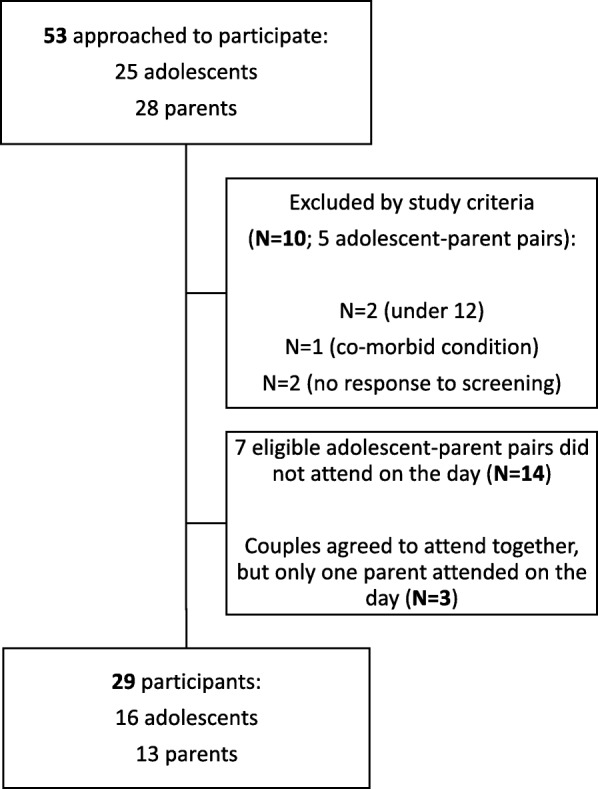
Focus groups and interviews were conducted with Irish adolescents with JIA (N = 16), their parents (N = 13), and Irish paediatric healthcare professionals (HCPs; N = 22). Adolescents were aged 12-18 (M = 14.19 years), and predominantly female (62.5%). Participants identified the needs of adolescents with JIA and evaluated the usefulness of the TTC programme. Data were analysed using a thematic analysis approach.
Five themes emerged: independent self-management; acquiring skills and knowledge to manage JIA; unique challenges of JIA in Ireland; views on web-based interventions; and understanding through social support. Adolescents acknowledged the need for independent self-management and gradually took additional responsibilities to achieve this goal. However, they felt they lacked information to manage their condition independently. Parents and adolescents emphasised the need for social support and felt a peer-support scheme could provide additional benefit to adolescents if integrated within the TTC programme. All participants endorsed the TTC programme to gain knowledge about JIA and offered suggestions to make the programme relevant to Irish users.
There is scope for providing easily-accessible, accurate information to Irish families with JIA. The acceptability of adapting an existing JIA self-management intervention for Irish users was confirmed.
青少年特发性关节炎(JIA)影响着爱尔兰1000多名儿童和青少年,可能会对与健康相关的生活质量产生影响。可获取的自我管理策略,包括基于互联网的干预措施,可以为爱尔兰的青少年提供支持,因为该国的专科风湿病护理在首都地区集中。本研究采访了患有JIA的青少年、他们的父母以及医疗保健专业人员,以(i)探索爱尔兰青少年的自我管理需求;以及(ii)评估加拿大JIA自我管理计划(青少年自主管理:在线管理关节炎,或TTC)的改编版本对爱尔兰用户的可接受性。
对患有JIA的爱尔兰青少年(N = 16)、他们的父母(N = 13)以及爱尔兰儿科医疗保健专业人员(HCPs;N = 22)进行了焦点小组讨论和访谈。青少年年龄在12 - 18岁之间(M = 14.19岁),且以女性为主(62.5%)。参与者确定了患有JIA的青少年的需求,并评估了TTC计划的有用性。使用主题分析方法对数据进行了分析。
出现了五个主题:独立自我管理;获取管理JIA的技能和知识;JIA在爱尔兰的独特挑战;对基于网络的干预措施的看法;以及通过社会支持获得理解。青少年认识到需要独立自我管理,并逐渐承担更多责任以实现这一目标。然而,他们觉得自己缺乏独立管理病情的信息。父母和青少年强调了社会支持的必要性,并认为如果将同伴支持计划纳入TTC计划,可能会给青少年带来额外的益处。所有参与者都认可TTC计划以获取有关JIA的知识,并提出了使该计划与爱尔兰用户相关的建议。
有机会为患有JIA的爱尔兰家庭提供易于获取的准确信息。证实了将现有的JIA自我管理干预措施改编用于爱尔兰用户的可接受性。