Department of Reproductive Medicine, Shanghai General Hospital, Shanghai Jiao Tong University, School of Medicine, Shanghai 201620, China.
Department of Andrology, Center for Men's Health, Urologic Medical Center, Shanghai General Hospital, Shanghai Jiao Tong University, School of Medicine, Shanghai 200080, China.
Asian J Androl. 2019 Mar-Apr;21(2):143-149. doi: 10.4103/aja.aja_78_18.
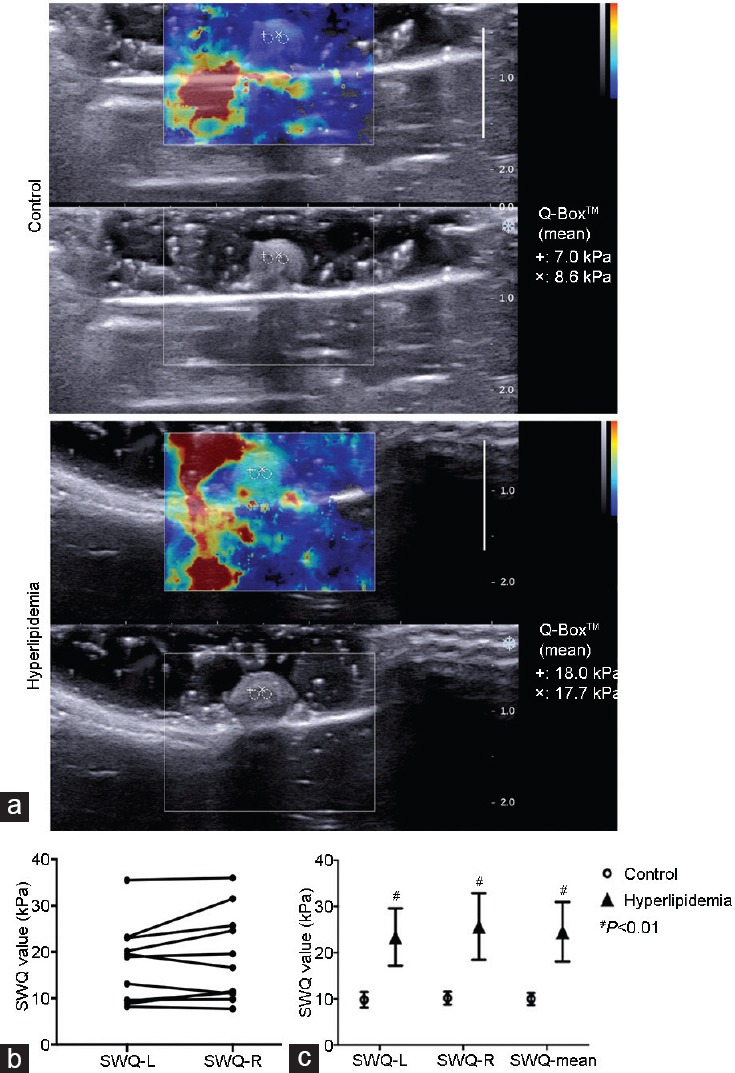
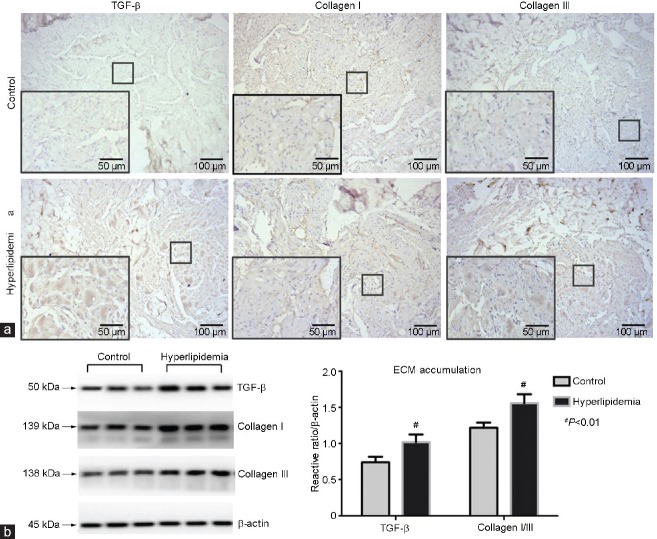
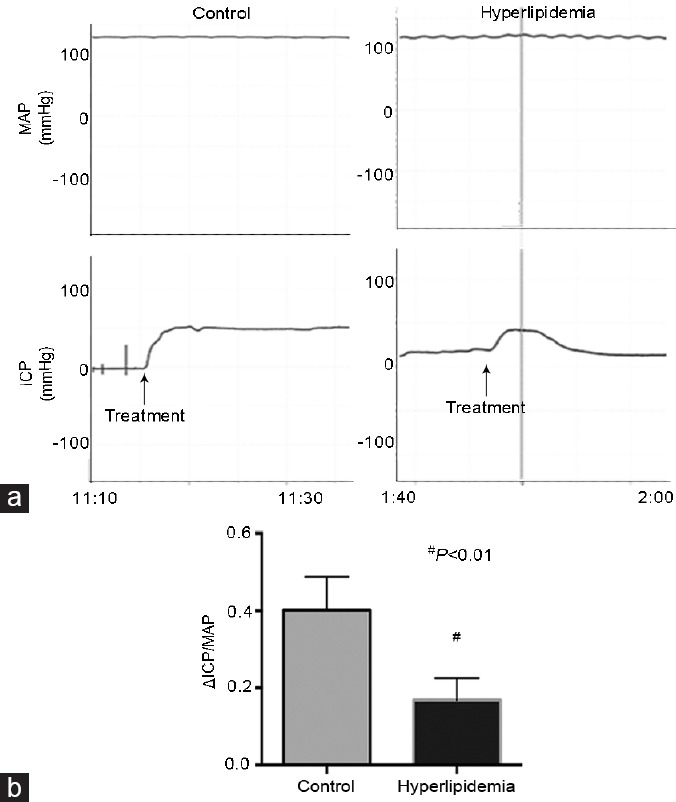
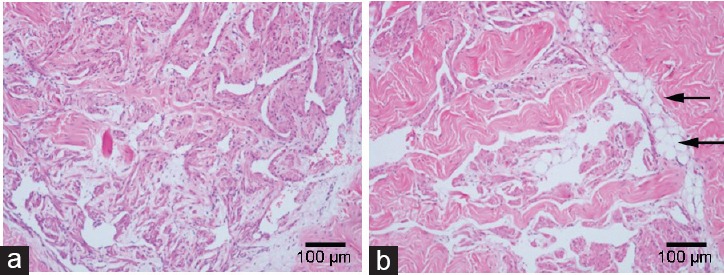
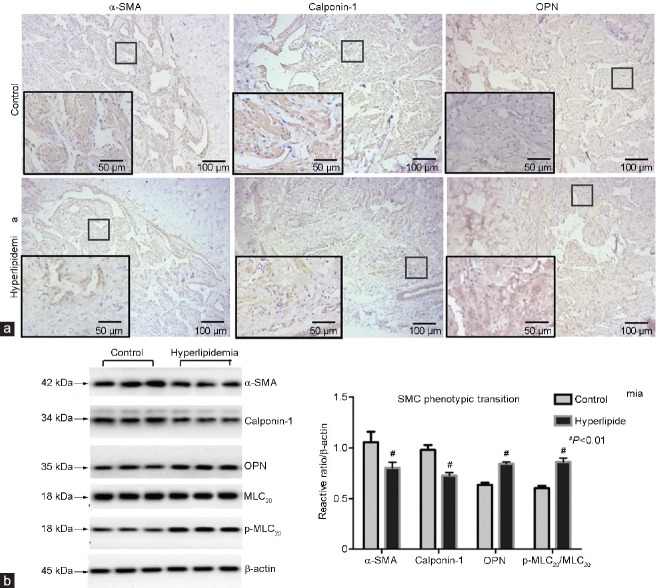
Structural alterations in fibroelastic components of the penile corpus cavernousum (CC) may impair its compliance, resulting in venous leakage and erectile dysfunction (ED). Our study evaluated the effectiveness of noninvasive two-dimensional shear-wave elastography (2-D SWE) in quantifying penile CC lesions in rabbits with hyperlipidemia-induced ED. A total of 12 New Zealand white rabbits were randomly divided into two groups. Six were fed a high-cholesterol diet containing 2% cholesterol and 8.5% lard for 10 weeks and the other six were fed normal diet as controls. We measured the shear-wave elastic quantitative (SWQ) value of penile CC by 2-D SWE. Erectile function was investigated by intracavernous injection of papaverine, and immunohistochemical (IHC) staining and the western blot analysis to determine the penile CC lesions. After 10 weeks, the SWQ values obtained from penile CC were remarkably higher in the high-cholesterol-fed compared with the control group, and the ΔICP (ICP plateau minus ICP baseline)/MAP (ICP: intracavernous pressure, MAP: mean arterial pressure) was markedly decreased. The IHC staining and western blot revealed extracellular matrix (ECM) accumulation in penile cavernous tissues, and the smooth muscle cell (SMC) phenotypic transition was affected, as indicated by reduced alpha-smooth muscle actin and calponin-1 expression and increased phospho-myosin light chain (p-MLC)/MLC and osteopontin expression. Hyperlipidemia resulted in ECM accumulation accompanied with SMC phenotypic transition in penile CC and impaired the erectile function eventually. These might, in turn, lead to variations in the SWQ values. It suggests that 2-D SWE may be a novel, noninvasive and effective approach that distinguishes penile CC lesions secondary to hyperlipidemia from normal.
阴茎海绵体(CC)纤维弹性成分的结构改变可能会损害其顺应性,导致静脉漏和勃起功能障碍(ED)。我们的研究评估了二维剪切波弹性成像(2-D SWE)在定量评估高脂血症诱导 ED 兔阴茎 CC 病变中的有效性。将 12 只新西兰白兔随机分为两组,6 只喂食含有 2%胆固醇和 8.5%猪油的高胆固醇饮食 10 周,另 6 只喂食正常饮食作为对照。我们通过 2-D SWE 测量阴茎 CC 的剪切波弹性定量值(SWQ)。通过阴茎海绵体内注射罂粟碱研究勃起功能,并通过免疫组化(IHC)染色和 Western blot 分析确定阴茎 CC 病变。10 周后,与对照组相比,高脂饮食组的阴茎 CC 获得的 SWQ 值显著升高,ICP 平台与 ICP 基线之差/平均动脉压(ICP:阴茎内压,MAP:平均动脉压)显著降低。IHC 染色和 Western blot 显示阴茎海绵体组织中细胞外基质(ECM)的积累,平滑肌细胞(SMC)表型转化受到影响,α-平滑肌肌动蛋白和钙调蛋白-1的表达减少,磷酸肌球蛋白轻链(p-MLC)/MLC 和骨桥蛋白的表达增加。高脂血症导致 ECM 积累,伴有阴茎 CC 中的 SMC 表型转化,最终损害勃起功能。这反过来可能导致 SWQ 值的变化。这表明 2-D SWE 可能是一种新颖的、非侵入性的有效方法,可以区分继发于高脂血症的阴茎 CC 病变与正常情况。