Department of Human Genetics, Leiden University Medical Center (LUMC), 2300 RC, Leiden, The Netherlands.
Einthoven Laboratory for Experimental Vascular Medicine, Leiden University Medical Center (LUMC), 2300 RC, Leiden, The Netherlands.
Sci Rep. 2018 Nov 8;8(1):16515. doi: 10.1038/s41598-018-34970-y.
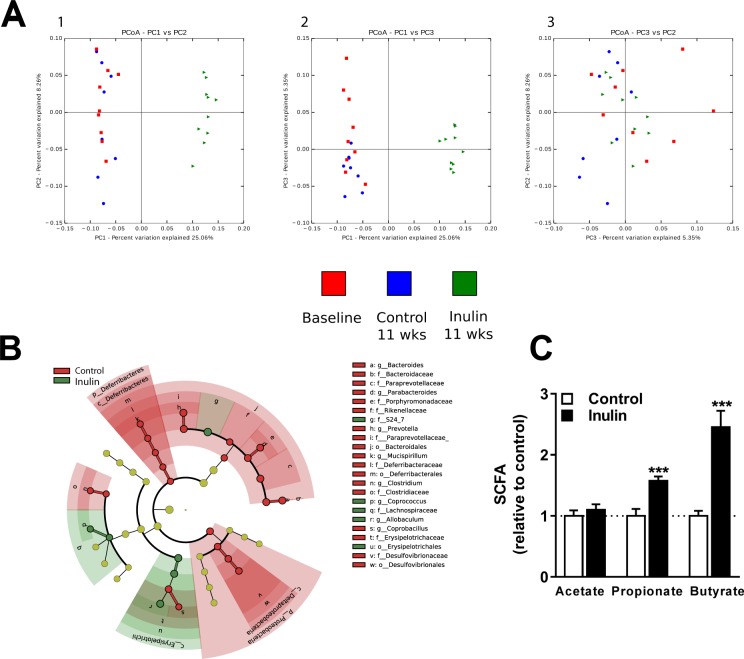
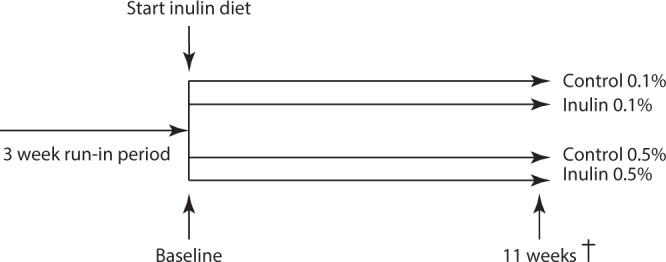
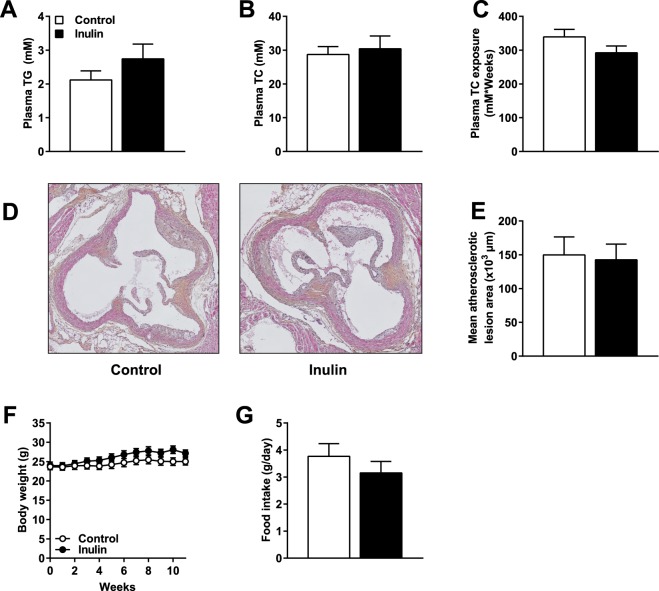
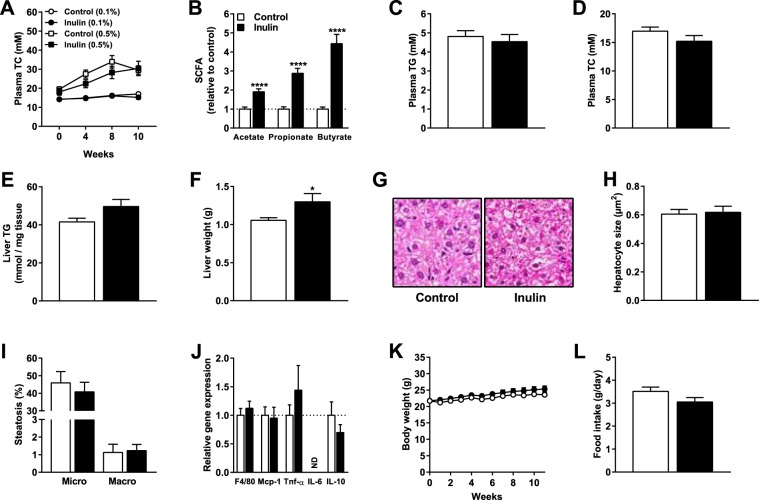
Gut microbiota have been implicated in the development of atherosclerosis and cardiovascular disease. Since the prebiotic inulin is thought to beneficially affect gut microbiota, we aimed to determine the effect of inulin supplementation on atherosclerosis development in APOE*3-Leiden.CETP (E3L.CETP) mice. Female E3L.CETP mice were fed a western-type diet containing 0.1% or 0.5% cholesterol with or without 10% inulin. The effects of inulin were determined on: microbiota composition, cecal short-chain fatty acid (SCFA) levels, plasma lipid levels, atherosclerosis development, hepatic morphology and hepatic inflammation. Inulin with 0.5% dietary cholesterol increased specific bacterial genera and elevated levels of cecal SCFAs, but did not affect plasma cholesterol levels or atherosclerosis development. Surprisingly, inulin resulted in mild hepatic inflammation as shown by increased expression of inflammation markers. However, these effects were not accompanied by increased hepatic macrophage number. Analogously, inulin induced mild steatosis and increased hepatocyte size, but did not affect hepatic triglyceride content. Inulin with 0.1% dietary cholesterol did not affect hepatic morphology, nor hepatic expression of inflammation markers. Overall, inulin did not reduce hypercholesterolemia or atherosclerosis development in E3L.CETP mice despite showing clear prebiotic activity, but resulted in manifestations of hepatic inflammation when combined with a high percentage of dietary cholesterol.
肠道微生物群与动脉粥样硬化和心血管疾病的发展有关。由于菊粉被认为对肠道微生物群有益,我们旨在确定菊粉补充对 APOE*3-Leiden.CETP(E3L.CETP)小鼠动脉粥样硬化发展的影响。雌性 E3L.CETP 小鼠喂食含有 0.1%或 0.5%胆固醇的西方饮食,同时含有或不含有 10%菊粉。菊粉的作用如下:微生物群组成、盲肠短链脂肪酸(SCFA)水平、血浆脂质水平、动脉粥样硬化发展、肝形态和肝炎症。含有 0.5%膳食胆固醇的菊粉增加了特定的细菌属,并提高了盲肠 SCFA 的水平,但不影响血浆胆固醇水平或动脉粥样硬化的发展。令人惊讶的是,菊粉导致轻度肝炎症,表现为炎症标志物的表达增加。然而,这些影响并没有伴随着肝巨噬细胞数量的增加。类似地,菊粉诱导轻度脂肪变性和增加肝细胞大小,但不影响肝甘油三酯含量。含有 0.1%膳食胆固醇的菊粉不影响肝形态,也不影响肝炎症标志物的表达。总的来说,尽管菊粉表现出明显的益生元活性,但它并没有减少 E3L.CETP 小鼠的高胆固醇血症或动脉粥样硬化发展,而是在与高百分比膳食胆固醇结合时导致肝炎症的表现。