Bio-NMR-Centre, Department of Biological Sciences, Faculty of Science, University of Calgary, Calgary, AB, Canada.
Department of Pediatrics, University of Calgary, Calgary, AB, Canada.
Sci Rep. 2018 Nov 9;8(1):16606. doi: 10.1038/s41598-018-35000-7.
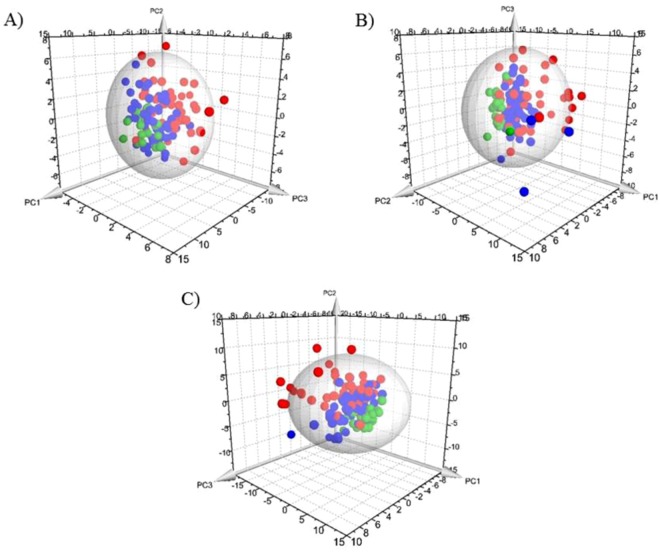
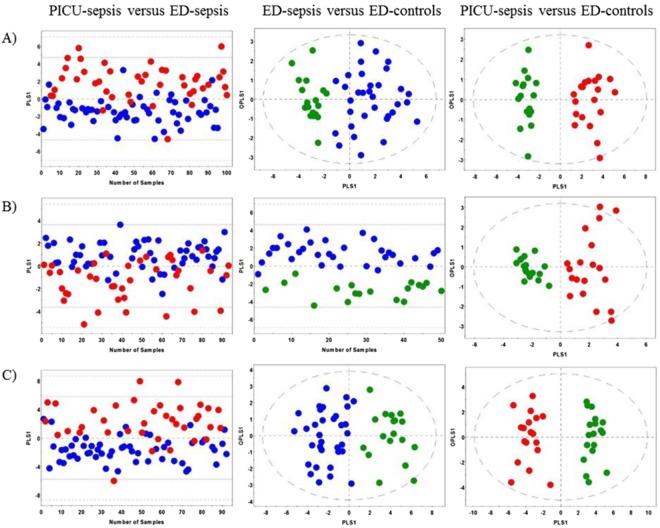
Early diagnosis and triage of sepsis improves outcomes. We aimed to identify biomarkers that may advance diagnosis and triage of pediatric sepsis. Serum and plasma samples were collected from young children (1-23 months old) with sepsis on presentation to the Pediatric Intensive Care Unit (PICU-sepsis, n = 46) or Pediatric Emergency Department (PED-sepsis, n = 58) and PED-non-sepsis patients (n = 19). Multivariate analysis was applied to distinguish between patient groups. Results were compared to our results for older children (2-17 years old). Common metabolites and protein-mediators were validated as potential biomarkers for a sepsis-triage model to differentiate PICU-sepsis from PED-sepsis in children age 1 month-17 years. Metabolomics in young children clearly separated the PICU-sepsis and PED-sepsis cohorts: sensitivity 0.71, specificity 0.93, and AUROC = 0.90 ± 0.03. Adding protein-mediators to the model did not improve performance. The seven metabolites common to the young and older children were used to create the sepsis-triage model. Validation of the sepsis-triage model resulted in sensitivity: 0.83 ± 0.02, specificity: 0.88 ± 0.05 and AUROC 0.93 ± 0.02. The metabolic-based biomarkers predicted which sepsis patients required care in a PICU versus those that could be safely cared for outside of a PICU. This has potential to inform appropriate triage of pediatric sepsis, particularly in EDs with less experience evaluating children.
早期诊断和脓毒症分诊可改善预后。我们旨在寻找可能有助于诊断和分诊儿童脓毒症的生物标志物。采集了患有脓毒症的幼儿(1-23 个月)的血清和血浆样本,这些幼儿分别来自儿科重症监护病房(PICU-脓毒症,n=46)、儿科急诊部(PED-脓毒症,n=58)和儿科急诊部非脓毒症患者(n=19)。应用多变量分析来区分患者组。结果与我们对年龄较大的儿童(2-17 岁)的研究结果进行了比较。验证了常见的代谢物和蛋白介质,作为一种脓毒症分诊模型的潜在生物标志物,以区分 1 个月至 17 岁儿童的 PICU-脓毒症和 PED-脓毒症。代谢组学在幼儿中清楚地区分了 PICU-脓毒症和 PED-脓毒症队列:敏感性为 0.71,特异性为 0.93,AUROC 为 0.90±0.03。将蛋白介质添加到模型中并未提高性能。将在幼儿和年龄较大的儿童中共同存在的七种代谢物用于创建脓毒症分诊模型。该脓毒症分诊模型的验证结果为:敏感性为 0.83±0.02,特异性为 0.88±0.05,AUROC 为 0.93±0.02。基于代谢的生物标志物预测了哪些脓毒症患者需要在 PICU 中接受治疗,而哪些患者可以在 PICU 外安全地接受治疗。这有可能为儿科脓毒症的适当分诊提供信息,特别是在经验不足的儿科急诊评估儿童的情况下。