Department of Intermedia, Art and Science, School of Fundamental Science and Engineering, Waseda University, 3-4-1 Ohkubo, Shinjuku, Tokyo 169-0072, Japan
Department of Information System Creation, Faculty of Technology, Kanagawa University, 3-27-1 Rokkakubashi, Kanagawa-ku, Yokohama-shi, Kanagawa 221-8686, Japan.
Philos Trans A Math Phys Eng Sci. 2018 Nov 12;376(2135):20170370. doi: 10.1098/rsta.2017.0370.
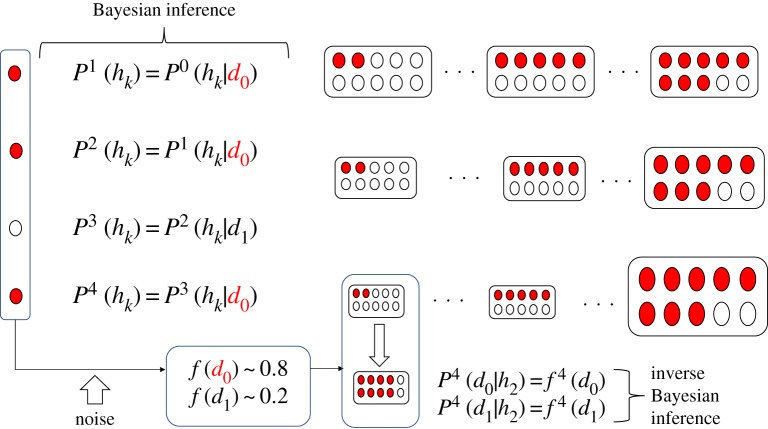
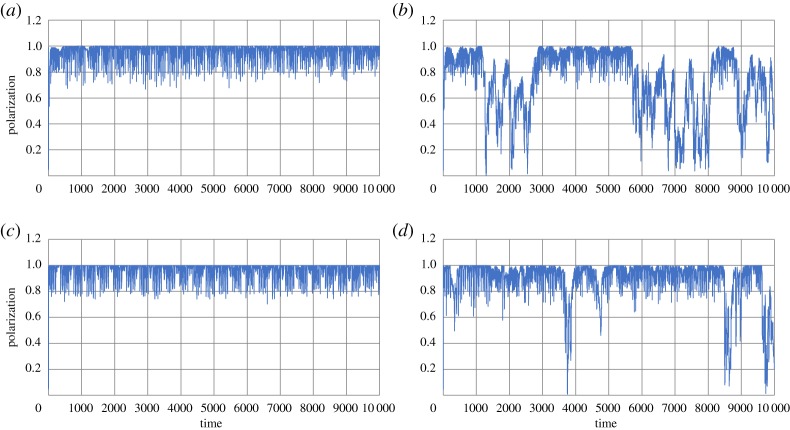
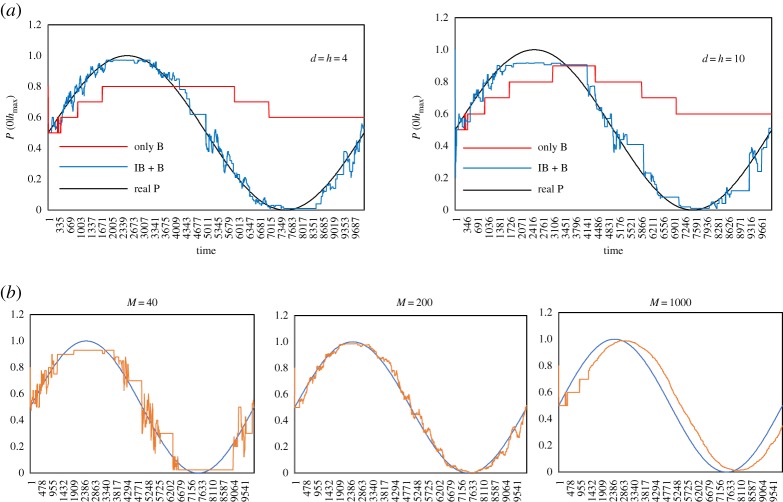
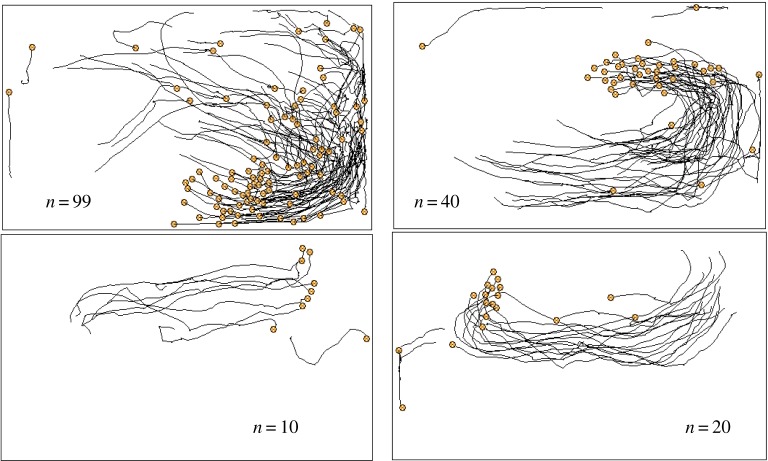
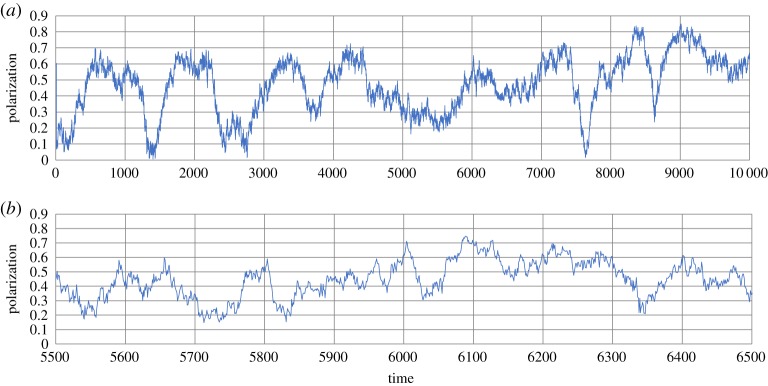
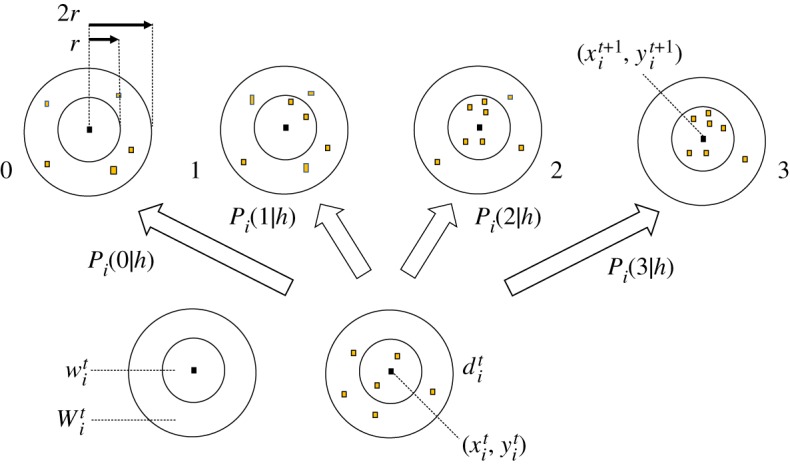
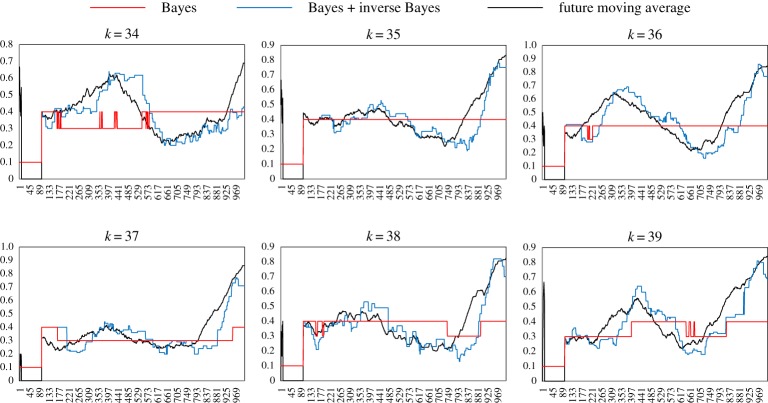
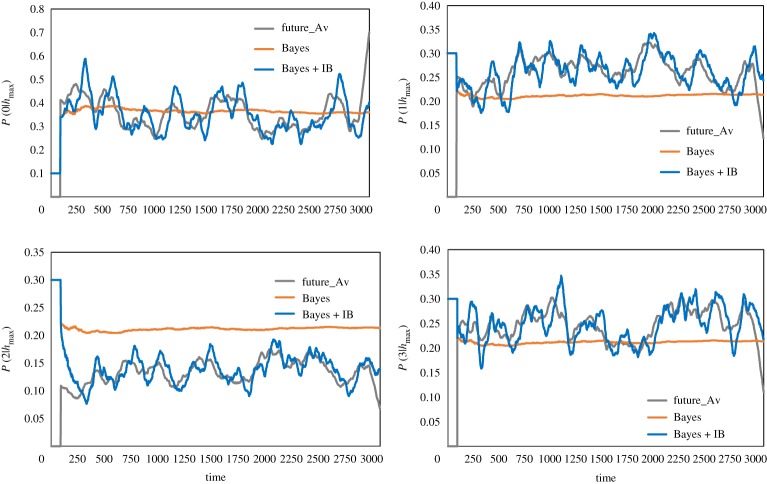
Animals making a group sometimes approach and sometimes avoid a dense area of group mates, and that reveals the ambiguity of density preference. Although the ambiguity is not expressed by a simple deterministic local rule, it seems to be implemented by probabilistic inference that is based on Bayesian and inverse Bayesian inference. In particular, the inverse Bayesian process refers to perpetual changing of hypotheses. We here analyse a time series of swarming soldier crabs and show that they are employed to Bayesian and inverse Bayesian inference. Comparing simulation results with data of the real swarm, we show that the interpretation of the movement of soldier crabs which can be based on the inference can lead to the identification of a drastic phase shift-like transition of gathering and dispersing.This article is part of the theme issue 'Dissipative structures in matter out of equilibrium: from chemistry, photonics and biology (part 2)'.
动物成群结队时,有时会靠近,有时会避开密集的同伴区域,这揭示了对密度的偏好存在模糊性。尽管这种模糊性不是由简单的确定性局部规则表达的,但它似乎是通过基于贝叶斯和逆贝叶斯推理的概率推理来实现的。特别是,逆贝叶斯过程指的是假设的不断变化。我们在这里分析了一群行军兵蟹的时间序列,并表明它们被用于贝叶斯和逆贝叶斯推理。将模拟结果与真实群体的数据进行比较,我们表明,基于推理的兵蟹运动的解释可以导致聚集和分散的急剧相移样转变的识别。本文是“非平衡物质中的耗散结构:从化学、光子学和生物学(第 2 部分)”主题的一部分。