Department of Chemistry, Center for Ordered Materials, Organometallics and Catalysis (COMOC), Ghent University, Krijgslaan 281 (S3), 9000 Gent, Belgium.
LumiLab, Department of Solid State Sciences, Ghent University, Krijgslaan 281 (S1), 9000 Gent, Belgium.
Molecules. 2018 Nov 12;23(11):2947. doi: 10.3390/molecules23112947.
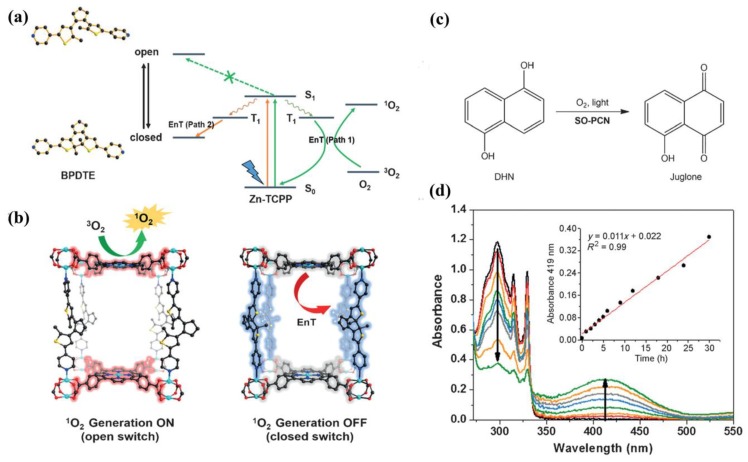
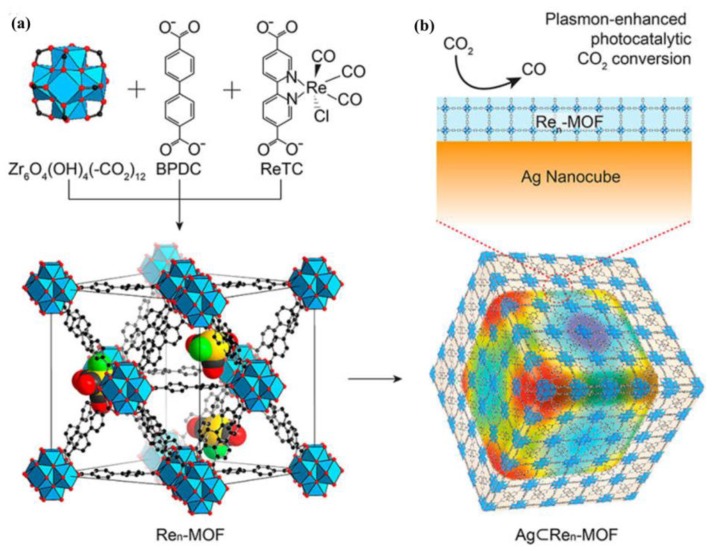
The increase in environmental pollution due to the excessive use of fossil fuels has prompted the development of alternative and sustainable energy sources. As an abundant and sustainable energy, solar energy represents the most attractive and promising clean energy source for replacing fossil fuels. Metal organic frameworks (MOFs) are easily constructed and can be tailored towards favorable photocatalytic properties in pollution degradation, organic transformations, CO₂ reduction and water splitting. In this review, we first summarize the different roles of MOF materials in the photoredox chemical systems. Then, the typical applications of MOF materials in heterogeneous photocatalysis are discussed in detail. Finally, the challenges and opportunities in this promising field are evaluated.
由于化石燃料的过度使用导致环境污染增加,这促使人们开发替代能源和可持续能源。太阳能作为一种丰富且可持续的能源,是最具吸引力和前景的替代化石燃料的清洁能源。金属有机骨架(MOFs)易于构建,并且可以针对光催化性能进行定制,从而有利于在污染降解、有机转化、CO₂还原和水分解等方面的应用。在这篇综述中,我们首先总结了 MOF 材料在光氧化还原化学体系中的不同作用。然后,详细讨论了 MOF 材料在多相光催化中的典型应用。最后,评估了这一有前途的领域所面临的挑战和机遇。