Liu Huihui, Li Yajing, Yuan Mengwei, Sun Genban, Liao Qingliang, Zhang Yue
Beijing Key Laboratory of Energy Conversion and Storage Materials and College of Chemistry, Beijing Normal University, Beijing, 100875, China.
State Key Laboratory for Advanced Metals and Materials, School of Materials Science and Engineering, University of Science and Technology Beijing, Beijing, 100083, China.
Sci Rep. 2018 Nov 15;8(1):16832. doi: 10.1038/s41598-018-35078-z.
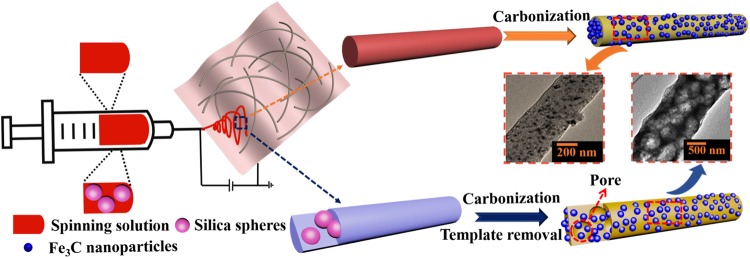
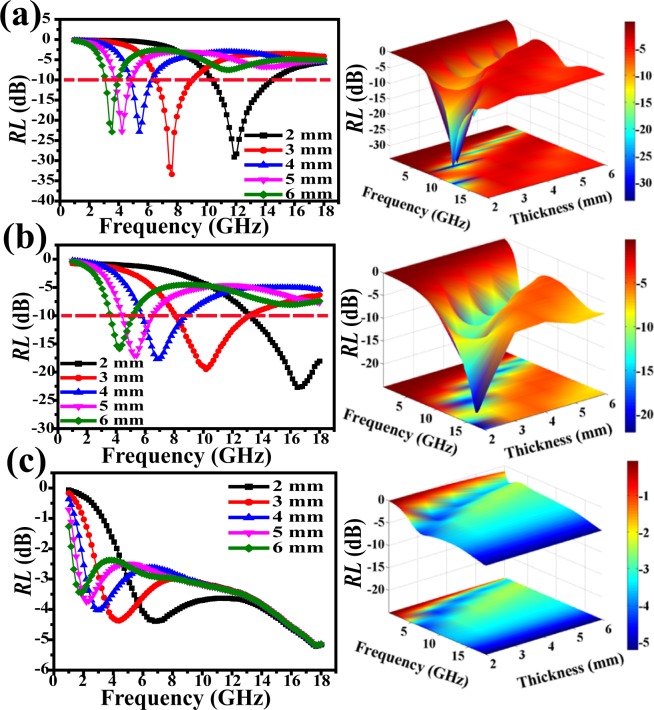
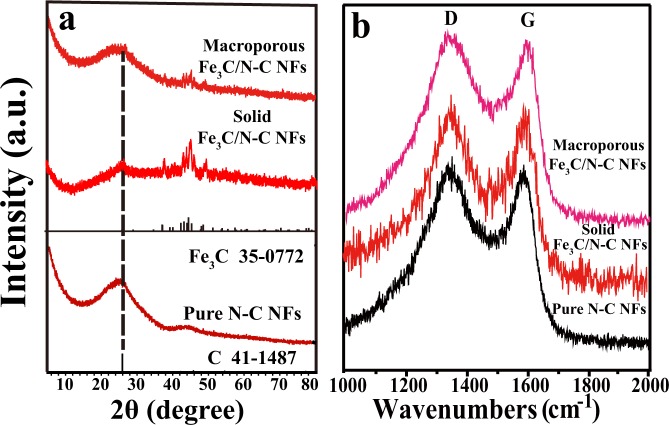
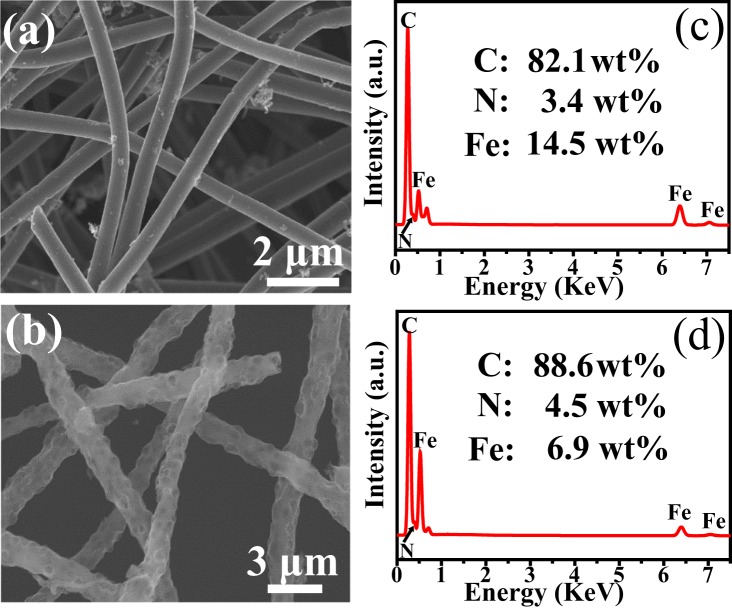
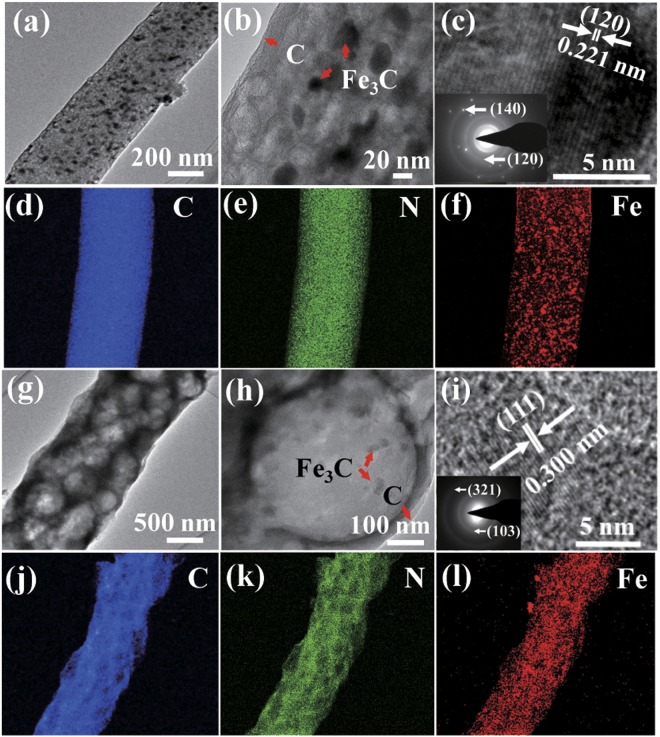
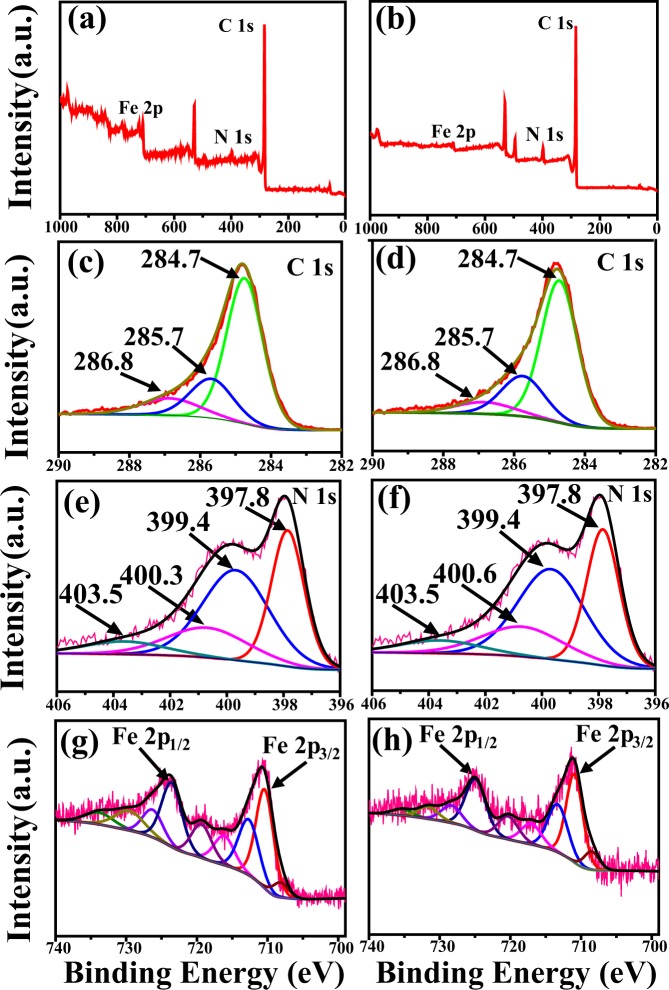
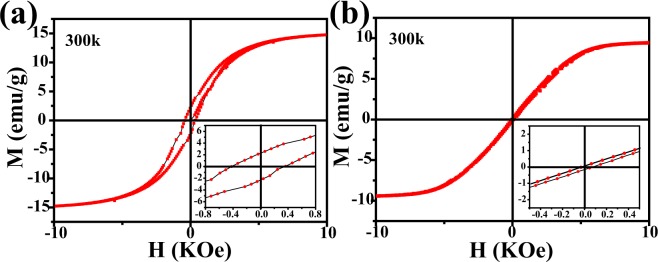
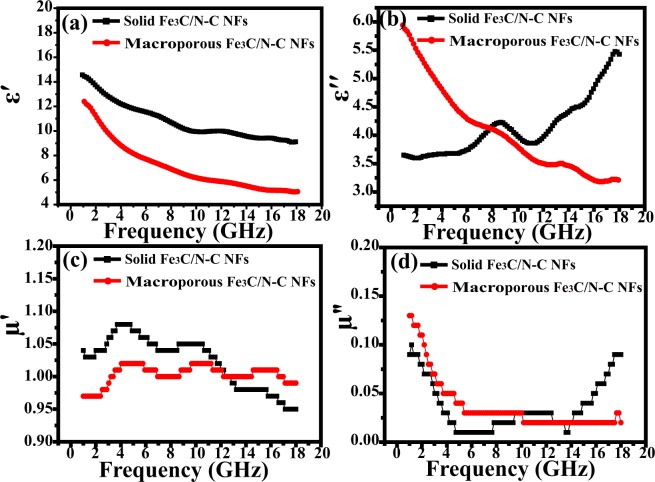
A series of solid and macroporous N-doped carbon nanofibers composed of FeC nanoparticles (named as solid FeC/N-C NFs, solid FeC/N-C NFs-1, solid FeC/N-C NFs-2, macroporous FeC/N-C NFs, macroporous FeC/N-C NFs-1 and macroporous FeC/N-C NFs-2, respectively) were prepared through carbonization of as-electrospun nanofiber precursors. The results show that the magnetic FeC nanoparticles (NPs) dispersed homogeneously on the N-doped carbon fibers; as-prepared six materials exhibit excellent microwave absorption with a lower filler content in comparison with other magnetic carbon hybrid nanocomposites in related literatures. Particularly, the solid FeC/N-C NFs have an optimal reflection loss value (RL) of -33.4 dB at 7.6 GHz. For solid FeC/N-C NFs-2, the effective absorption bandwidth (EAB) at RL value below -10 dB can be up to 6.2 GHz at 2 mm. The macroporous FeC/N-C NFs have a broadband absorption area of 4.8 GHz at 3 mm. The EAB can be obtained in the 3.6-18.0 GHz frequency for the thickness of absorber layer between 2 and 6 mm. These FeC-based nanocomposites can be promising as lightweight, effective and low-metal content microwave absorption materials in 1-18 GHz.
通过对静电纺丝纳米纤维前驱体进行碳化,制备了一系列由FeC纳米颗粒组成的实心和大孔N掺杂碳纳米纤维(分别命名为实心FeC/N-C NFs、实心FeC/N-C NFs-1、实心FeC/N-C NFs-2、大孔FeC/N-C NFs、大孔FeC/N-C NFs-1和大孔FeC/N-C NFs-2)。结果表明,磁性FeC纳米颗粒均匀分散在N掺杂碳纤维上;与相关文献中的其他磁性碳杂化纳米复合材料相比,所制备的六种材料在较低填料含量下表现出优异的微波吸收性能。特别是,实心FeC/N-C NFs在7.6 GHz时具有-33.4 dB的最佳反射损耗值(RL)。对于实心FeC/N-C NFs-2,在2 mm厚度下,RL值低于-10 dB时的有效吸收带宽(EAB)可达6.2 GHz。大孔FeC/N-C NFs在3 mm厚度下具有4.8 GHz的宽带吸收区域。对于2至6 mm的吸收层厚度,可以在3.6-18.0 GHz频率范围内获得EAB。这些基于FeC的纳米复合材料有望成为1-18 GHz范围内轻质、高效且低金属含量的微波吸收材料。