Borel Y, Lewis R M, André-Schwartz J, Stollar B D, Diener E
J Clin Invest. 1978 Feb;61(2):276-86. doi: 10.1172/JCI108937.
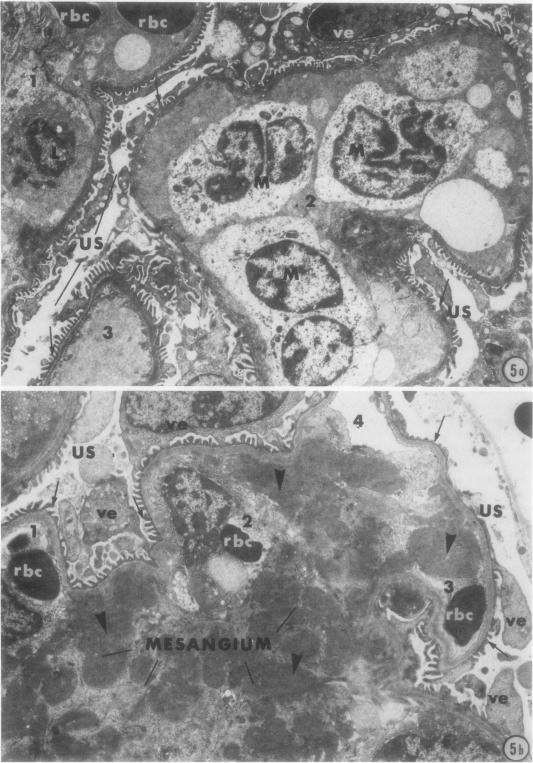
Adult female (NZB + NZW)F1 mice were treated with cortisone, cortisone with tolerogen (isologous NZB IgG-nucleosides conjugates) or cortisone with isologous IgG free of nucleosides. Other treatments also included tolerogen or isologous IgG alone, and cortisone together with denatured DNA. All untreated mice died by 10 mo of age. Cortisone prolonged the survival rate. This effect was further improved by combined treatment of cortisone and tolerogen. Prolonged survival was accompanied by a decrease in proteinuria. Other treatments failed to influence either survival or proteinuria. Although cortisone did not prevent the appearance of antibody to denatured DNA, cortisone and tolerogen suppressed them in most of the animals. Preexisting antibody to denatured DNA was reduced by cortisone and cortisone and tolerogen, but not by cortisone and IgG. In contrast, antibody to native DNA bore no relationship to therapy. Animals living beyond 1 yr of age, regardless of the treatment, fall into three histopathological categories: (a) severe nephritis, as in untreated animals, (b) moderate nephritis (with absence of severe alteration of the glomerular basement membrane, i.e. the histological counterpart of prolonged survival), (c) minimal nephritis. In a small number of animals treated with cortisone or cortisone and IgG and in 6/20 animals treated with cortisone and tolerogen, minimal lesions as judged by light, fluorescent, and electron microscopy were found. These last mice were in good health at 15-16 mo of age, twice the life-span of untreated mice. In conclusion, these data suggest that tolerance to nucleic acid antigens facilitated by cortisone offers a promising new approach to treat established murine lupus nephritis.
成年雌性(NZB + NZW)F1小鼠接受了可的松、可的松与耐受原(同源NZB IgG - 核苷缀合物)或可的松与无核苷的同源IgG的治疗。其他治疗还包括单独使用耐受原或同源IgG,以及可的松与变性DNA联合使用。所有未治疗的小鼠在10月龄时死亡。可的松延长了存活率。可的松与耐受原联合治疗进一步提高了这种效果。存活率的延长伴随着蛋白尿的减少。其他治疗未能影响存活率或蛋白尿。虽然可的松不能阻止抗变性DNA抗体的出现,但可的松和耐受原在大多数动物中抑制了它们。预先存在的抗变性DNA抗体被可的松、可的松与耐受原降低,但未被可的松与IgG降低。相比之下,抗天然DNA抗体与治疗无关。存活超过1岁的动物,无论接受何种治疗,都可分为三种组织病理学类型:(a)严重肾炎,如同未治疗的动物;(b)中度肾炎(肾小球基底膜无严重改变,即存活率延长的组织学对应物);(c)轻度肾炎。在用可的松或可的松与IgG治疗的少数动物以及用可的松与耐受原治疗的20只动物中的6只中,通过光镜、荧光镜和电镜观察发现病变轻微。这些最后的小鼠在15 - 16月龄时健康状况良好,是未治疗小鼠寿命的两倍。总之,这些数据表明,可的松促进的对核酸抗原的耐受性为治疗已建立的小鼠狼疮性肾炎提供了一种有前景的新方法。